
1. Introducción
Sourcing high-quality PPR pipes from China is a proven strategy for international MEP contractors and wholesale distributors to protect project margins. However, treating PPR as a low-tech commodity is a multi-million dollar mistake. In high-pressure commercial plumbing and HVAC networks, your piping system isn’t just an expense—it’s an engineering specification.
To stop wasting procurement hours on superficial catalog browsing, this guide moves past entry-level explanations to deliver an authoritative, science-backed material audit. We crack open the true engineering metrics behind Polypropylene Random Copolymer, decrypt the hidden cost drivers in Chinese manufacturing pricing structures, and provide a battle-tested technical checklist to ensure your supply chain remains failure-free for the next 50 years.
2. La base molecular de las tuberías de PPR: ¿Por qué es importante el “copolímero aleatorio”?
Para comprender las ventajas de las tuberías PPR, es necesario analizarlas a nivel microscópico. No todos los polipropilenos son iguales.
La química de la resiliencia
En esencia, las tuberías de PPR se producen mediante la copolimerización aleatoria de propileno y etileno. En un polipropileno estándar (PP-H), las moléculas se disponen en un patrón muy rígido y uniforme.
Sin embargo, en las tuberías PPR, pequeñas cantidades de etileno (normalmente 3% a 5%) se insertan “aleatoriamente” en las largas cadenas de propileno.
Nota: Estos datos son sólo de referencia; las formulaciones específicas y las estructuras de polímeros pueden variar entre diferentes proveedores de materia prima y grados especializados.
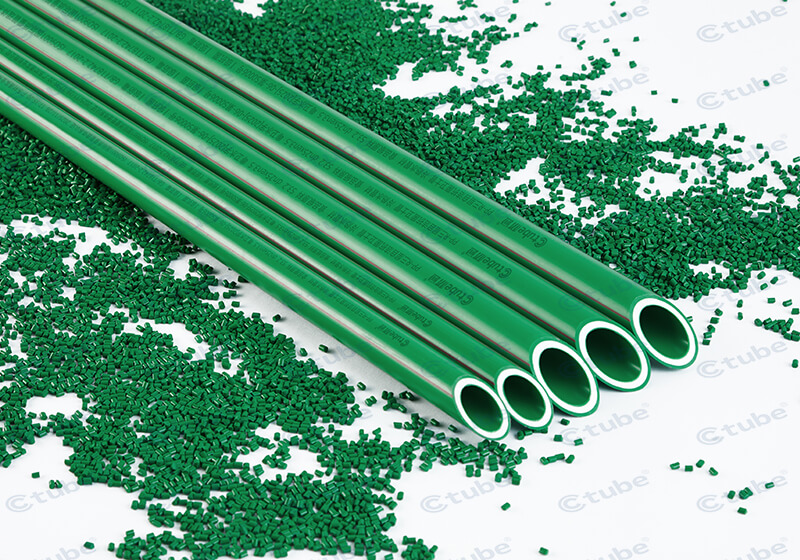
La ciencia de la cristalinidadEsta concentración específica no es arbitraria. Es el resultado de una rigurosa ciencia de materiales destinada a optimizar la estructura cristalina. En resumen, mientras que el polipropileno estándar es altamente cristalino (muy rígido y organizado), las moléculas aleatorias de etileno actúan como un disruptor. Rompen estas grandes regiones cristalinas rígidas y crean zonas más amorfas (flexibles).
Si el contenido de etileno es demasiado bajo, la tubería se vuelve demasiado cristalina y quebradiza, lo que aumenta el riesgo de agrietamiento por tensión ambiental. Si supera el umbral óptimo, la resistencia hidrostática a largo plazo (LTHS) del material comienza a degradarse, lo que compromete su capacidad para soportar altas presiones a temperaturas elevadas durante décadas.
Un desglose intuitivoPara visualizar la diferencia, imagine el polipropileno estándar (PP-H) como un haz de cuerdas rectas y perfectamente paralelas. Debido a su organización tan ordenada (altamente cristalino), estas cuerdas son resistentes al tirar en una dirección, pero pueden deslizarse fácilmente entre sí o romperse en los huecos al someterse a una flexión repentina o a una presión localizada.
Sin embargo, en las tuberías de PPR, las moléculas de etileno integradas aleatoriamente actúan como "nudos estratégicos" atados a lo largo de esas cuerdas. Estos nudos alteran la alineación paralela, simple y rígida, obligando a las largas cadenas moleculares a entrelazarse y trabarse entre sí.
El resultadoCuando la tubería sufre un impacto externo o se ve sometida a presión hidráulica interna, estos "nudos moleculares" (y las zonas flexibles que crean) absorben la energía y evitan que las microfisuras se propaguen. Este equilibrio entre dureza y tenacidad es lo que hace que el PPR sea tan duradero.
Estabilidad térmica y resistencia a la presión
La distribución aleatoria de estas moléculas crea un material que no se queda quieto, sino que funciona. Para los profesionales, la métrica clave es la resistencia a la presión hidrostática.
Gracias a su estructura de copolímero aleatorio, el PPR presenta un alto índice de fluidez (MFR) y una resistencia hidrostática superior a largo plazo. Esto permite que la tubería soporte temperaturas de agua caliente continuas de hasta 70 °C durante una vida útil estimada de 50 años, con una tolerancia máxima a corto plazo de 95 °C.
Las tuberías de plástico comunes, sometidas a un estrés prolongado por agua caliente, son como una goma elástica vieja dejada al sol. Inicialmente elásticas, el calor y la tensión acaban provocando que las cadenas moleculares se rompan y se aflojen. En un sistema de plomería, esto provoca el adelgazamiento de las paredes, filtraciones y roturas repentinas.
El PPR, en cambio, actúa como una "red protectora inteligente" tejida con fibras de alta resistencia. Incluso a una temperatura constante de 70 °C, estas fibras permanecen firmemente entrelazadas. Esta estructura no solo resiste el empuje continuo del agua a alta presión, sino que también garantiza que el sistema se mantenga tan resistente como el primer día, incluso después de décadas de uso, eliminando eficazmente la fatiga térmica.
Consejos profesionales: Want to learn more about SDR & Pressure Rating? Read our expert tutorial on Temperature Limits, SDR Ratings.
Engineering Specification: Material Science & Structural Fatigue Limits
To design or source a reliable pressurized fluid network, professionals must evaluate PPR based on its molecular performance and structural layer integrity rather than just unit price.
A critical technical metric is the Inner Wall Smoothness. Premium PPR systems feature an absolute surface roughness coefficient of just 0.007 mm (compared to metal pipes which range from 0.02 mm to 0.05 mm). This microscopic smoothness eliminates friction loss, prevents calcium scaling accumulation, and dramatically reduces pipeline pressure drop. In large-scale commercial MEP designs, lower fluid resistance directly translates to reduced pumping power requirements, saving up to 15% in long-term facility energy costs.
Furthermore, selecting the right structural layer composition dictates the safety boundary of your installation:
PPR Pipe Structural Layer & Application
| Material Configuration | Technical Metric / Pressure Boundaries | Ideal Engineering Application |
| Standard 1-Layer PPR | 100% Virgin Type 3 Polypropylene. High hydrostatic strength at standard ambient temps. | General domestic cold/hot water distribution, high cost-efficiency projects. |
| Advanced 2-Layer PPR | Specialized Anti-Bacterial Inner Layer co-extruded with an outer protective PPR matrix. | Pure water networks, food-processing facilities, hospital and laboratory fluid piping. |
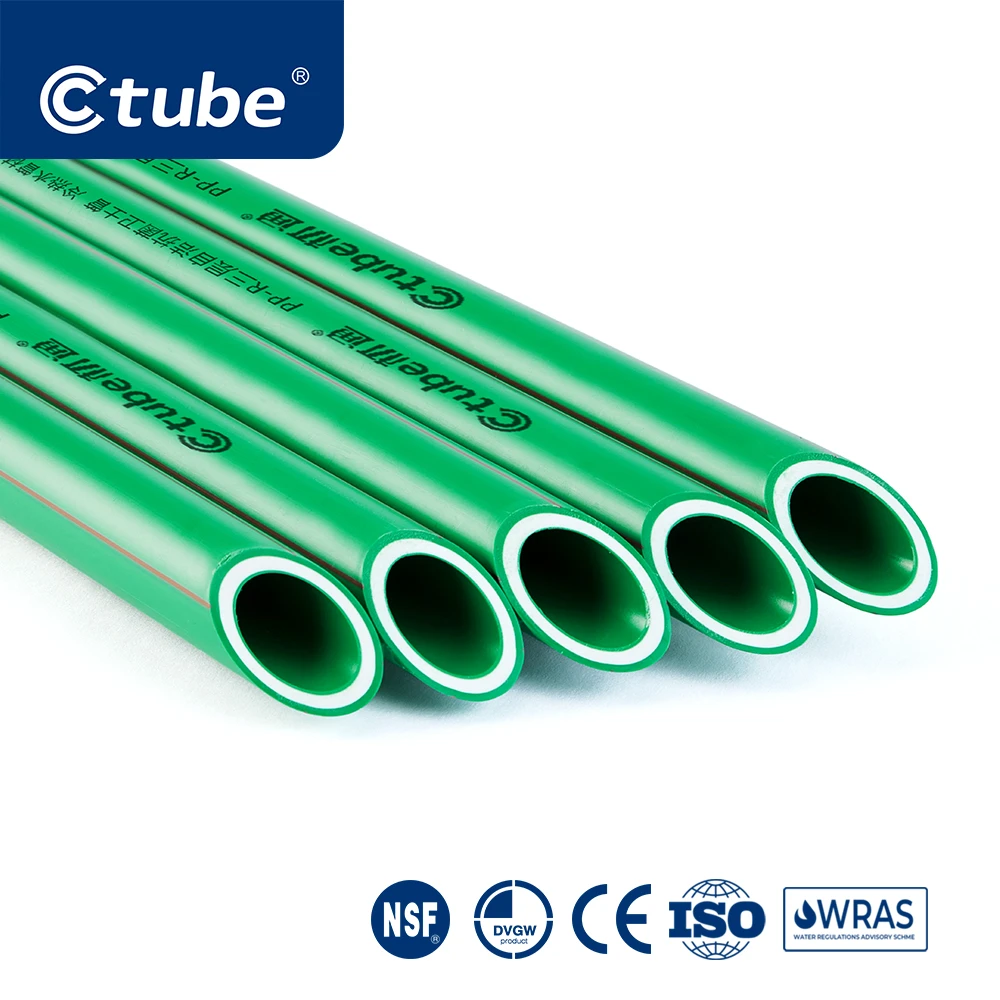
| Heavy-Duty 3-Layer FR-PPR | PPR + Glass Fiber Reinforced Composite Center Layer + PPR. Reduces linear expansion by 75%. | High-temperature HVAC riser mains, exposed outdoor lines, boiler connection loops. |
3. Física térmica y acústica: los beneficios invisibles
Si bien la durabilidad de un sistema de tuberías es una preocupación principal para los ingenieros, la comodidad diaria del usuario final depende de dos factores invisibles: la eficiencia térmica y el control del ruido.
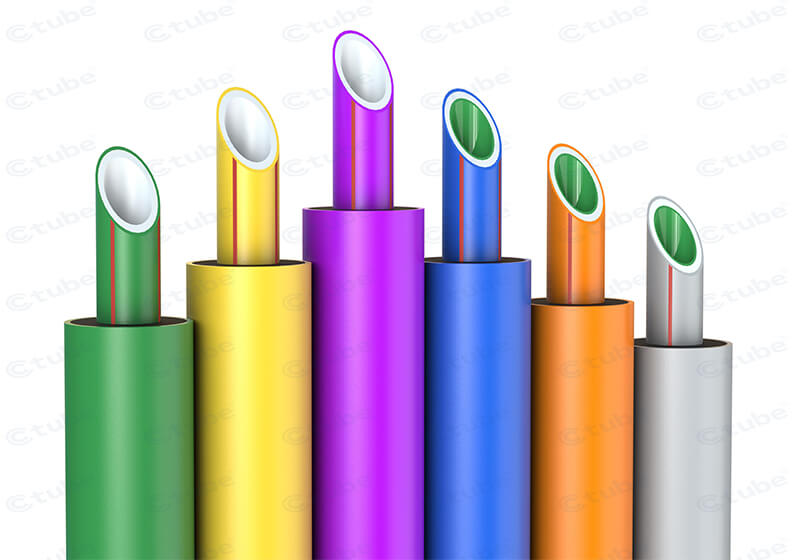
Aislamiento térmico superior (eficiencia energética)
Una de las propiedades físicas destacadas del PPR es su baja conductividad térmica, que se mide en aproximadamente 0,24 W/mK.
En física de transferencia de calor, la conductividad del material determina cuánta energía se pierde al medio ambiente durante el transporte de fluidos. En comparación con el cobre (aprox. 400 W/mK) o el acero al carbono (aprox. 50 W/mK), el PPR actúa como un aislante natural. Esto reduce significativamente la pérdida de calor estancada en los sistemas de circulación de agua caliente, manteniendo la temperatura del agua durante más tiempo sin requerir energía adicional de la caldera.
Imagina beber agua caliente en un gélido día de invierno. Si usas una taza de metal, las paredes se calientan al tacto casi al instante, pero el agua se enfría rápidamente. Sin embargo, si usas una taza de polímero de paredes gruesas, el calor se retiene en su interior.
Las tuberías de PPR actúan como una "capa de plumón a medida" para el sistema de agua caliente de su hogar. Garantizan que el calor prácticamente no se pierda durante el largo recorrido del agua por las tuberías. Esto no solo significa que obtendrá agua caliente del grifo más rápido, sino que también reduce significativamente sus facturas mensuales de energía.
Amortiguación acústica: La tubería de agua silenciosa
La estructura de “copolímero aleatorio” analizada en el Capítulo 2 no solo agrega resistencia, sino que también proporciona excelentes propiedades de insonorización a través de la amortiguación viscoelástica.
Las tuberías metálicas son rígidas y altamente conductoras del sonido; actúan como transmisores de las vibraciones causadas por el flujo de agua a alta velocidad o por los efectos del golpe de ariete. El PPR, al ser un material viscoelástico, posee un alto coeficiente de amortiguamiento interno. Absorbe las vibraciones mecánicas y las disipa como pequeñas cantidades de calor en lugar de reflejarlas como ruido.
Las tuberías metálicas actúan como un altavoz cuando el agua fluye rápidamente. Ya sea que se tire de la cadena del inodoro en el piso superior o se abra un grifo, las vibraciones resultantes se propagan fácilmente por las paredes rígidas de las tuberías y resuenan por toda la casa.
Sin embargo, las tuberías de PPR incorporan un efecto silenciador. Gracias a su resistencia y elasticidad, este material posee la capacidad única de absorber vibraciones. Incluso cuando el agua a alta velocidad impacta contra las paredes de la tubería, el sonido es absorbido por el propio material en lugar de amplificarse. Esto crea un ambiente doméstico mucho más silencioso, permitiéndole olvidarse del molesto ruido del agua corriendo tras las paredes.
Resistencia a la condensación: protegiendo su infraestructura
En muchos sistemas de tuberías, la condensación es una amenaza latente importante. El PPR ofrece una solución científica a este problema común.
La condensación se produce cuando la temperatura superficial de una tubería desciende por debajo del punto de rocío del aire circundante. Debido a la baja conductividad térmica del PPR, el gradiente de temperatura entre el fluido interno y la superficie externa de la tubería es pronunciado. Esto significa que la pared exterior de una tubería de PPR se mantiene cerca de la temperatura ambiente, incluso al transportar agua refrigerada.
En verano, las tuberías de agua fría suelen quedar cubiertas por densas gotas de agua. Esta condensación no solo corroe los soportes de las tuberías, sino que también provoca humedad y moho en las paredes, y goteras en los techos.
Las tuberías de PPR actúan como si tuvieran una carcasa aislante incorporada. Debido a que el material conduce el calor muy lentamente, el frío del agua fría en su interior tiene dificultades para llegar a la superficie exterior. Como resultado, la pared de la tubería no se congela, lo que evita naturalmente su transpiración. Esto es crucial para proteger la decoración interior y mantener la estructura del edificio seca y en buen estado.
4. Excelencia hidráulica e higiene: el “espejo” interior
Si bien la estructura molecular proporciona resistencia, la física de la superficie del interior de la tubería determina la calidad del agua y la eficiencia de todo el sistema.
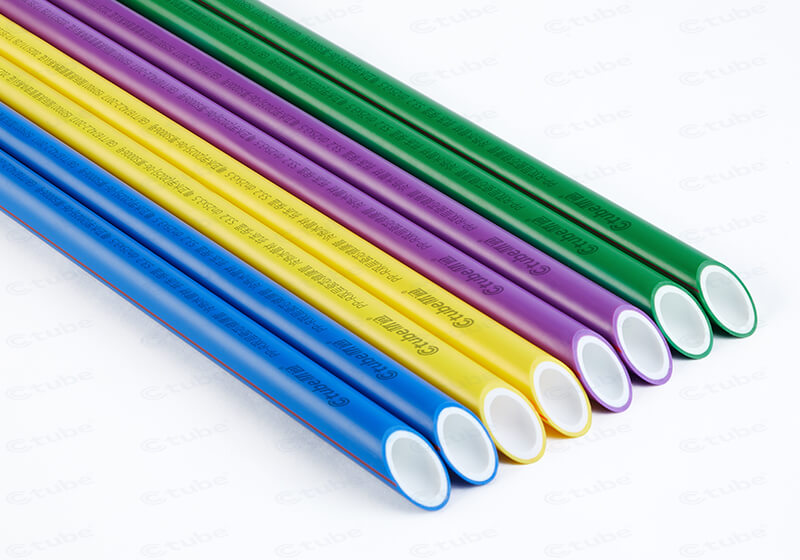
Baja rugosidad superficial: la ciencia de la fricción
El PPR es conocido por su superficie interna excepcionalmente lisa, a menudo caracterizada por un coeficiente de rugosidad superficial muy bajo, normalmente alrededor de 0,007 mm (solo como referencia).
En ingeniería hidráulica, el factor C de Hazen-Williams para PPR es excepcionalmente alto (generalmente alrededor de 150). Esta baja rugosidad absoluta implica una fricción mínima entre el agua y la pared de la tubería. Como resultado, se produce una caída de presión significativamente menor en todo el sistema, lo que permite que las bombas funcionen con mayor eficiencia y requieran menos energía para mantener el caudal.
Antiincrustante y resistencia a las biopelículas
La superficie lisa y no polar del PPR no solo reduce la fricción; también actúa como una barrera de alta tecnología contra la contaminación.
Debido a la baja energía superficial y la mínima rugosidad, los iones de calcio y magnesio (cal) no pueden encontrar puntos de anclaje para precipitarse en las paredes de la tubería. Además, esta ausencia de grietas microscópicas previene la formación de biopelículas, las capas viscosas donde proliferan bacterias como la Legionella.
Resistencia a la corrosión
A diferencia del cobre o el acero galvanizado, el PPR es un polímero inerte, lo que significa que no reacciona con el agua ni con los productos químicos de construcción comunes.
Global Compliance and Hydrostatic Certification Matrix
A scientifically superior piping system must validate its performance through independent, unyielding international laboratory testing. When auditing an extrusion factory, their standard operating procedures (SOP) must align with these three benchmark certifications:
PPR Pipe Three Common Standard Table
| Certification / Standard | Regulatory Jurisdiction | Technical Testing Focus | Critical B2B Project Impact |
| DIN 8077 / 8078 | Germany / Global | Long-Term Hydrostatic Strength & Dimensional Tolerances | Guarantees the polymer can withstand a continuous 50-year structural lifespan under stress. |
| NSF/ANSI 14 & 61 | North America / International | Toxicological Extraction & Material Purity | Certified 100% lead-free and non-toxic; zero chemical leaching into potable water. |
| WRAS | United Kingdom / Commonwealth | Organoleptic and Microbiological Material Testing | Confirms the inner walls will not promote biofilm, bacterial, or microbial growth. |
5. La ciencia de la fusión térmica: creación de un sistema monolítico
El punto de falla más común en cualquier sistema de plomería es la unión. Sin embargo, el PPR convierte esta debilidad en una fortaleza mediante un proceso llamado fusión térmica.
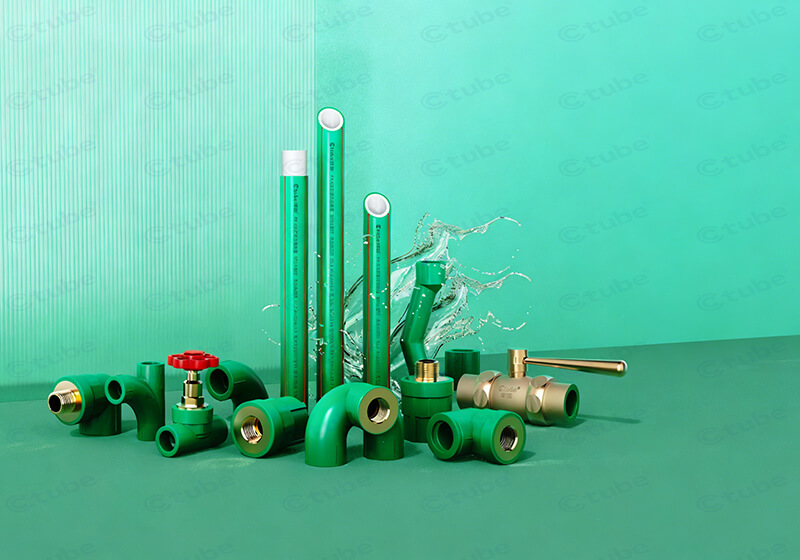
Entrelazamiento molecular
A diferencia del PVC, que utiliza pegamentos químicos, o del cobre, que depende de la soldadura mecánica, las uniones de PPR se crean fundiendo la tubería y encajándola.
Al calentarse a la temperatura de fusión (normalmente 260 °C), la estructura semicristalina del PPR se ablanda hasta fundirse. Al unir la tubería y el accesorio, las cadenas aleatorias de polímero de ambas partes se desplazan por la interfaz, creando un entrelazamiento molecular interfacial. Al enfriarse, la unión se recristaliza en una sola pieza continua de material.
Por qué la unión es más fuerte que la tubería
Uno de los aspectos más notables de una unión de fusión PPR adecuada es que el área de la unión se convierte en la parte más fuerte de todo el sistema.
Debido a que la zona de fusión tiene un espesor de pared ligeramente mayor y las cadenas moleculares se han “rebloqueado” a través de una recristalización controlada, la unión a menudo exhibe una resistencia a la presión de ruptura mayor que la tubería misma.
La integridad “sin fugas”
A largo plazo, esta estructura “monolítica” es la razón por la que los sistemas PPR pueden durar fácilmente más de 50 años enterrados dentro de paredes o pisos.
6. Brand Substitution: Premium Chinese Extrusion vs. European Legacy Brands
For decades, overseas procurement managers defaulted to ultra-expensive European legacy brands (such as Aquatherm) to guarantee project safety, assuming Chinese imports inherently carried a higher failure risk.
From a material science perspective, this premium gap has closed. The fundamental quality of a PPR pipe is determined by its molecular stability—specifically its Oxidative Induction Time (OIT). When a Chinese factory utilizes identical European-grade 100% virgin resin (such as Borealis or Sabic) and maintains strict continuous ultrasonic wall-thickness tracking on the line, the resulting extrusion matches the structural integrity of European brands at a fraction of the corporate marketing markup.
By shifting from an elite legacy brand to an agile, high-precision Chinese manufacturer that strictly respects international specifications, B2B importers can reduce material procurement costs by 40% to 60% without sacrificing a single PSI of pressure rating or violating local building codes.
7. Wholesale Pricing Drivers: Demystifying the Chinese Cost Structure
When evaluating volume quotes from China, a suspiciously low price is always a red flag. To understand where hidden compromises occur, bulk buyers must understand the three core cost pillars that drive genuine PPR manufacturing pricing:
-
Pillar 1: Resin Purity Index: 100% virgin polymer is a globally traded commodity with a stable baseline price. Suppliers offering prices significantly below the market average are universally blending 20% to 40% recycled regrind plastics into the extrusion, causing the pipe to become brittle and prone to catastrophic cracking under water hammer shocks.
-
Pillar 2: SDR Wall Thickness Deviations: A common margin-cutting tactic involves quoting for a Heavy-Duty SDR 6 (PN20) wall thickness but recalibrating the extrusion line to run at an SDR 7.4 (PN16) dimension. This missing 15% of material weight directly hollows out the pipe’s long-term temperature resistance.
-
Pillar 3: The Brass Component Grade: Threaded metal-to-plastic transition fittings require premium, heavy-gauge CW617N or DZR (Dezincification Resistant) brass. Cheap quotes substitute this with recycled scrap brass, which suffers from zinc leaching and cracks under standard mechanical tightening torque.
👉Want the latest wholesale prices? Contact the Ctube sales team for the latest 2026 price list!
8. The PPR Color Myth: Why Green Doesn’t Equal Eco-Friendly
One of the most persistent misconceptions among sourcing teams is that green or white PPR pipes are inherently superior or cleaner than grey ones. This is pure marketing fiction.
Raw, unadulterated Polypropylene Random Copolymer is naturally translucent or milky white. The final color of the pipe is determined entirely by a 2% color masterbatch additive injected during extrusion. Green, grey, white, or blue pipes can possess identical mechanical characteristics.
The real technical question to ask your factory isn’t what color the pipe is, but is the masterbatch certified food-grade and 100% opaque? If the pipe wall allows light penetration, UV rays will interact with the water, creating a breeding ground for severe algae growth inside the pipeline network within months.
9. Sustainability and Total Cost of Ownership (TCO)
En la construcción moderna, el enfoque se ha desplazado del "costo inicial más bajo" al "máximo valor a largo plazo". El PPR destaca en esta categoría, ofreciendo una excelente relación calidad-precio tanto para el medio ambiente como para el bolsillo.
Al evaluar un sistema de tuberías, los profesionales consideran el costo total de propiedad (TCO), que incluye la compra inicial, la mano de obra de instalación, el mantenimiento y los posibles costos de fallas.
El PPR está diseñado para una vida útil de al menos 50 años en condiciones de funcionamiento estándar (70 °C, 10 bar). Su resistencia a la incrustación, la corrosión y la degradación química significa que el...
El gasto operativo (OPEX) es prácticamente nulo. Por el contrario, los sistemas metálicos suelen requerir costosos tratamientos químicos o una sustitución prematura debido a la corrosión.
Es importante tener en cuenta que, si bien el PPR está diseñado para durar, su vida útil específica puede variar según el grado del material del producto y la calidad de la instalación profesional.
A diferencia del PVC, el PPR no contiene cloro ni estabilizadores de metales pesados (como el plomo), que pueden filtrarse al agua o liberar humos tóxicos durante un incendio. Además, el PPR es reciclable según la norma 100%. Al final de su larga vida útil, puede triturarse y reutilizarse en otros productos plásticos, promoviendo así la economía circular.
10. The 1-Minute RFQ Audit Checklist for Serious PPR Buyers
Before authorizing a wire transfer for a bulk container load, issue these four technical questions directly to your supplier’s engineering team. If they fail to provide immediate, documented proof, reconsider your partner:
-
“Can you provide a 3rd-party laboratory OIT report at 200°C exceeding 30 minutes for this batch?” (Verifies 100% virgin resin material status)
-
“What is the exact metallurgical grade of the brass inserts inside your threaded fittings?” (Ensures DZR / CW617N compliance against heavy metal leaching)
-
“Do you employ continuous, real-time ultrasonic diameter and wall-thickness monitoring on the live extrusion lines?” (Guarantees zero blind spots or structural deviation across the entire run)
-
“Can you provide a verified light-transmission test certificate proving complete pipeline opacity?” (Guarantees prevention of internal biological/algae fouling)
11. Partnering with Ctube: The Agile Solution for High-Spec Infrastructure
En Tubo C, we don’t expect our partners to rely on blind trust—we welcome rigid technical scrutiny. Built specifically to service international MEP contractors, engineering developers, and high-volume B2B distributors, we bridge the gap between volatile low-tier markets and rigid, overpriced legacy brands.
Our Manufacturing Mandate:
-
Zero-Compromise Purity: Every PPR piping system we export is crafted from 100% virgin Type 3 copolymer. Every batch undergoes rigorous internal OIT evaluation and standard dimension ratio validation.
-
Certified Global Readiness: Our factory production lines run in absolute alignment with DIN 8077/8078, NSF, and WRAS requirements, ensuring seamless local municipal inspection approvals for your projects.
-
Advanced Multi-Layer Capabilities: We specialize in advanced co-extrusion engineering, including customized antimicrobial linings and glass-fiber reinforced (FR-PPR) three-layer systems for complex HVAC installations.
-
Agile B2B Customization & Logistics: We offer flexible OEM branding, custom length slicing, and intelligent mixed-container nesting (pipes loaded with matching socket-fusion fittings and valves) to minimize your ocean freight overhead.
👉 Contact Our Technical Sourcing Team for a Product Catalog & Factory-Direct OEM Quote!
12. Conclusion
Los sistemas de tuberías son los componentes vitales de cualquier estructura. Invisibles y ocultos, son los guardianes silenciosos de su calidad de vida. Al elegir PPR, no solo compra un producto, sino que adopta un estilo de vida "instalar y olvidar".
Ctube eleva los estándares de la industria al combinar I+D avanzado con una amplia gama de tuberías PPR monocapa y multicapa. Nuestra avanzada tecnología antibacteriana está disponible en toda nuestra gama, garantizando la máxima higiene del agua y una protección a largo plazo contra el crecimiento bacteriano.
Ya sean sus requisitos estándar o altamente especializados, Ctube mantiene su compromiso con los más altos niveles de calidad y seguridad. Contáctenos para descubrir cómo nuestros últimos desarrollos en PPR pueden beneficiar su infraestructura.

13. FAQs
¿Cómo se comporta el PPR a temperaturas bajo cero? ¿Se agrieta cuando el agua se congela?
El PPR tiene mayor elasticidad que las tuberías metálicas, lo que significa que puede expandirse ligeramente si el agua se congela en su interior. Sin embargo, como la mayoría de los materiales, se vuelve más frágil en condiciones de frío extremo (por debajo de 0 °C). En regiones con climas gélidos, recomendamos aislar las tuberías para evitar la congelación del agua. Si el sistema no se utiliza durante el invierno, debe drenarse para evitar la tensión estructural causada por la expansión del hielo.
¿Existe riesgo de que el agua potable adquiera un "sabor a plástico" o de que se filtren sustancias químicas?
No. El PPR es un material no polar e inerte químicamente. A diferencia de otros plásticos, no requiere adhesivos químicos ni disolventes (que contienen COV) para su unión, ni contiene estabilizadores de metales pesados como el plomo. Está ampliamente certificado para su uso en agua potable a nivel mundial, lo que garantiza que el agua en el grifo se mantenga tan pura como en la fuente.
¿Se pueden reciclar las tuberías de PPR al final de su vida útil?
Sí, el PPR es un termoplástico, lo que significa que puede fundirse y moldearse varias veces sin degradar significativamente sus propiedades químicas. Esto lo convierte en un material reciclable 100%. A diferencia de los plásticos termoestables o las tuberías compuestas con capas pegadas, el PPR puro puede granularse y reutilizarse en la producción de diversos productos plásticos, lo que contribuye a una menor huella de carbono y a una economía circular.
¿Es el PPR resistente a los efectos del "golpe de ariete"?
Sí, el PPR soporta mucho mejor el golpe de ariete que las tuberías metálicas. El golpe de ariete se produce cuando una válvula se cierra repentinamente, generando una onda de choque en el fluido. Debido a que el PPR tiene un módulo de elasticidad menor que el cobre o el acero, las paredes de la tubería pueden deformarse ligeramente para absorber la energía cinética del aumento repentino de presión. Esta amortiguación natural reduce la tensión en las juntas y minimiza el ruido de golpeteo en las paredes.
What is the exact meaning of PPR pipe in modern commercial construction?
PPR stands for Polypropylene Random Copolymer (Type 3). In commercial engineering, it defines a highly reliable thermoplastic pressure piping system joined via homogenous thermal socket fusion, optimized for hot and cold potable water distribution and industrial fluid routing.
Is a high-quality PPR pipe truly 100% corrosion-free over its entire lifespan?
Yes. Unlike traditional copper or galvanized iron lines, pure PPR is completely non-polar. It cannot react chemically with dissolved minerals, chlorine, acids, or alkalis, making it completely immune to rust, scale build-up, and chemical pitting.
What is the continuous temperature and pressure threshold for high-tier PPR systems?
Premium PPR systems are designed to operate continuously at 70°C (158°F) under standard working pressures for 50 years. They are engineered to safely absorb short-term thermal spikes up to 95°C (203°F) without experiencing structural or joints deformation.
Can PPR pipes be used for chilled water air conditioning loops without sweating?
Yes. PPR possesses an exceptionally low thermal conductivity (0.24 W/mK). This inherent insulation effect drastically slows down heat transfer, mitigating exterior surface condensation (sweating) and making it far more energy-efficient than uninsulated metal pipes in HVAC designs.
How do I know if my pipeline layout requires 3-layer fiberglass FR-PPR instead of standard 1-layer PPR?
Standard 1-layer PPR is perfect for buried networks or short indoor plumbing runs. However, for long, vertically exposed riser mains or high-temperature HVAC loops, you should specify 3-layer glass fiber reinforced PPR (FR-PPR). Its integrated center core reduces linear thermal expansion by 75%, preventing pipe sagging and eliminating the need for expensive expansion loops.
What is Ctube’s Minimum Order Quantity (MOQ) for custom-branded or custom-color PPR orders?
Ctube proudly supports agile B2B procurement with highly flexible MOQ structures compared to traditional mega-conglomerates. We evaluate MOQs based on total container volume and facilitate mixed-loading patterns—allowing you to bundle diverse SDR ratings and fitting packages into a single shipment.
What is the typical factory production lead time and delivery cycle for custom Ctube OEM orders?
Our standard manufacturing lead time is 15 to 25 days from formal order confirmation to port loading, depending on the complexity of your custom requirements (such as multi-layer co-extrusion profiles or custom inkjet branding specs). We maintain transparent pipeline tracking to ensure your infrastructure timeline stays on schedule.



 English
  French
  Spanish
  German
  Arabic
  Indonesian
  Vietnamese