
1. Introduction
The main difference between PE-RT and PEX pipe is their molecular structure and joining methods. While PEX is cross-linked and requires expensive mechanical fittings, PE-RT features a unique thermoplastic structure that allows for seamless thermal fusion welding, offering 100% recyclability and significant cost savings for contractors.
In the world of modern fluid distribution and radiant heating, the presence of both PEX (Cross-linked Polyethylene) and PE-RT (Polyethylene of Raised Temperature Resistance) is not about one being “better” than the other, but rather a reflection of the diverse needs of the construction industry.
When evaluating these two materials, it becomes clear that they often occupy similar spaces in technical catalogs and frequently meet the same ASTM or ISO certifications. This overlap commonly leads to a hesitation during the procurement process: “If both pipes are rated for the same pressure and temperature, why does the industry offer two different chemical compositions?” This question is a natural part of professional due diligence, as the choice between them often determines the installation logic, material cost control, and long-term system maintenance strategy of a project.
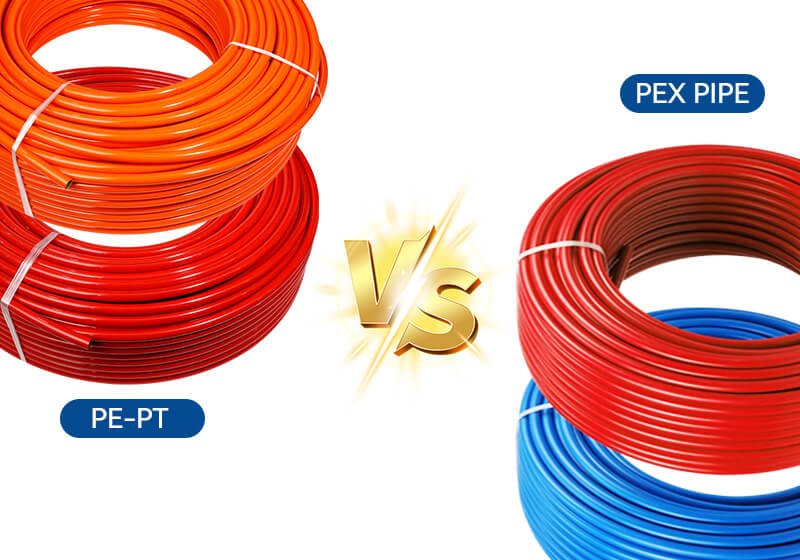
The reality is that PEX and PE-RT were engineered to solve different sets of challenges. PEX, with its long-standing history of chemical cross-linking, was developed to provide a rugged, thermoset solution that excels in high-stress, high-temperature environments. On the other hand, PE-RT represents an evolution in polymer design, utilizing advanced molecular branching to achieve heat resistance while maintaining the thermoplastic properties that allow for easier recycling and different joining methods.
Neither material is a universal replacement for the other; instead, they exist as two distinct tools in a professional’s toolkit, each with its own set of trade-offs. When deciding between these two options, professionals often consider whether the thermal memory and time-tested resilience of PEX better suit a high-temperature radiator system, or whether the superior flexibility and fusion-bonding capabilities of PE-RT provide a more efficient solution for an expansive underfloor heating grid.
Whether you are a procurement manager optimizing costs, a contractor overseeing site efficiency, or a homeowner evaluating your infrastructure, this guide may be helpful. By objectively analyzing the key differences that define their roles, we can make a strategic selection based on technical compatibility and long-term project value.
2. The Structural Identity: Cross-linking vs. Molecular Engineering
At the heart of the PEX vs. PE-RT debate lies a fundamental difference in how these materials are born. To understand how they will perform after being buried in a concrete slab for thirty years, you have to look at their molecular architecture.
PEX (Cross-linked Polyethylene) is classified as a “thermoset” material. During the manufacturing process, the polyethylene chains are bonded together through chemical or physical “cross-linking.”
Think of this as creating a permanent, three-dimensional net that locks the molecules in place. Because these chains are chemically tethered to one another, the material gains exceptional stability.
It resists “creep”—the slow deformation of plastic under constant pressure—making it a reliable workhorse for high-temperature plumbing and radiator connections where thermal stress is a constant factor.
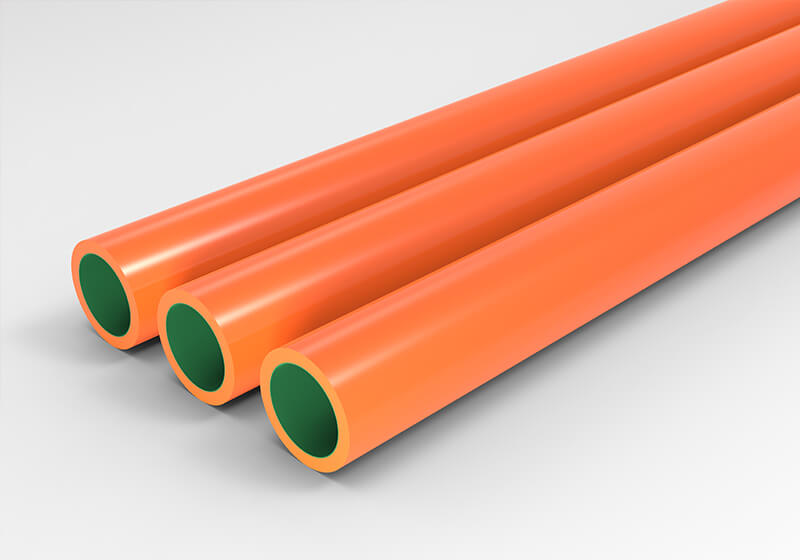
PE-RT (Polyethylene of Raised Temperature resistance) takes a different approach. It is a “thermoplastic” material, meaning it does not rely on post-production cross-linking to achieve its strength. Instead, scientists engineered the polymer’s backbone using specific “side-chain branching” (often utilizing octene).
Imagine these as microscopic anchors that entangle and stabilize the material naturally. Because this structure is inherent to the resin itself, PE-RT remains a thermoplastic throughout its life.
The distinction here isn’t about strength, but about “personality.” PEX offers the rigid stability of a locked net, which is ideal for systems exposed to extreme thermal spikes. PE-RT offers a high-tech, engineered resin that provides consistency and excellent heat resistance without the need for complex cross-linking chemical processes, which is why it has become a favorite in modern, sustainable construction projects.
3. Quick Summary: PE-RT vs PEX Pipe Comparison Matrix
For contractors and purchasing managers, here is a quick breakdown of the core operational differences:
PE-RT vs PEX Pipe Comparison Table
| Feature / Specification | PEX (Cross-linked Polyethylene) | PE-RT (Polyethylene of Raised Temperature) | B2B Impact (Which is better?) |
| Joining Method | Mechanical Fittings (Brass/Poly) | Thermal Fusion & Mechanical | PE-RT (Fusion eliminates fitting costs & leaks) |
| Low-Temp Flexibility | Stiff in cold conditions | Highly flexible down to -50°C | PE-RT (Saves 20% labor time in winter) |
| Recyclability | 0% (Thermoset, goes to landfill) | 100% Recyclable (Thermoplastic) | PE-RT (Earns LEED points, zero disposal fees) |
| Chlorine Resistance | Excellent (ASTM F2023) | Excellent (ASTM F2769 / ISO 22391) | Tie (Both meet strict potable water standards) |
| Material Structure | Cross-linked (Chemical process) | Unique molecular side chains | PE-RT (Easier to extrude and stabilize) |
4. Difference 1: Thermal Memory and Site Repairability
One of the most immediate practical differences you will encounter on a construction site is how these pipes react when things go wrong—specifically, when a pipe gets “kinked” during installation.
Cost-Impact Data: According to plumbing industry estimates, in a standard PEX commercial installation, mechanical fittings (brass or poly-alloy) and crimp rings can account for 30% to 40% of the total material cost. Furthermore, mechanical joints are the #1 source of system leaks. PE-RT eliminates this financial burden. Because it is a true thermoplastic, it allows for thermal fusion welding, creating a seamless, homogeneous joint. This reduces fitting material costs to near zero and completely eliminates the risk of mechanical joint failure.
PEX (particularly PEX-a) is famous in the industry for its “thermal memory.” Because of that 3D cross-linked net we mentioned earlier, the material acts like a spring. If an installer accidentally bends the pipe too sharply and causes a kink, the material isn’t permanently damaged.
By applying heat with a specialized heat gun, the molecules return to their original, stress-free configuration, and the kink vanishes. For many contractors, this is a massive insurance policy against installation accidents, especially in tight or complex spaces.

PE-RT, as a thermoplastic, does not possess this same degree of “thermal memory.” If a PE-RT pipe is kinked, the molecular chains have been permanently bent and stressed. You cannot simply “heat it out.” While this might sound like a disadvantage, many experienced installers view it differently: it encourages a higher standard of care during the layout phase. Furthermore, because PE-RT is generally more flexible than PEX, it is often less prone to kinking in the first place, especially when unrolling the tubing in cold weather.
If the project involves a high degree of complexity with many tight bends and less experienced labor, the “forgiving” nature of PEX might reduce your risk of wasted material.
However, if team follows strict installation protocols, the flexibility of PE-RT often allows for faster, smoother runs, ultimately saving on labor time.
5. Difference 2: Connection Methodologies – Fusion vs. Mechanical Fittings
Perhaps the most technical, yet economically significant, difference between PE-RT and PEX lies in how they are joined. In any plumbing or radiant heating system, connections are the most common failure points.
The method used to bridge two pipes determines not only the long-term reliability of the system but also the labor costs and specialized tool requirements for your installation crew.
Because PE-RT is a thermoplastic material, it supports heat fusion (specifically socket fusion or butt fusion). This process essentially melts the end of the pipe and the fitting together, creating a “monolithic” or single-piece connection.
Once the material cools, the joint becomes as strong as—or stronger than—the pipe itself. There are no rubber o-rings to degrade over time and no mechanical seals to loosen due to thermal expansion and contraction.
For underground or in-slab installations, this provides an unparalleled level of long-term security. The pipe literally becomes one continuous line, minimizing the risk of leaks hidden deep within concrete or behind walls.
PEX, due to its cross-linked structure, cannot be melted or fused. Consequently, PEX systems rely entirely on mechanical fittings. Whether you use crimp rings, cinch clamps, or the popular expansion (ProPEX) method, every connection involves inserting a fitting (typically brass or engineered plastic) into the pipe. The seal is then maintained by the pressure of the fitting against the inner wall of the pipe.
While modern PEX fitting systems are highly reliable and have been the industry standard for decades, they fundamentally rely on the integrity of the connection hardware. If the installation is done incorrectly, or if the fitting quality is subpar, the potential for a slow, undetected leak over many years remains a factor in the system’s lifecycle.
From a procurement standpoint, this is where the math about Cost and Labor Trade-offs.
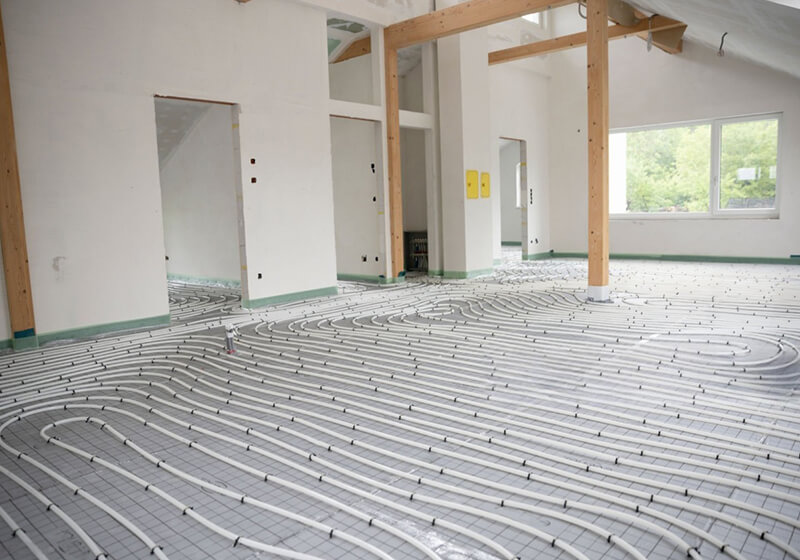
PE-RT and Fusion: While heat fusion requires specialized welding tools and a skilled operator to ensure the fusion temperature is correct, it significantly reduces the need for expensive brass or PPSU (polyphenylsulfone) fittings. In a large-scale project, the cost savings of eliminating hundreds of high-priced mechanical fittings can be substantial.
PEX systems are often favored for their speed and ease of installation. Mechanical connections can be made quickly, often with manual or battery-powered tools that require less training than a fusion machine. However, the recurring cost of purchasing high-quality fittings for every junction adds a “hidden” expense to your materials list that must be factored into your total project budget.
If your priority is a permanent, seamless system that eliminates the risk of joint failure, PE-RT’s fusion capabilities are a distinct engineering advantage. If your priority is rapid deployment and you prefer a system that uses universally recognized, standardized mechanical connection hardware, PEX remains the proven, straightforward choice.
6. Difference 3: Chemical Resistance and Chlorine Tolerance
Understanding Water Chemistry in Radiant Heating Systems
Before comparing the chemical resistance of PEX and PE-RT, it is helpful to understand how radiant floor heating systems actually work.
Unlike domestic plumbing systems that constantly deliver fresh water, radiant floor heating operates as a closed-loop hydronic system. In this type of system, water—or sometimes a water-glycol mixture—circulates continuously through a network of pipes installed beneath the floor. The heated fluid transfers thermal energy to the floor surface, which then radiates warmth evenly throughout the room.
Because the system is closed, the same water typically remains inside the pipes for long periods rather than being frequently replaced. However, the initial filling water may still contain dissolved oxygen, minerals, or residual disinfectants depending on the local water supply. In addition, systems may occasionally be refilled during maintenance or servicing.

For this reason, the long-term chemical stability of the pipe material still matters, even in hydronic heating systems.
Water Quality and Oxidative Stress
Water quality varies significantly depending on geographic location and local treatment processes. Modern municipal water supplies are typically treated with disinfectants—most commonly chlorine or chloramine—to ensure safety. However, these chemicals can act as oxidants, which may degrade polymer pipes over time.
To understand why water chemistry matters, think of oxidation as the “rusting” process for plastic. Chlorine and chloramine, while essential for water safety, contain free radicals that are chemically reactive.
When these disinfectants come into contact with the inner wall of a pipe, they seek stability by “stealing” electrons from the polymer chains—the long, sturdy carbon-hydrogen molecules that form the structure of the pipe.
Over time, this continuous chemical attack weakens the material. The molecular chains begin to break down, the plastic gradually becomes brittle, and micro-cracks may eventually form. This process is known as oxidative degradation.
The vulnerability of any polymer pipe to this process is measured by its Oxidation Induction Time (OIT).
Both PEX and PE-RT manufacturers enhance the natural resistance of their resins by adding stabilizer packages (antioxidants) during production. These stabilizers act as a sacrificial shield, neutralizing the oxidative effects of chlorine and chloramine before they can damage the structural polymer chains of the pipe.
In essence, the stabilizers absorb the chemical attack first, helping to preserve the integrity and long-term performance of the pipe material.
PEX and Chemical Stability
PEX has been extensively tested against aggressive chlorinated water conditions for decades. Because PEX is a cross-linked material, its molecular structure is inherently robust.
When paired with advanced antioxidant stabilizer packages, high-quality PEX pipe—particularly PEX-a and PEX-b—demonstrates excellent resistance to the harsh chemicals found in treated tap water.
For projects where water chemistry is known to be particularly aggressive, PEX is often viewed as a proven solution, supported by a large body of long-term testing data and field experience.
PE-RT and Modern Formulation
PE-RT is also engineered for high-performance plumbing and heating systems. While it lacks the chemical cross-linking found in PEX, its controlled molecular branching structure provides excellent resistance to oxidative stress.
Modern PE-RT formulations are specifically designed to meet stringent chemical resistance standards comparable to those applied to PEX materials. Many current PE-RT products are tested to ensure they do not degrade prematurely when exposed to chlorine-treated water.
As a result, PE-RT pipes are widely considered suitable for both potable water distribution and hydronic radiant heating applications.
For procurement professionals and project engineers, the most important takeaway is not to choose based on “PEX vs. PE-RT” alone, but rather on certification compliance and product quality.
Regardless of the material, always verify that the product meets the relevant industry standards and certifications—such as NSF/ANSI 61 or ASTM F2023—which evaluate long-term resistance to oxidative environments.
If a project is located in a region with particularly aggressive water treatment or unusual pH levels, it is advisable to request the manufacturer’s technical data regarding OIT performance and chlorine resistance testing.
7. Difference 4: Low-Temperature Flexibility and Ease of Installation
Construction schedules don’t always align with perfect weather. In many regions, installers are frequently tasked with laying radiant heating grids or plumbing lines in sub-zero or near-freezing temperatures. In these harsh environments, the physical handling of the tubing becomes a major factor in site productivity and overall labor costs.
Installation Efficiency: PEX piping becomes noticeably rigid in freezing temperatures, often requiring contractors to use heat guns to bend the pipe, slowing down the project. PE-RT retains exceptional flexibility even at temperatures as low as -50°C (-58°F). Site data suggests this superior flexibility can reduce installation labor time by up to 20% during winter construction, a significant margin-booster for MEP contractors.
At lower temperatures, most thermoplastic and thermoset materials undergo a “stiffening” effect. As the temperature drops, the polymer chains lose some of their mobility, causing the pipe to become rigid and harder to bend. This is a common phenomenon in plastic engineering, and how a material performs in this “cold-state” is a defining characteristic of its usability on an active job site.
PEX is a rugged, reliable material, but its molecular cross-linked structure gives it a certain degree of inherent stiffness. When the ambient temperature is low, PEX tubing tends to become notably rigid. Installers often find that “uncoiling” PEX in the cold requires more effort, as the pipe retains a strong “coil memory” and acts like a spring. This means the pipe is more prone to “spring-back”—where it wants to pop out of floor clips or track systems—requiring more fastening or manual labor to hold the tubing in place during the layout phase.
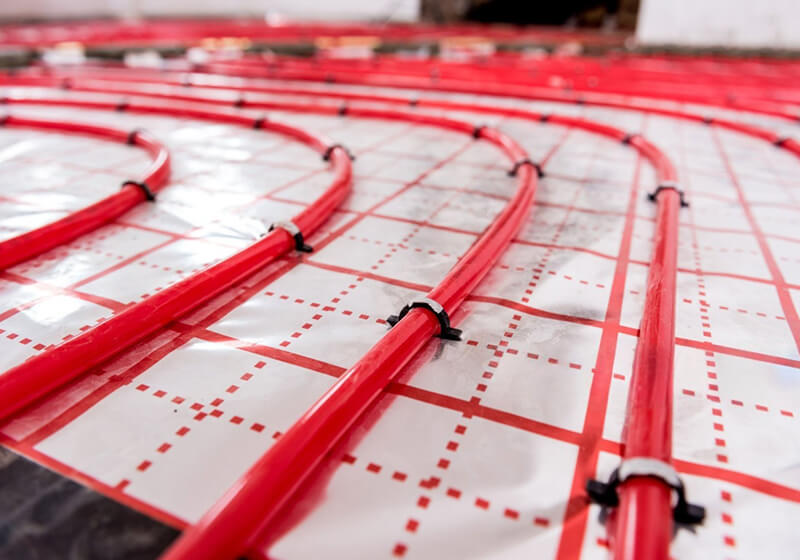
PE-RT is frequently cited by field crews for its superior flexibility in cold-weather conditions. Because of its molecular design, PE-RT tends to remain more “limber” and pliable even when the mercury drops. It “drapes” naturally into installation tracks or onto mesh grids without putting up as much resistance as a cross-linked material. For a crew working on a tight deadline, this means less time wrestling with the tubing, fewer clips required to keep it in place, and a significantly smoother, faster installation process.
When procurement managers look at a quote, they often focus on the material price. However, in cold-weather markets, labor efficiency is the real bottom line.
If your project is located in a cold climate: Choosing a material that is easier to handle can shave days off your installation timeline, directly reducing labor costs.
If your project is largely vertical or requires tight routing: The stiffness of PEX in the cold might require more mechanical fastening, whereas the flexibility of PE-RT might allow for longer, uninterrupted runs.
8. Difference 5: Environmental Impact and Sustainability
As global attention to green building standards continues to grow, the sustainability profile of construction materials has become an increasingly important factor in procurement decisions.
The Hidden Cost of Non-Recyclability: Because PEX is a cross-linked thermoset plastic, it cannot be melted down. At the end of its lifecycle (or as construction scrap), 100% of PEX goes to landfills. For large-scale developers aiming for LEED certification or green building standards, this is a liability. PE-RT is a thermoplastic and is 100% recyclable. Using PE-RT not only reduces commercial landfill tipping fees (which are rising globally) but also aligns with strict ESG (Environmental, Social, and Governance) goals for modern construction.
For many developers and project managers, evaluating the environmental lifecycle of piping systems is no longer optional but an integral part of responsible building design.
In this regard, PEX and PE-RT demonstrate distinctly different sustainability characteristics, largely due to their fundamental material structures.
PEX (cross-linked polyethylene) is classified as a thermoset material. During the cross-linking process, the polymer chains form a stable three-dimensional network that significantly improves mechanical strength, temperature resistance, and long-term durability. However, this same structural stability also creates challenges when it comes to recycling.
Once PEX is cross-linked, the material cannot simply be melted down and remolded into new pipe products. From a sustainability perspective, this means that traditional recycling methods are limited. In most cases, post-consumer PEX waste is mechanically processed and downcycled—for example, ground into particles and used as filler material in other industrial products rather than being remanufactured into new piping systems.
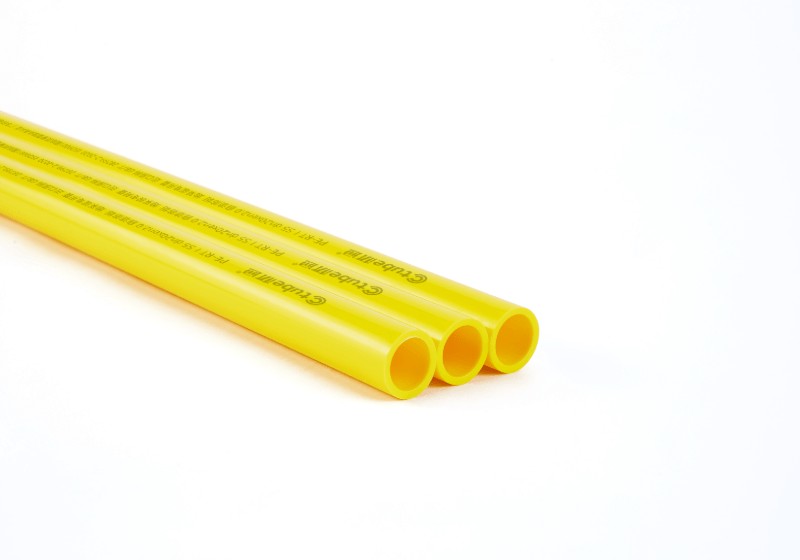
PE-RT (Polyethylene of Raised Temperature Resistance), by contrast, is a thermoplastic material, which gives it a structural advantage in terms of recyclability.
Because PE-RT does not undergo chemical cross-linking, the material can be reheated, softened, and reprocessed. In manufacturing environments, production scrap and recovered PE-RT materials can be collected, melted, and pelletized for reuse in new products. This ability aligns closely with the circular economy model, where materials are continuously reused rather than discarded after a single lifecycle.
PEX contributes to sustainability through its long operational lifespan, reducing the need for replacement and minimizing lifecycle material consumption. PE-RT, on the other hand, supports sustainability through greater recyclability and compatibility with circular manufacturing practices.
Ultimately, the decision depends on the sustainability priorities of the project—whether the goal is to maximize long-term durability and minimal maintenance, or to emphasize material recyclability and circular resource use.
9. Strategic Sourcing: How to Choose a Reliable PE-RT Supplier
For B2B buyers, distributors, and contractors, choosing the right material is only half the battle. Selecting a reliable manufacturing partner dictates your supply chain stability and project profitability. Here are critical tips to avoid common procurement traps:
9.1 Verify the Raw Material Source (The #1 Pitfall):
The performance of PE-RT heavily relies on the quality of the resin. Unreliable suppliers may mix recycled plastics. Always ask your manufacturer for Material Test Certificates (MTC) proving they use top-tier virgin resins, such as Dowlex™ (Dow Chemical) or SK DX800.
9.2 Look for Strict Standard Compliance:
Ensure the factory’s PE-RT pipes strictly conform to ISO 22391 or ASTM F2769. If they lack these core certifications, their pipes may fail under long-term hydrostatic pressure.
9.3 Assess OEM & Extrusion Capabilities:
If you are a wholesaler requiring custom branding or specific coil lengths, check the supplier’s extrusion line capacity. A true manufacturer will offer agile OEM services without demanding unreasonable MOQs (Minimum Order Quantities).
9.4 Demand Complete Systems, Not Just Pipes:
A reliable supplier should manufacture both the pipes and the corresponding thermal fusion fittings. Sourcing pipes and fittings from different factories can lead to dimensional mismatches and fusion failures.
9.5 Looking for a Direct Factory Partner?
As a dedicated manufacturer with rigorous international standards, we provide high-performance PE-RT piping systems engineered for commercial durability and wholesale efficiency. Contact our technical sales team for pricing and OEM inquiries!
10. Conclusion
Choosing between PEX and PE-RT is not about declaring a clear winner; it is about identifying the material that best fits the operational realities of your project.
Throughout this guide, we have explored the key differences between these two piping systems—from molecular structure and thermal memory to connection methods and chemical resistance. Both materials have proven themselves in modern plumbing and radiant heating systems, and when properly specified and installed, each can deliver long-term reliability and performance.
The real distinction lies in how each material responds to different engineering priorities. PEX provides a well-established, cross-linked structure that offers exceptional stability under demanding thermal conditions, while PE-RT represents an advanced thermoplastic solution that emphasizes flexibility, recyclability, and simplified installation.
Ultimately, the decision should be guided not by brand familiarity or industry habits, but by the specific technical and environmental conditions of your project. Factors such as installation practices, system design, water chemistry, and long-term performance expectations should all play a role in selecting the right piping solution. No single material can address every challenge, but selecting the appropriate one ensures that your system will operate safely, efficiently, and reliably for years to come.
When evaluating products for procurement, it is also important to confirm that they meet the relevant standards and certifications required in your region. In addition, consider the experience level of your installation team and the environmental conditions of the installation site, including ambient temperature and water quality, as these factors can influence the long-term durability of the piping system.
Thank you for reading. We hope this guide has provided helpful insights into the differences between PEX and PE-RT and supports you in making informed decisions for your projects.
Ctube offers high-quality PE-RT pipes—feel free to contact us for more information.
11. FAQs
Can PEX and PE-RT pipes be used in the same project?
Yes. Many professionals use PEX for high-temperature radiator connections and PE-RT for large-area underfloor heating loops to leverage the specific strengths of each material within a single infrastructure.
Is PE-RT just a cheaper, lower-quality version of PEX?
No. PE-RT is a highly engineered "thermoplastic" that achieves heat resistance through molecular branching rather than chemical cross-linking. It is a high-performance material often preferred for its recyclability and fusion capabilities.
Which pipe is better for DIY or small-scale residential repairs?
PEX is often preferred for small repairs because it utilizes standardized mechanical fittings (crimp or expansion) that are widely available and don't require the specialized heat-fusion equipment often used with PE-RT.
Does "thermal memory" really matter on a construction site?
It acts as a vital insurance policy. If a PEX-a pipe is kinked during a difficult install, it can be repaired with a heat gun. A kinked PE-RT pipe generally must be cut out and replaced with a coupling.
Can I use heat fusion to connect PEX pipes?
No. Due to its cross-linked molecular structure, PEX will not melt and bond. It must be joined using mechanical fittings. Attempting to fuse PEX will result in a joint failure.
Does the "Oxygen Barrier" (EVOH) apply to both PEX and PE-RT?
Yes. For hydronic heating systems, both PEX and PE-RT are available with an EVOH oxygen barrier layer to prevent oxygen from entering the system and causing corrosion in metal boiler components.
Which material handles freezing temperatures better during installation?
PE-RT is generally more flexible and easier to uncoil in cold weather. While both are durable once installed, PEX becomes significantly stiffer in low temperatures, which can slow down the layout process.
Can PE-RT handle high-pressure commercial loops as well as PEX-a?
Yes. PE-RT Type II meets ISO 22391 and provides the same 50-year life at 80°C, with the added safety of leak-proof fusion joints.
Can I use the same thermal fusion tools for PE-RT that I use for PPR?
Yes! This is a massive cost-saver. You can use standard socket fusion equipment, avoiding the expensive specialized tools required for PEX.
How does PE-RT compare in Total Project Cost (TCO)?
By eliminating mechanical fittings (30% of material budget) and reducing winter labor time by up to 20%, PE-RT offers a significantly lower TCO than PEX.
Is PE-RT safe for potable water?
Absolutely. It features a clean molecular structure without chemical cross-linking agents, meeting the strictest NSF/ANSI 61 and WRAS standards.
12. References & Industry Standards
-
ASTM F2769: Standard Specification for PE-RT Hot/Cold Distribution
-
Dow Chemical: DOWLEX™ 2344 Polyethylene Resin Data



 English
  French
  Spanish
  German
  Arabic
  Indonesian
  Vietnamese