
1. Introducción
In modern plumbing systems, selecting the right piping material is no longer a simple decision based on cost or availability. With increasing demands on durability, water quality, and energy efficiency, engineers, contractors, and developers must carefully evaluate how a material performs under real operating conditions.
Among the available options, PPR (Polypropylene Random Copolymer) pipes have become a widely adopted solution for both hot and cold water systems. Their resistance to corrosion, long service life, and stable performance under temperature variation make them particularly suitable for residential, commercial, and industrial applications.
However, choosing the right PPR pipe is not as straightforward as it may seem. Pipes that appear identical from the outside can differ significantly in pressure rating, wall thickness, material composition, and long-term performance. Selecting the wrong type—especially in hot water applications—can lead to premature failure, pressure loss, or costly system repairs.
To make informed decisions, it is essential to understand not only the product specifications, but also the underlying principles that govern PPR pipe performance. Factors such as temperature, pressure, installation quality, and environmental exposure all play a role in determining whether a system will meet its expected 50-year service life.
This guide is designed to provide a structured, engineering-oriented overview of how to choose PPR pipes for hot and cold water applications. It covers material properties, performance limits, selection criteria, installation best practices, and long-term maintenance considerations—helping professionals avoid common mistakes and optimize system reliability.
2. PPR Material Properties – Molecular Structure and Performance Advantages
To understand why PPR (Polypropylene Random Copolymer) is widely used in both hot and cold water systems, it is important to look beyond its appearance and examine its material structure.
The performance of any piping system is fundamentally determined by its material properties, and in the case of PPR, its molecular composition plays a decisive role in durability, safety, and long-term stability.
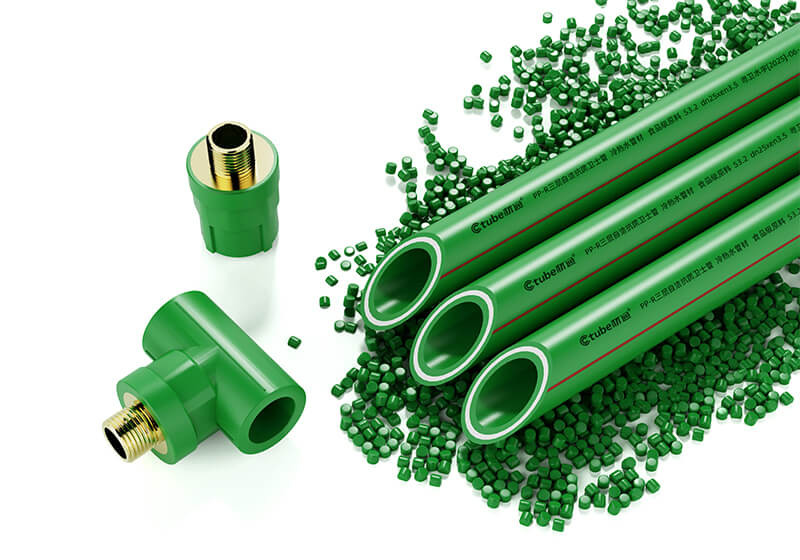
Molecular Structure of PPR and Its Engineering Significance
Polypropylene exists in several forms, including homopolymer (PP-H) and block copolymer (PP-B), each suited to different industrial applications. However, they are generally not ideal for long-term pressurized hot water systems.
PPR is produced through a process known as random copolymerization, in which a small percentage of ethylene—typically around 3% to 5% for pipe-grade materials—is incorporated into the polypropylene chain as a comonomer. This results in a more randomly distributed molecular structure compared to conventional polypropylene, contributing to improved flexibility and long-term performance under elevated temperature and pressure conditions. The ethylene content mentioned is for general reference only and may vary by manufacturer and grade; detailed specifications should be confirmed with the material supplier.
From an engineering perspective, this seemingly small structural difference leads to significant performance improvements. The modified structure enhances flexibility, making the material less brittle and easier to handle during installation, especially in lower temperatures. It also improves impact resistance, allowing the pipe to withstand mechanical stress during transportation and construction. More importantly, it contributes to long-term thermal stability, enabling the material to maintain its strength and shape under continuous exposure to hot water.
Thermal Conductivity and Energy Efficiency
One of the practical advantages of PPR pipes is their relatively low thermal conductivity, which is approximately 0.24 W/m·K. This value is significantly lower than that of traditional metal piping materials such as copper or galvanized steel.
In real-world applications, this property allows PPR to function as a natural insulator. In hot water systems, it helps reduce heat loss as water travels through the pipeline, improving overall energy efficiency. In cold water systems, it minimizes surface condensation, which can otherwise lead to moisture-related damage in surrounding building materials.
Hydraulic Performance and Internal Surface Characteristics
The internal surface condition of a pipe directly affects the hydraulic efficiency of a system. PPR pipes are characterized by a smooth internal bore, with an absolute roughness typically around 0.007 mm.
This smooth surface reduces friction as water flows through the pipe, which helps maintain stable pressure and can contribute to lower energy consumption in pumping systems. In addition, the material resists the buildup of mineral deposits. Unlike metal pipes, which may develop scale over time, PPR maintains its internal diameter throughout its service life, ensuring consistent flow performance.
Chemical Stability and Water Quality Protection
For potable water systems, material safety is a critical consideration. PPR is chemically inert under normal operating conditions, meaning it does not react with water or release harmful substances.
Because it does not corrode, there is no risk of metal ion contamination, which can occur in traditional piping systems. Furthermore, high-quality PPR pipes manufactured in accordance with ISO 15874 are designed with low light transmission, which helps prevent algae growth inside the pipe. This contributes to maintaining water quality over long-term use.
3. PPR Pipe Performance Limits – Temperature, Pressure, and Service Life
For engineers and system designers, selecting a PPR pipe is not simply a matter of choosing between hot and cold water applications. Instead, it requires understanding how temperature, pressure, and service life interact over time.
These three factors are interdependent, and any imbalance between them can significantly reduce system reliability. A well-designed PPR system must therefore operate within defined performance limits to achieve its expected 50-year lifespan.
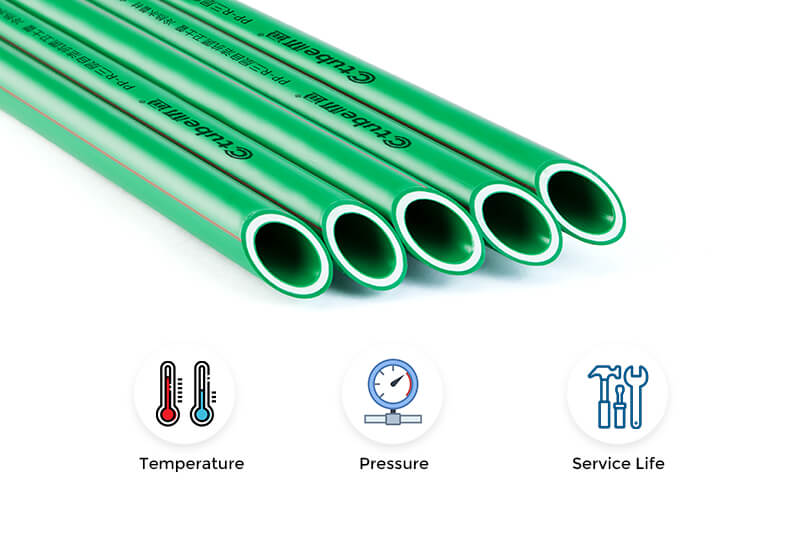
Pressure Ratings and Pipe Series (PN vs. S Value)
Traditionally, PPR pipes have been classified using PN (nominal pressure), which indicates the maximum allowable pressure at a reference temperature of 20°C. While this remains widely used in commercial specifications, modern standards such as ISO 15874 place greater emphasis on the pipe series, or S value, which defines wall thickness relative to pipe diameter.
From an engineering perspective, the S value provides a more fundamental understanding of pipe strength. Pipes with lower S values have thicker walls and are better suited for applications involving higher temperatures or long-term pressure exposure, while higher S values indicate thinner walls intended for less demanding conditions.
Temperature-Pressure Relationship (Derating Effect)
One of the most important performance characteristics of PPR is that its strength decreases as temperature increases. This phenomenon, known as temperature derating, plays a critical role in system design.
A pipe that performs safely at its nominal pressure under cold water conditions cannot be assumed to maintain the same capacity at elevated temperatures. According to regression data in ISO 15874-2, a pipe rated PN20 at 20°C may only withstand a fraction of that pressure when operating continuously at 70°C over a 50-year period.
This means that proper pipe selection must always consider the actual operating temperature rather than relying solely on nominal pressure ratings.
Application Classes and Design Conditions
To simplify the relationship between temperature, pressure, and service life, ISO standards define a series of application classes that represent typical operating conditions.
These classes correspond to different use cases, such as domestic hot water systems, underfloor heating, or high-temperature radiator systems, each with defined design temperatures and service expectations.
An important concept within this framework is the malfunction temperature, typically around 95°C. This represents a short-term extreme condition that the pipe can tolerate for a limited duration over its lifetime, rather than a temperature suitable for continuous operation. Misinterpreting this value as a working condition is a common design error.
Thermal Expansion and Its Impact on System Design
Another key limitation of standard PPR is its relatively high thermal expansion coefficient. When exposed to hot water, the pipe expands noticeably in length, which can introduce stress into the system if not properly managed.
For long pipe runs, even moderate temperature increases can result in measurable expansion, potentially causing bending or additional load on joints and supports. This behavior is one of the main reasons why reinforced PPR variants are often specified in hot water systems, as they significantly reduce expansion and improve dimensional stability.
Long-Term Strength and Creep Behavior
PPR is a viscoelastic material, meaning it gradually deforms under sustained stress. This behavior, known as creep, is a critical consideration in long-term system performance.
Even if a pipe passes initial pressure testing, operating it beyond its designed stress limits—particularly under high temperature conditions—can lead to slow material deformation and eventual failure, often referred to as creep rupture.
For this reason, correct pipe selection is not only about meeting immediate performance requirements, but also about ensuring that the material can withstand continuous stress over decades of operation.
4. Choosing PPR Pipes for Hot and Cold Water – Identification, SDR, and Material Types
In professional plumbing and construction projects, selecting the correct PPR pipe for hot and cold water applications is critical to system safety and long-term performance. Although many PPR pipes appear similar externally, their pressure rating, wall thickness, and material structure can vary significantly.
Understanding how to identify and differentiate these pipes helps prevent costly installation errors and ensures compliance with design specifications.
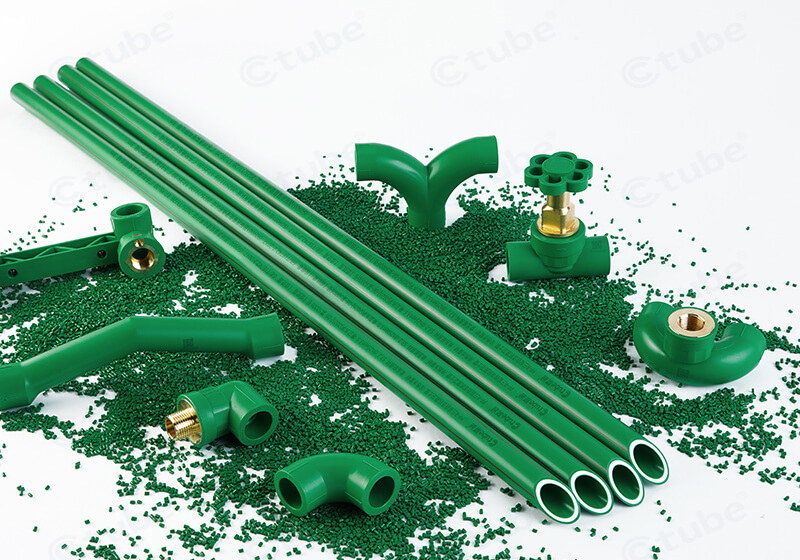
How to Identify PPR Pipes: Markings and Color Codes
To reduce the risk of misapplication, PPR pipes are typically marked according to international standards such as ISO 15874 and DIN 8077.
In practice, identification relies on both visual cues and printed information on the pipe surface.
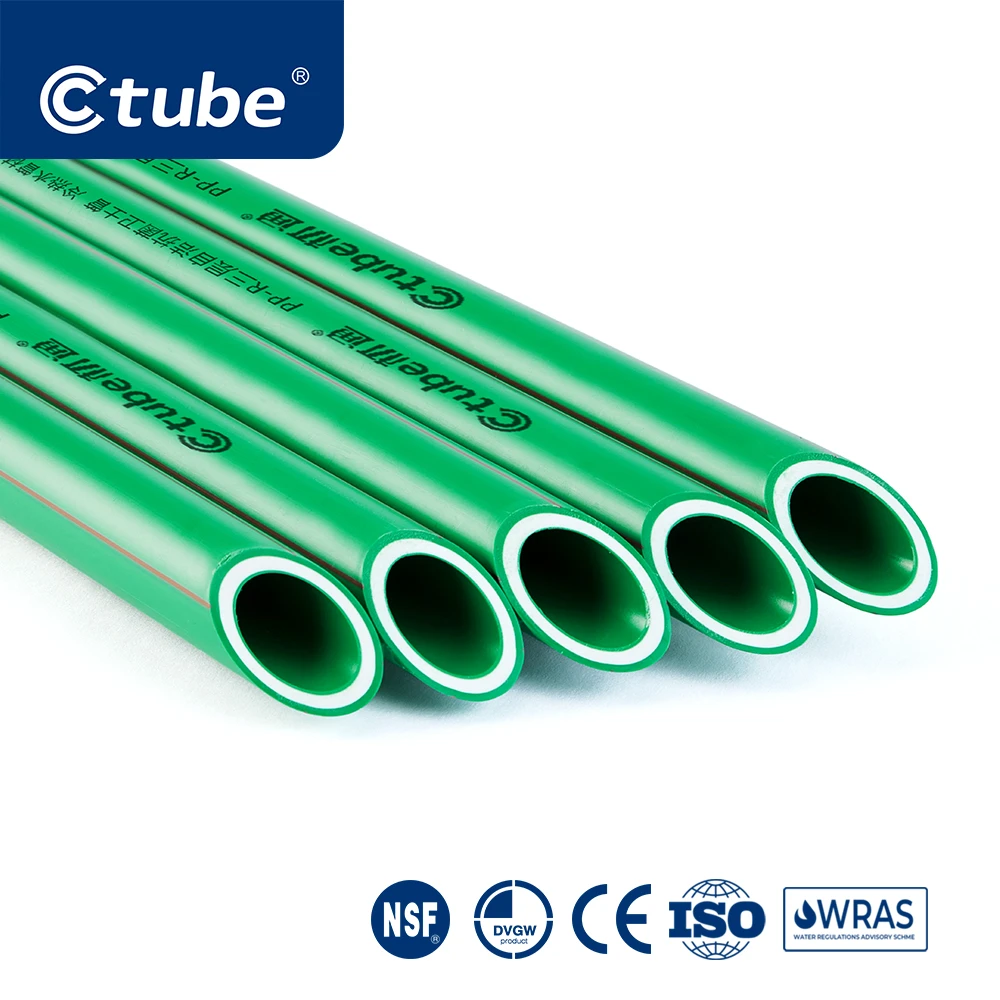
Color stripes are commonly used in the industry as a quick reference, where blue is often associated with cold water systems and red with hot water applications. However, it is important to note that this color-coding system is not universally standardized and may vary between manufacturers. In many cases, pipes share the same base color—such as green, white, or gray—and rely entirely on printed markings for identification.
For this reason, the most reliable method is to read the continuous marking printed along the pipe. According to industry practice, this marking should appear at regular intervals and typically includes key technical information such as the manufacturer’s name, material type (for example, PP-R or PP-RCT), pipe series and SDR value, nominal pressure rating (PN), application class, and production traceability details like date and batch number.
Understanding SDR and Its Role in Pipe Selection
While PN ratings are commonly used in sales and specification sheets, engineers often rely on SDR (Standard Dimension Ratio) for a more precise evaluation of pipe performance.
SDR is defined as the ratio between the pipe’s outer diameter and its wall thickness. A lower SDR value indicates a thicker wall, which improves the pipe’s ability to withstand internal pressure and elevated temperatures over time.
In practical terms, pipes with lower SDR values—such as SDR 6 or SDR 7.4—are better suited for hot water systems, including domestic hot water circulation and heating applications. Their thicker walls provide greater resistance to long-term thermal stress.
Conversely, higher SDR pipes, such as SDR 11, have thinner walls and offer slightly improved flow capacity due to a larger internal diameter. However, they are less suitable for high-temperature applications because they are more vulnerable to deformation and long-term material fatigue under combined heat and pressure.
Types of PPR Pipes: Standard vs. Reinforced Structures
Beyond pressure ratings, selecting the right PPR pipe also involves understanding material variations designed for different performance requirements.
Standard monolayer PPR pipes consist of a single layer of polypropylene and are commonly used in cold water systems or low-temperature hot water applications. They offer a cost-effective and reliable solution where thermal stress is limited.
For more demanding conditions, fiber-reinforced PPR (often referred to as F-PPR) incorporates a middle layer of glass fiber within the pipe wall. This structure significantly reduces thermal expansion, making it particularly suitable for vertical risers and long-distance hot water distribution systems where dimensional stability is important.
Another widely used option is aluminum composite PPR, sometimes known as “Stabi” pipe. These pipes include an aluminum layer embedded within the structure, which acts as an oxygen barrier and further limits thermal expansion. They are typically used in high-temperature heating systems where oxygen diffusion must be controlled.
In high-rise residential projects, fiber-reinforced PPR is often preferred for hot water mains, as it provides a good balance between performance, stability, and installation convenience.
Correct Application: The Rule of Compatibility
A fundamental principle in PPR pipe selection is ensuring that the pressure rating matches the intended application temperature.
Pipes designed for hot water systems, typically rated PN20 or PN25, can safely be used in cold water applications. In fact, doing so can provide an additional safety margin and improved mechanical durability, although it may increase material cost.
However, the reverse is not true. Pipes rated for cold water, such as PN10 or PN16, are not suitable for hot water systems. When exposed to elevated temperatures—such as 60–70°C—the material may soften, leading to deformation, loss of pressure resistance, and eventual failure. This type of misuse is one of the most common causes of premature system damage.
Environmental Considerations: Opacity and UV Resistance
In addition to pressure and temperature requirements, environmental conditions should also be considered during pipe selection.
For potable water systems, opacity is an important factor. According to ISO 15874, pipes should limit light transmission to prevent algae growth inside the system. Ensuring compliance with this requirement helps maintain water quality over time.
Ultraviolet exposure is another key consideration. Standard PPR materials are not resistant to prolonged UV radiation, which can lead to surface degradation and reduced mechanical strength. Therefore, pipes installed outdoors or in areas exposed to sunlight should either include UV-resistant additives or be protected with insulation, coatings, or physical coverings.
5. PPR Pipe Installation – Heat Fusion Process, Parameters, and Common Mistakes
Unlike metal piping systems that rely on threaded or mechanical joints, PPR pipes are connected through a process known as heat fusion, or thermodynamic welding. This method allows the pipe and fitting to fuse together at a molecular level, forming a single continuous structure.
When performed correctly, this type of joint becomes the strongest point in the entire piping system. However, its reliability depends entirely on precise control during installation, making proper technique and parameter management critical.
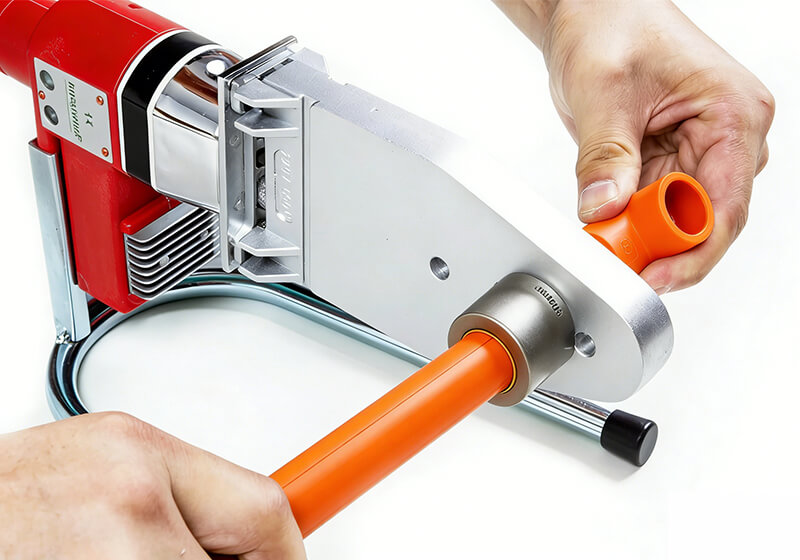
How Heat Fusion Works in PPR Pipe Installation
The heat fusion process involves simultaneously heating the outer surface of the pipe and the inner surface of the fitting using a specialized welding tool. Once both surfaces reach the required temperature, they are joined together, allowing the նյութ (material) to merge and solidify into a homogeneous connection.
According to DVS 2207-11, the recommended heater temperature for PPR heat fusion is approximately 260°C (±10°C). Maintaining this temperature range ensures proper surface plasticization while preventing material degradation, which is essential for achieving a reliable, homogeneous joint.
The process itself follows a continuous sequence: the pipe and fitting are first heated, then quickly removed from the tool and joined together, after which they are held in position until the material stabilizes. During the cooling phase, the joint must remain completely undisturbed to avoid internal stress or structural weakness.
Key Fusion Parameters and Their Impact
The quality of a fusion joint is highly sensitive to timing, and each stage of the process must be carefully controlled based on pipe diameter and ambient conditions.
In general, larger pipe diameters require longer heating and cooling times, while the transition between heating and joining must always be completed within a very short window to prevent heat loss. For standard PN20 (SDR 6) pipes at around 20°C ambient temperature, these parameters are defined in DVS guidelines and widely adopted across the industry.
Environmental conditions also play a significant role. In colder environments—especially below 5°C—heat dissipates more rapidly from the pipe surface. As a result, heating time typically needs to be extended by approximately 50% to ensure proper fusion.
In practice, consistent adherence to these parameters is what separates a durable installation from one that may develop hidden defects over time.
Common PPR Welding Mistakes and Their Consequences
Even when high-quality PPR materials are used, improper installation can introduce defects that remain undetected during initial testing but lead to long-term system failure.
One of the most frequent issues is overheating during fusion. When the pipe is exposed to heat for too long or inserted too deeply into the fitting, excess molten material is pushed inward, reducing the internal diameter of the pipe. This restriction can increase flow resistance, create turbulence, and result in noticeable pressure loss across the system.
Another critical issue is the formation of what is often referred to as a “cold joint.” This occurs when the connection is made too slowly after heating, or when the welding tool fails to reach the correct temperature. In such cases, proper molecular bonding does not occur, and the joint is held together only by surface friction. Although it may pass an initial pressure test, it is highly vulnerable to failure under long-term thermal cycling.
Contamination is also a common but often overlooked problem. The presence of moisture, dust, or oil on the fusion surfaces can prevent proper bonding between materials. Since polypropylene is non-polar, even a thin layer of contamination can lead to microscopic voids within the joint, which may eventually develop into slow leaks.
Managing Thermal Expansion During Installation
One of the inherent characteristics of PPR is its relatively high thermal expansion coefficient. If not properly accounted for during installation, thermal movement can place stress on joints and lead to deformation or failure over time.
To manage this, installers typically incorporate design strategies that allow controlled movement within the system. For example, expansion loops—often in the form of U-shaped bends—provide flexibility and absorb linear expansion.
In addition, the strategic placement of fixed and sliding supports ensures that pipe movement is guided in a predictable direction, preventing stress from accumulating at connection points. In more complex or industrial systems, pre-stressing techniques may also be used, where pipes are installed with calculated offsets to compensate for expansion once the system reaches operating temperature.
Pressure Testing and Final System Validation
Before a PPR piping system is put into service or concealed within walls and floors, pressure testing is essential to verify the integrity of all joints.
Any drop in pressure during this process indicates a potential defect, such as an improperly fused joint or a micro-crack within the pipe. Identifying and resolving these issues at this stage is critical, as post-installation repairs can be significantly more complex and costly.
6. PPR Pipe Maintenance, Troubleshooting, and Lifespan Management
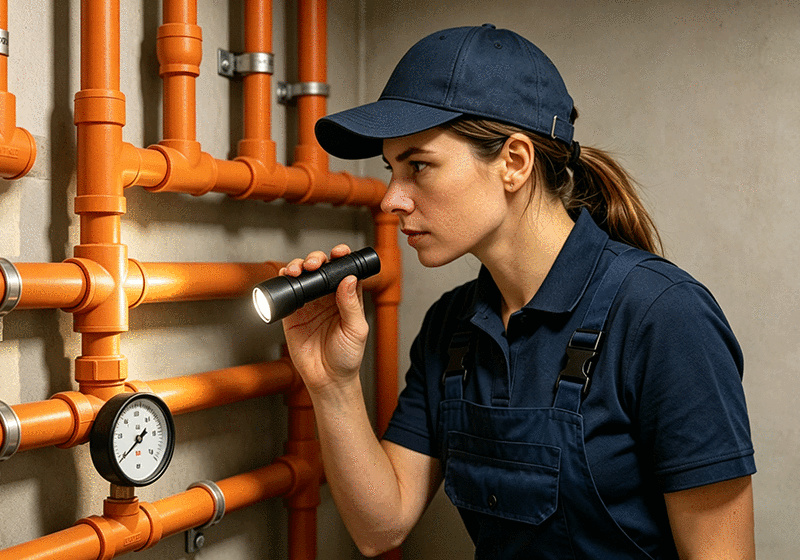
One of the most recognized advantages of PPR piping systems is their low-maintenance nature. Unlike traditional metal pipes, PPR does not suffer from corrosion, scaling, or internal rust buildup, which significantly reduces the need for ongoing intervention. However, low maintenance should not be misunderstood as no maintenance at all.
To ensure that a PPR system can reach its expected 50-year service life under ISO 15874 standards, periodic inspection and proper lifecycle management are still essential.
Environmental Factors That Affect PPR Pipe Lifespan
Although PPR pipes are designed for durability, their long-term performance can still be influenced by environmental exposure, particularly in installations where protection measures are insufficient.
One of the most critical factors is ultraviolet (UV) radiation. Polypropylene is inherently sensitive to UV light, which means that standard PPR pipes are not intended for prolonged direct exposure to sunlight. Over time, unprotected pipes may develop surface whitening, small cracks, or increased brittleness, all of which indicate material degradation. For this reason, pipes installed outdoors or on rooftops should always be protected with insulation, cladding, or UV-resistant coatings, and these protective layers should be checked regularly.
In addition to UV exposure, chemical contact can also affect system performance in certain environments. While PPR offers excellent resistance to a wide range of chemicals, prolonged exposure to substances such as hydrocarbons or strong oxidizing agents may gradually weaken the material. This is particularly relevant in industrial or mixed-use buildings, where accidental leaks from adjacent systems can occur. Ensuring that the piping system remains isolated from such exposure is an important part of routine inspection.
Common PPR Pipe Problems and How to Fix Them
Even though PPR systems are known for reliability, operational issues may still arise, often due to installation conditions rather than material limitations.
One of the most commonly reported issues is noise within the piping system, often described as banging or knocking sounds inside walls. This phenomenon is typically caused by water hammer, which occurs when valves close suddenly and create pressure surges. Although PPR pipes are naturally better at absorbing shock compared to metal pipes, improper installation—such as loose or poorly positioned pipe clamps—can allow movement that amplifies noise and causes the pipe to rub against surrounding structures. In such cases, securing the pipe properly usually resolves the issue.
Another issue that may occur is a gradual reduction in water flow or pressure. Unlike metal pipes, PPR does not develop internal scale, so this problem is usually linked to external factors. In many cases, debris such as sand or mineral particles enters the system from the main water supply or from aging equipment like water heaters, eventually accumulating in strainers or fittings. Regular cleaning of these components can effectively restore normal flow.
However, if the pressure drop has been present since the initial installation, the cause is more likely to be a welding defect. Excessive heat during fusion can partially block the pipe internally, a condition sometimes referred to as over-melting. Unfortunately, this type of issue cannot be corrected externally and typically requires replacing the affected section of pipe.
Lifecycle Cost and Long-Term Value of PPR Pipes
When selecting piping materials, initial cost is only one part of the equation. PPR systems demonstrate their true value when evaluated over their full lifecycle.
One of the key advantages lies in energy efficiency. Due to its relatively low thermal conductivity, PPR reduces heat loss in hot water systems compared to materials such as copper, especially when insulation is limited. This can result in noticeable energy savings over time, particularly in large or continuously operating systems.
In terms of durability, properly installed PPR systems operating within their specified temperature and pressure classes can achieve a service life of up to 50 years without internal corrosion or scaling. This level of stability significantly reduces the need for repairs or replacements during the system’s lifespan.
Additionally, PPR offers practical benefits when repairs are necessary. In the event of accidental damage, such as drilling into a pipe during renovation, localized repair methods can be used without dismantling large sections of the system. This not only reduces repair costs but also minimizes disruption to the building structure.
7. Conclusion
In conclusion, the successful implementation of a PPR piping system for hot and cold water relies on both proper material selection and disciplined installation.
To ensure the highest level of system integrity, it is essential to source materials from trusted manufacturers who adhere to international standards. Tubo C provides a comprehensive range of high-quality PPR pipes and integrated fittings designed to meet the rigorous demands of modern residential and commercial projects.
By choosing a complete system solution, project managers can ensure material compatibility and consistent performance across both hot and cold water networks.
Thank you for reading this guide. We hope this post is helpful. If you have specific project requirements, please feel free to contact us. We wish you great success with your upcoming project!
Preguntas frecuentes
1. Is it safe to use PPR pipes for drinking water (potable water)?
Yes. PPR is chemically inert and does not corrode or leach heavy metals into the water supply. To ensure safety, confirm the product is certified to ISO 15874 and meets local health standards (such as WRAS, NSF, or equivalent). Its smooth internal surface also resists biofilm buildup compared to metallic pipes.
2. Can PPR pipes be installed in areas with direct sunlight?
Standard PPR is sensitive to UV radiation, which can cause the material to become brittle. If installation in sunlight is unavoidable, you should use UV-stabilized multilayer pipes or protect standard pipes with UV-resistant paint, specialized cladding, or pre-insulated sleeves.
3. What is the most common cause of leaks in a PPR system?
The majority of failures are due to improper heat fusion rather than material defects. Common errors include incorrect welding temperatures, contaminated joint surfaces, excessive transition time between heating and joining (causing "cold joints"), or over-welding, which can restrict flow.
4. Can PPR pipes be connected directly to a water heater?
While PPR is heat-resistant, it is recommended to use a short metallic pipe section (approx. 50cm) or a flexible connector as a thermal buffer between the heater outlet and the PPR line. This protects the plastic from potential temperature spikes or steam backflow during equipment malfunctions.
5. Does PPR require insulation for hot water lines?
Although PPR has low thermal conductivity, insulation is still recommended for hot water runs to maximize energy efficiency. Additionally, insulating cold water lines is advised in humid environments to prevent surface condensation (sweating) and potential water damage.



 English
  French
  Spanish
  German
  Arabic
  Indonesian
  Vietnamese