
1. Introducción
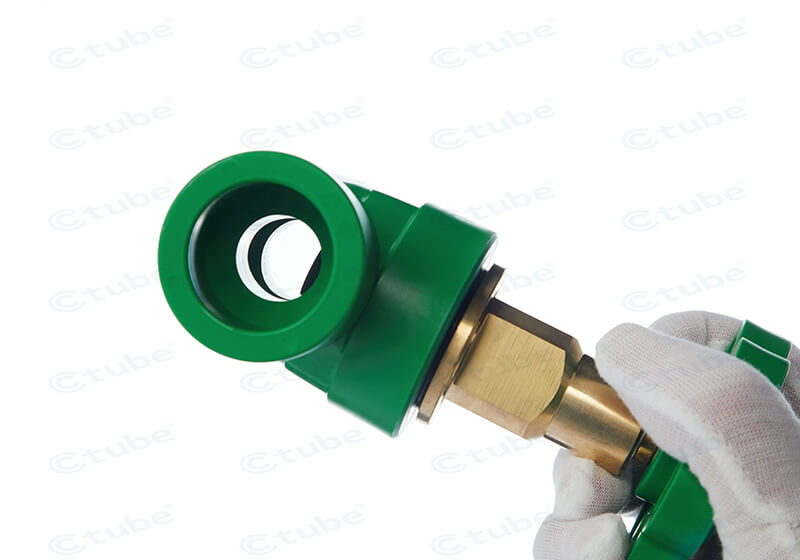
In municipal utility design, high-rise commercial infrastructures, and critical industrial piping layouts, an entire fluid distribution network is only as secure as its weakest isolation mechanism. While procurement managers routinely dedicate substantial resources to auditing and certifying PPR linear pipes, the selection of PPR in-line valves is frequently treated as a secondary component consideration.
This oversight represents a massive high-liability blind spot. An uncertified, poorly engineered valve failure does not merely present a localized leak; it triggers uncontrollable pressure drops, irreversible hydrostatic fatigue across the fusion interface, and catastrophic structural property damage. This B2B technical manual establishes a definitive, data-driven framework for engineers, regional distributors, and mechanical contractors to uncover critical PPR valve sourcing secrets and bypass high-risk supply chain traps.
2. What Is a PPR Valve? Engineering Definition & Structural Dynamics
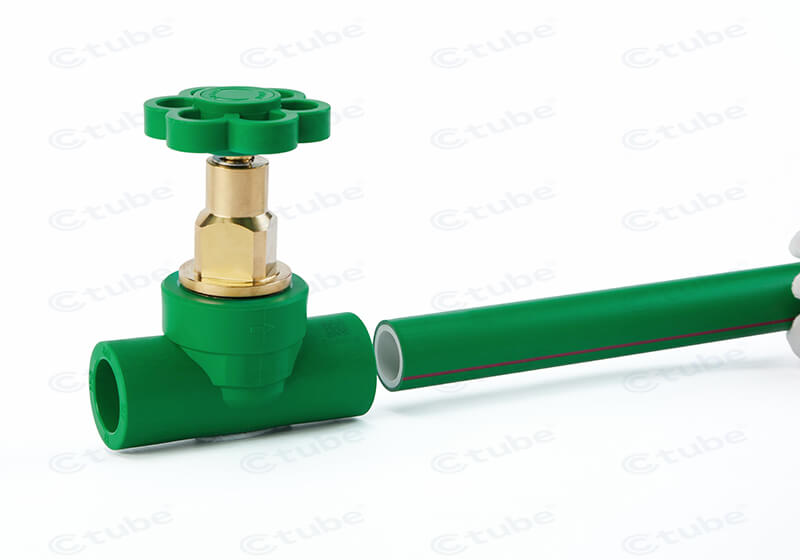
A Polypropylene Random Copolymer (PPR) valve is a pressure-rated in-line fluid control device engineered for seamless thermal welding. Rigorously tested to withstand operational extremes from 23 ± 2 °C for cold water up to 82 ± 2 °C for commercial hot water applications, it ensures long-term hydrostatic integrity per ISO 15874 and NSF safety standards.
To execute successful PPR valve sourcing, engineers must look beyond the basic open-and-close flow mechanics. Unlike traditional metal valves—such as brass gate valves or cast-iron butterfly valves that must be clamped or compressed onto plastic networks via aggressive mechanical threads or compression flanges—a true industrial PPR valve utilizes a body molded entirely from 100% premium virgin Type 3 Polypropylene Random Copolymer.
This structural material matching is critical due to a fundamental physical law: the Coefficient of Linear Thermal Expansion (CLTE). Mechanical joints that mate disparate materials (such as metal and plastic) inevitably weep, lose torque, and fail over extended thermal cycles because the metal and plastic expand and contract at completely different rates. By specifying a fusion-compatible PPR valve, the installation crew executes a homogeneous socket fusion process. The valve body melts and structurally fuses with the conveyance pipe at a molecular level, creating a continuous, monolithic pathway with zero leak paths and absolute structural continuity.
3. Piping Code Compliance Sourcing Secrets: “Compliant” vs. “Certified”
In global B2B procurement, misleading and predatory marketing terminology is the primary vulnerability for purchasing departments. There is a massive, legally binding gulf between an unverified manufacturer stating their products are “designed to comply with” an international code versus a manufacturer whose components are independently audited and Certified.
Compliant vs. Certified PPR Valve
| Compliance Dimension | “Compliant” (Self-Declared Supplier Claims) | “Certified” (Independent Third-Party Validated) |
| Validation Authority | Internal factory testing with zero external oversight or legal accountability. | Rigorous independent laboratory validation by global accredited bodies like NSF, WRAS, or DVGW. |
| Raw Material Traceability | Unregulated; regrind or unrated polymer lots may be introduced across different batches. | Continuous raw material monitoring. Mandatory use of 100% virgin, trackable PPR compounds. |
| Quality Control Checks | Intermittent internal checks, highly susceptible to operational cost-cutting. | Unannounced factory audits, mandatory random batch stress testing, and permanent record keeping. |
| Project Indemnification Risk | Extremely High; contractor or distributor bears full legal liability for mechanical failures. | Zero; complete engineering indemnification backed by documented international code registries. |
Decoding ISO 15874 Application Classes & The 5,000-Cycle Defeat Mechanism
When engineering teams evaluate technical specifications for PPR stop valves or ball valves, they must map the valve’s structural boundaries directly to the intended ISO 15874 classification framework. A genuinely certified premium valve must demonstrate consistent hydrostatic stability under these exact temperature-time life cycles across a 50-year continuous service baseline:
ISO 15874 Application Class Table
| ISO 15874 Application Class | Typical Field Application | Design Temperature (TD) | Service Time at TD | Max Operational Temp (Tmax) | Malfunction Temp (Tmal) & Lifetime |
| Clase 1 | Hot water supply (60 °C) | 60 °C | 49 Years | 70 °C (1 Year) | 95 °C (100 Hours) |
| Clase 2 | Hot water supply (70 °C) | 70 °C | 49 Years | 80 °C (1 Year) | 95 °C (100 Hours) |
| Clase 5 | High-temperature radiator heating |
20 °C
60 °C
80 °C |
10 Years
25 años
10 Years |
90 °C (1 Year) | 100 °C (100 Hours continuous) |
However, the ultimate sourcing secret regarding ISO compliance resides in ISO 15874-5 System Fitness for Purpose validation. Uncertified manufacturers routinely bypass the mandatory Thermal Cycling Test because their production tolerances are too wide to pass.
This test subjects the integrated pipe-and-valve assembly to a brutal hydraulic regime: the system is pressurized to its maximum rating while experiencing 5,000 continuous alternating cycles of cold and hot water (cycling between 20 °C and up to 90 °C under constant pressure). Cheap valves fail this test rapidly. Because the interface where the plastic shell encapsulates internal components hasn’t undergone rigorous stress-relaxation analysis, the extreme, rapid thermal expansion differentials destroy the internal seals within the first 1,000 cycles. Specifying a valve that is genuinely certified to ISO 15874-5 is your only absolute defense against long-term operational weeping.
The NSF/ANSI 61 Toxicity Barrier & SPAC Benchmarks
For potable drinking water distribution, mechanical endurance is only half the battle. Chemical purity and the mitigation of toxic extraction are paramount. Under NSF/ANSI/CAN 61 (Section 8), any in-line device that incorporates metallic elements—such as a brass-inserted PPR ball valve—must pass highly aggressive contaminant extraction parameters before achieving certification.
Cheap suppliers deliberately omit NSF certification because the auditing protocols leave zero margin for error. For inline fluid devices with a dry weight ≤ 15 kg and an internal volume ≤ 2 L, auditors conduct specialized exposure testing in at least triplicate. The valve is submerged and saturated with highly aggressive, chemically adjusted exposure water at fluctuating pH boundaries (specifically at pH 8 and pH 10 matrices) to force and measure the extraction of heavy metals.
NSF auditors do not evaluate on a loose “pass/fail” spectrum; they calculate the precise Normalized Value (RV) of chemical migration and compare it against the ultra-stringent Single Product Allowable Concentration (SPAC). The SPAC threshold for toxic heavy metals like lead is incredibly low. If a manufacturer utilizes unrefined, recycled, or cheap scrap brass for their valve cores, the lead leaching value instantly spikes past the SPAC boundary across the triplicate tests, disqualifying the component. Sourcing an NSF-certified valve guarantees that your network remains completely non-toxic and fully compliant with global environmental health regulations.
4. Sourcing Secrets: The Hidden Mechanical Vulnerabilities of Brass Inserts
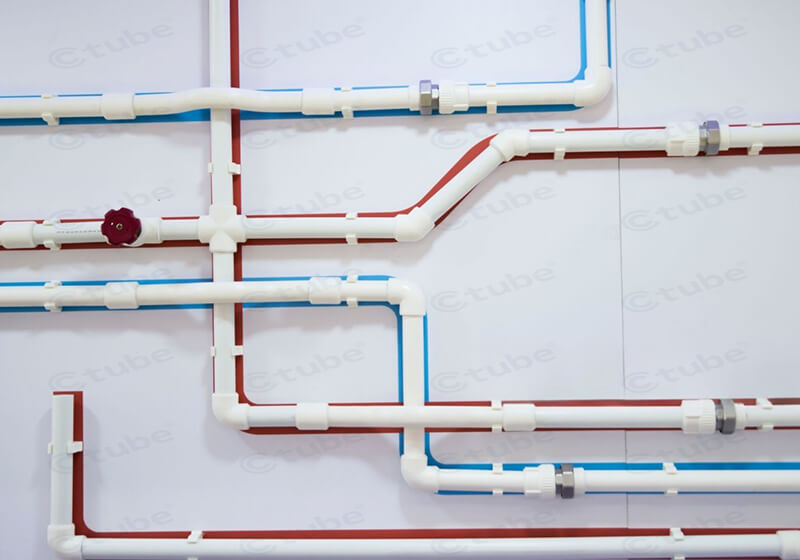
When a technical procurement manager reviews a PPR ball valve or stop valve, the metallic threading appears to be a robust, reliable anchor point for system integration. However, the exact interface where the Polypropylene outer shell encapsulates the internal brass insert is where 90% of field mechanical failures originate. If your engineering or sourcing team does not cross-examine a supplier on two distinct metallurgical and design thresholds, your project remains highly exposed to costly post-installation liabilities.
4.1 The Phenomenon of “Spin-out” and Torque Resistance
During active onsite installation, mechanical plumbers utilize heavy-duty pipe wrenches to secure transition joints into the valve threading. With cheap, uncertified components, a devastating structural failure known as spin-out occurs: the moment installation torque is applied, the internal brass component breaks its physical bond with the plastic housing and begins to spin freely inside the injected polymer. The valve is instantly rendered useless, requiring a full section cut-out and emergency re-welding.
To unlock zero-risk installation, the core sourcing secret lies in auditing the knurling geometry y undercut patterns of the brass insert before it ever enters the injection molding machine. Sub-standard manufacturers cut costs by using smooth, shallowly scored, or straight-grooved brass blocks.
Premium manufacturing demands the engineering of deep, multi-directional helical or diamond-patterned knurls with pronounced structural undercuts. When 100% virgin PPR polymer is injected at optimal pressures and temperatures, it flows deeply into these microscopic metallic ravines. This creates an immovable mechanical interlocking matrix. The resulting bond allows the valve to easily withstand high installation torques that far exceed minimum plumbing codes, preserving the hermetic seal under continuous hydraulic pressure.
4.2 The Chemical Silent Killer: Dezincification Resistant (DZR) Brass
The second procurement secret involves a chemical degradation process that occurs silently long after the project handover: Dezincification. Standard brass is primarily a copper-zinc alloy. When cheap valves are subjected to oxygenated, chlorinated municipal water networks, the zinc can be selectively leached out of the alloy over months or years of continuous service.
This leaching leaves behind a porous, structurally compromised copper framework. The valve’s threaded core essentially transforms into a brittle, sponge-like matrix that eventually cracks or shears off under minor domestic pressure surges.
To eliminate this bottleneck, B2B purchasing specifications must strictly mandate CW617N brass or certified DZR (Dezincification Resistant) alloys. CW617N brass is formulated to strict European metallurgic standards, incorporating precise trace elemental inhibitors (such as minor controlled additions of arsenic) that chemically stabilize the alloy structure. This guarantees that the valve’s threaded core remains highly ductile, corrosion-free, and pressure-tight throughout its 50-year design cycle.
5. Advanced Valve Selection Guide for PPR Piping Systems by Application
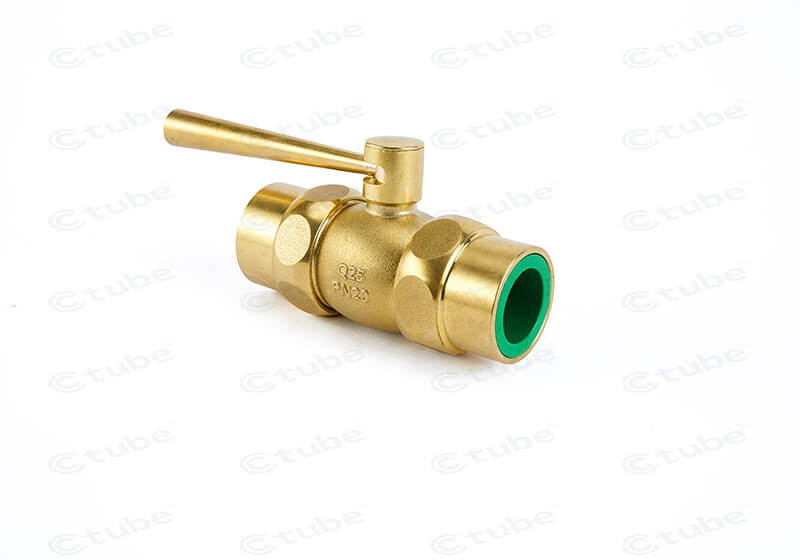
Mastering material chemistry allows procurement specialists to establish a flawless matrix for field deployment. Selecting the correct PPR valve requires more than choosing between a generic stop valve and a ball valve; it demands aligning the specific hydraulic demands of the application with verified laboratory performance metrics.
Below is the engineered blueprint to match common commercial applications with their mandatory mechanical and thermal baselines.
5.1 Commercial Hot Water Loops & Heating Infrastructure (High Thermal Stress)
In commercial heating applications, water is maintained at constant elevated temperatures under high-velocity continuous circulation.
-
The Engineering Risk: Continuous thermal stress can cause inferior polymer bodies to experience accelerated material creep, leading to premature valve body splitting or localized ballooning.
-
The Sourcing Spec: For systems categorized under ISO 15874 Application Class 5, the valve must be independently verified to sustain a continuous malfunction temperature (Tmal) of 100 °C for up to 100 consecutive hours without burst or deformation.
-
Valve Blueprint: Specify heavy-duty PPR gate or globe valves featuring CW617N brass components. The valve body must be rated to PN20 or PN25 boundaries to actively offset the natural physical strength reduction that occurs as polypropylene operates near its upper thermal thresholds.
5.2 Potable Drinking Water Networks (High Chemical Safety)
Municipal mains introduce highly volatile chemical variables, including fluctuating pH levels, dissolved oxygen, and residual chlorine disinfectants.
-
The Engineering Risk: Heavy metal leaching (particularly lead) into the public drinking supply, resulting in environmental regulatory non-compliance, severe municipal penalties, and massive corporate liabilities.
-
The Sourcing Spec: The valves must carry clear, active certification under NSF/ANSI/CAN 61. Sourcing teams should demand official documentation proving that the inline device passed chemical extraction tests executed in at least triplicate under aggressive water matrices (such as pH 8 and pH 10 test exposures) to prove zero toxic chemical migration.
-
Valve Blueprint: Deploy full-plastic PPR ball valves or certified DZR brass-inserted stop valves. Utilizing full-plastic ball valves where engineering parameters allow is a highly effective procurement secret, as it eliminates water-to-metal contact entirely, bypassing the toxic leaching threshold altogether.
5.3 Industrial Fluid & High-Velocity Chilled Systems (Cavitation & Flow Erosion)
Chilled water loop infrastructure and industrial manufacturing lines face distinct internal mechanical wear, primarily driven by high fluid velocity and turbulent friction.
-
The Engineering Risk: Internal fluid turbulence can rapidly wear down the valve seating and sphere, causing internal bypass leaks even when the valve handle is turned completely to the closed position.
-
The Sourcing Spec: Request the manufacturer’s verified internal wall surface roughness parameters. Per standard extrusion and injection molding metrics, the inner wall roughness (Ra) must align closely with the ultra-smooth limit of 0.007 mm to prevent friction.
-
Valve Blueprint: Full-bore PPR ball valves are mandatory for these environments. A full-bore design mirrors the exact internal diameter of the continuous piping run. This generates minimal fluid turbulence, minimizes hydraulic pressure drops, and significantly mitigates the cavitation erosion that degrades reduced-bore options over time.
6. Sourcing PPR Valves: The Ctube Zero-Risk Manufacturing Guarantee
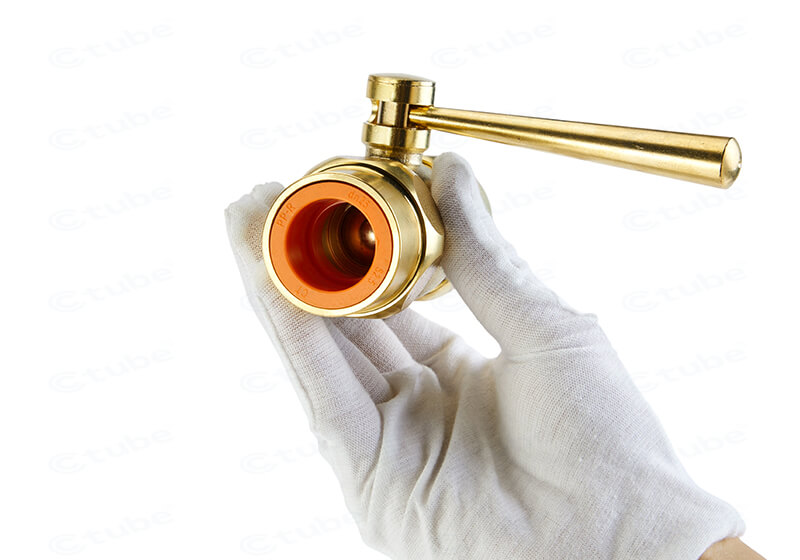
Navigating international supply chains for mechanical components requires more than technical knowledge; it demands a manufacturing partner that views compliance as a legal mandate rather than a marketing slogan. At Ctube, we have engineered our industrial PPR valve production lines to directly solve the volatile mechanical and chemical vulnerabilities that compromise commercial plumbing projects.
When you partner with Ctube, your procurement and engineering teams secure an absolute zero-risk guarantee built upon three foundational manufacturing pillars:
6.1 100% CW617N Premium Brass Integration
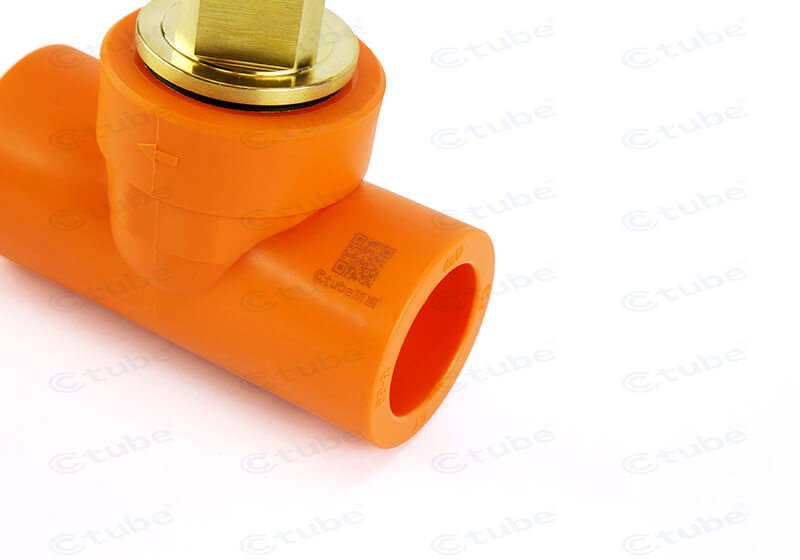
We eliminate the catastrophic risks of thread cracking and chemical dezincification at the molecular level. Ctube strictly utilizes certified CW617N premium European standard brass for all metal-threaded inserts. Every batch of brass undergoes rigorous spectrographic testing before entering our forging lines to guarantee optimal copper-to-zinc ratios. Formulated with controlled trace inhibitors, our brass components create an absolute chemical barrier against chlorinated municipal water, completely neutralising dezincification corrosion and ensuring the structural ductility of your valve joints for over 50 years.
6.2 Anti-Spin-Out Helical Knurling & High-Pressure Injection
To permanently eliminate the nightmare of installation spin-out failures on construction sites, Ctube has revolutionized the interface geometry of our brass cores. Our inserts feature deep, proprietary multi-directional helical knurls combined with heavy-duty structural undercuts.
During the molding phase, we feed 100% pure virgin Type 3 Polypropylene Random Copolymer into high-precision, computer-controlled injection machinery. Under extreme pressure, the molten polymer is driven deep into the helical metallic channels, solidifying into an unbreakable mechanical interlocking matrix. Ctube PPR valves are laboratory-tested to withstand professional installation torques that far exceed global standard plumbing regulations, giving your field crews absolute installation confidence.
6.3 Third-Party Audited Certification Matrix
Ctube refuses to play the “compliant with” word game. We back our manufacturing integrity with active, transparent, independent global certifications. Our plumbing components carry authentic credentials from leading international authorities, including NSF, ISO, and DIN registries.
Our manufacturing facilities are subject to unannounced, third-party factory audits and random batch stress testing. When you source from Ctube, you are not buying a supplier’s self-declaration; you are investing in an independently verified component that guarantees a 100% first-time inspection pass-rate for your commercial projects.
7. Conclusión
Seleccionar las válvulas adecuadas para los sistemas de tuberías PPR es fundamental para garantizar la eficiencia, la seguridad y la fiabilidad a largo plazo de cualquier sistema de suministro de agua caliente y fría para uso doméstico. Desde comprender las diferencias funcionales entre los distintos tipos de válvulas —como las de bola, compuerta, retención y angular— hasta evaluar factores clave como la presión nominal, la resistencia a la temperatura y los requisitos de la aplicación, cada decisión desempeña un papel crucial en el rendimiento general del sistema.
Al seleccionar las válvulas adecuadas según las necesidades reales de la aplicación, es posible minimizar la pérdida de presión, mantener condiciones de flujo estables y reducir el riesgo de problemas de mantenimiento a largo plazo. Los métodos de instalación correctos y el uso de materiales compatibles contribuyen aún más a la durabilidad del sistema y a la estabilidad operativa.
Dado que los sistemas de tuberías de PPR se siguen utilizando ampliamente en aplicaciones residenciales, comerciales e industriales ligeras, elegir válvulas de alta calidad de fabricantes fiables cobra cada vez más importancia. Un sistema bien diseñado, con los componentes adecuados, no solo mejora el rendimiento, sino que también ofrece valor y fiabilidad a largo plazo.
Finalmente, gracias por tomarse el tiempo para leer esta guía. Esperamos que este artículo le haya brindado información útil para respaldar sus decisiones de selección de válvulas. Tubo C, Ofrecemos una gama de válvulas de alta calidad diseñadas para sistemas de tuberías de PPR. Si tiene algún requisito o consulta para su proyecto, no dude en contactarnos para recibir asistencia profesional.
8. Engineering References & International Code Registries
To cross-examine, audit, and verify the hydrostatic, metallurgical, and toxicological parameters established in this procurement manual, sourcing managers can directly consult the official standards registries maintained by the global governing bodies below:
-
ISO 15874-1 (General Polypropylene Materials Framework): Review the official molecular and structural requirements for hot and cold water plastic installations via the Official ISO Standard Registry.
-
ISO 15874-5 (System Fitness & 5,000-Cycle Thermal Stress Limits): Audit the exact high-pressure alternating temperature testing protocols via the ISO System Fitness Catalog.
-
NSF/ANSI/CAN 61 (Potable Water Components – Health Effects): Verify the aggressive triplicate chemical extraction models and single product allowable concentration (SPAC) safety metrics via the NSF International Standards Portfolio.
9. FAQs
1. ¿Cuál es la válvula más utilizada en los sistemas de tuberías de PPR?
La válvula más utilizada en los sistemas de tuberías de PPR es la válvula de bola. Es la preferida por su estructura simple, su rápida apertura de 90 grados y su fiable sellado.
Aunque a menudo se las denomina "válvulas de PPR", es importante tener en cuenta que estas válvulas suelen ser productos compuestos, que presentan un cuerpo exterior de PPR combinado con componentes internos de metal, como una bola o insertos de latón, para garantizar la durabilidad y un funcionamiento estable.
2. ¿Se pueden utilizar las válvulas empleadas en los sistemas de tuberías de PPR para sistemas de agua caliente?
Sí, las válvulas utilizadas en los sistemas de tuberías de PPR están diseñadas para aplicaciones de agua fría y caliente. El cuerpo exterior está fabricado en PPR, que proporciona una excelente resistencia térmica, mientras que los componentes metálicos internos garantizan resistencia mecánica y durabilidad.
3. ¿Cuál es la diferencia entre una válvula de bola y una válvula de compuerta?
Una válvula de bola utiliza una bola metálica giratoria para controlar el flujo y funciona con un giro de 90 grados, lo que permite un cierre rápido. En cambio, una válvula de compuerta utiliza una compuerta metálica que se mueve hacia arriba y hacia abajo para abrir o cerrar el paso del flujo, lo que requiere varios giros.
En los sistemas de tuberías de PPR, ambos tipos se construyen con un cuerpo exterior de PPR y componentes internos metálicos. Las válvulas de bola son más adecuadas para operaciones frecuentes y cierres rápidos, mientras que las válvulas de compuerta son más apropiadas para aplicaciones que requieren un alto caudal y una mínima resistencia.
4. ¿Cómo elijo el tamaño de válvula adecuado para un sistema de tuberías PPR?
El tamaño de la válvula debe coincidir con el diámetro de la tubería de PPR para garantizar un flujo constante y minimizar la pérdida de presión. Un dimensionamiento adecuado ayuda a mantener la eficiencia del sistema y evita tensiones innecesarias tanto en la tubería como en la válvula.
También es importante asegurarse de que el tipo de conexión de la válvula, ya sea por fusión térmica o roscada con insertos metálicos, sea compatible con el sistema de tuberías en su conjunto.
5. ¿Se pueden utilizar las válvulas empleadas en los sistemas de tuberías de PPR para sistemas de agua potable?
Sí, las válvulas utilizadas en los sistemas de tuberías de PPR se emplean ampliamente en sistemas de agua potable. La carcasa exterior de PPR está fabricada con un material no tóxico e higiénico, mientras que los componentes metálicos internos están diseñados para cumplir con las normas de seguridad para el contacto con el agua.
Esta combinación garantiza que las válvulas no liberen sustancias nocivas, lo que las hace aptas para aplicaciones de agua potable tanto residenciales como comerciales.
6. Can a PN16-rated PPR valve be safely installed within a PN20 or PN25 heating system network?
Absolutely not. This is a critical technical downgrading trap that often leads to systemic liability claims. In any commercial hydraulic design, the inline isolation device must always possess a pressure rating that either matches or exceeds the continuous rating of the linear pipeline.
Because PPR material experiences natural physical tensile strength degradation as operating temperatures climb near thermal boundaries (such as in Class 5 heating loops), a PN16 valve will suffer rapid material creep and structural ballooning under PN20 application stresses, causing premature bursting. Always specify a continuous PN20 or PN25 rating for high-temperature infrastructures.
7. What exact documentation should our procurement team demand from a manufacturer to verify true NSF/ANSI 61 compliance?
Never accept a generic, self-printed manufacturer certificate or a vague statement on a brochure. Your sourcing team must explicitly demand an official Third-Party Laboratory Test Report bearing the authorized stamp of an accredited auditing agency (such as NSF International, IAPMO, or WRAS).
Crucially, the report must display a verified Product Listing matching the manufacturer's exact factory name and model number, alongside documented proof of triplicate chemical exposure testing showing heavy metal extraction values that sit safely below the legal Single Product Allowable Concentration (SPAC) thresholds.
8. Does Ctube support complete OEM customization for commercial distributors, including customized handle color branding?
Yes. As a dedicated industrial B2B manufacturer, Ctube provides comprehensive OEM and ODM solutions tailored directly to the supply chain requirements of regional distributors and large-scale wholesalers. We can customize the structural color-coding of the valve handles (such as matching specific corporate branding or system identification codes), precision-mold your registered trademark directly onto the PPR polymer valve body, and provide custom engineering packaging configurations. All OEM production runs remain fully locked into our certified NSF and ISO quality-control pipelines to guarantee absolute component consistency.
9. How does inner wall roughness Ra affect the lifecycle cost of an industrial in-line valve?
Inner wall roughness is the primary driver of operational fluid friction, pressure drops, and localized cavitation wear. Standard or low-tier valves with a rough internal surface generate high hydraulic turbulence. As high-velocity fluid shears against these internal microscopic imperfections, it creates localized low-pressure vapor bubbles that collapse violently—a process known as cavitation erosion—which rapidly destroys the internal valve seating and causes bypass leakage.
Ctube valves maintain an ultra-smooth internal roughness parameter of 0.007 mm, eliminating turbulence, minimizing pump energy consumption across the network, and extending the valve’s active operational lifespan.



 English
  French
  Spanish
  German
  Arabic
  Indonesian
  Vietnamese