
1. Introducción
Elegir el conducto eléctrico adecuado es una de las decisiones más importantes en cualquier instalación de cableado, ya sea que esté trabajando en un proyecto comercial, una instalación industrial o una mejora residencial.
Diferentes entornos exigen distintos niveles de protección, durabilidad, flexibilidad y cumplimiento de los códigos eléctricos, por lo que comprender los tipos de conductos es esencial tanto para la seguridad como para el rendimiento.
Entre todas las opciones disponibles, los sistemas EMT (tubería metálica eléctrica) y los conductos rígidos son dos de los más utilizados en Norteamérica. Aunque a primera vista puedan parecer similares, sus funciones son muy diferentes.
El EMT es ligero, fácil de doblar y rentable, ideal para instalaciones rápidas. Por otro lado, el conducto rígido proporciona máxima protección mecánica y una resistencia superior en entornos hostiles, lo que lo convierte en la opción preferida para aplicaciones exigentes o en exteriores.
En esta guía, lo ayudaremos a comprender claramente las diferencias entre EMT y conductos rígidos al guiarlo a través de su estructura, características, requisitos de código, aplicaciones, ventajas, limitaciones y consideraciones de instalación.
2. Comprensión de los conductos eléctricos metálicos EMT
2.1 ¿Qué es un conducto EMT?
EMT (tubería metálica eléctrica) Es un conducto metálico de pared delgada, comúnmente utilizado en cableado comercial e industrial ligero. Se trata de una canalización circular sin rosca, diseñada para proteger y enrutar conductores y cables, y generalmente está hecha de acero con recubrimientos protectores o, en algunos casos, de aluminio.
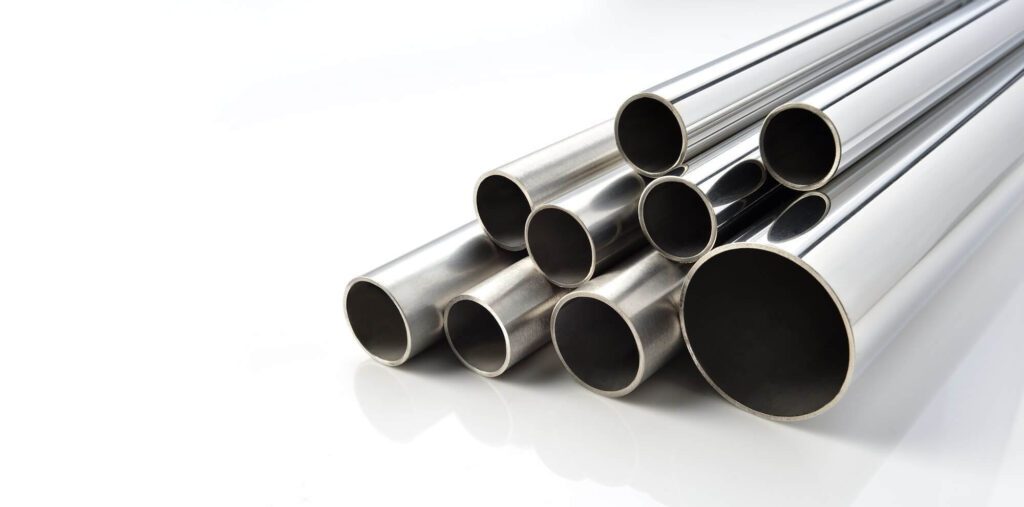
A simple vista, el EMT se parece bastante al conducto metálico rígido, y en algunas clasificaciones se agrupa de forma imprecisa dentro de la familia de los rígidos. Sin embargo, debido a que sus paredes son mucho más delgadas y la tubería es más ligera y fácil de doblar, los electricistas suelen referirse al EMT como una categoría independiente.
Los diferentes materiales EMT corresponden a diferentes estándares de producto. En las siguientes secciones, nos centraremos principalmente en UL 797A (Tubos Metálicos Eléctricos) (Aluminio y Acero Inoxidable) y UL 797 (Tubos Metálicos Eléctricos) (Acero). Al adquirir EMT, asegúrese de confirmar el tipo de material y el estándar aplicable.
2.2 Características del conducto EMT
Los tubos metálicos eléctricos (EMT) están diseñados no solo para proporcionar protección física y enrutamiento a los conductores eléctricos, sino también para mantener la integridad mecánica en diversas condiciones. Sus características clave se definen en gran medida mediante procedimientos de prueba estandarizados que garantizan la fiabilidad en instalaciones reales.
Un aspecto importante del EMT es su flexibilidad y ductilidad. El EMT se prueba tanto a temperatura ambiente como a baja temperatura para verificar que se pueda doblar sin agrietarse, separar la costura de soldadura ni distorsionar significativamente la sección transversal circular. Los tubos pequeños (como los de ½”, ¾” y 1”) se prueban específicamente a temperatura ambiente y a 0 °C (32 °F) utilizando mandriles y dispositivos de doblado estandarizados, mientras que los de mayor tamaño siguen procedimientos de doblado adecuados, regulados por radios de curvatura mínimos especificados.
Estas pruebas, definidas según normas como UL 797 y CSA C22.2 No. 83-104, garantizan que el EMT mantenga su forma y rendimiento mecánico en un rango de temperaturas y tamaños de tubos.
2.3 Tamaños de tubos metálicos eléctricos
El diámetro exterior y el peso mínimo de los tubos metálicos eléctricos terminados deberán ser los indicados en la Tabla 5.1. La longitud estándar de los tubos metálicos eléctricos deberá ser de 3,05 m (10 pies) ±6 mm (±1/4 pulg.).
| Designador métrico | Diámetro exterior (mm) | Peso mínimo aceptable (kg/m) | Tamaño del comercio | Diámetro exterior (pulg.) | Peso mínimo aceptable (lbs/ft) |
|---|---|---|---|---|---|
| 16 | 17,93 ± 0,13 | 0.424 | 1/2 | 0,706 ± 0,005 | 0.285 |
| 21 | 23,42 ± 0,13 | 0.647 | 3/4 | 0,922 ± 0,005 | 0.435 |
| 27 | 29,54 ± 0,13 | 0.952 | 1 | 1,163 ± 0,005 | 0.640 |
| 35 | 38,35 ± 0,13 | 1.414 | 1-1/4 | 1,510 ± 0,005 | 0.950 |
| 41 | 44,20 ± 0,13 | 1.637 | 1-1/2 | 1,740 ± 0,005 | 1.10 |
| 53 | 55,80 ± 0,13 | 2.083 | 2 | 2,197 ± 0,005 | 1.40 |
| 63 | 73,03 ± 0,25 | 3.051 | 2-1/2 | 2,875 ± 0,010 | 2.05 |
| 78 | 88,90 ± 0,38 | 3.720 | 3 | 3.500 ± 0.015 | 2.50 |
| 91 | 101,60 ± 0,50 | 4.837 | 3-1/2 | 4.000 ± 0.020 | 3.25 |
| 103 | 114,30 ± 0,50 | 5.506 | 4 | 4.500 ± 0.020 | 3.70 |
2.4 ¿Cuáles son los estándares de color de EMT?
Los conductos de colores se utilizan cada vez más en el diseño y la construcción de edificios. Muchos administradores de instalaciones reconocen los beneficios de los conductos de colores y han desarrollado sus propias pautas para su aplicación en nuevos proyectos, incluidos edificios inteligentes, instalaciones gubernamentales e instituciones educativas.
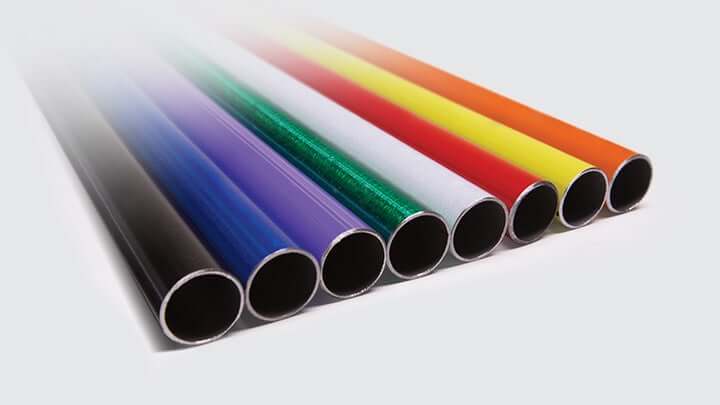
Hasta el momento, el NEC y otras normas NFPA/UL no establecen códigos de colores oficiales para conductos o cables en proyectos de nueva construcción. La industria eléctrica aún carece de un estándar de colores oficial para conductos o EMT (tubos metálicos eléctricos). No existen colores prescritos para diferentes circuitos o niveles de voltaje, por lo que las elecciones de colores para EMT a menudo están influenciadas por preferencias arquitectónicas en lugar de propósitos funcionales.
Si bien no existen requisitos formales, con el tiempo se han desarrollado prácticas informales. Algunas industrias o empresas pueden adoptar sus propios estándares de codificación por colores para satisfacer necesidades operativas o protocolos de seguridad específicos.
A continuación se muestran algunos colores comúnmente utilizados para EMT (tubos metálicos eléctricos) y sus aplicaciones típicas.
| Bloque de color | Solicitud |
|---|---|
| Uso estándar en arquitectura contemporánea y aplicaciones generales. | |
| Se funde con áreas de colores oscuros, comúnmente utilizado en arquitectura. | |
| Se utiliza a menudo en áreas de construcción o investigación, sistemas de fibra óptica y reparación o mantenimiento de automóviles. | |
| Designa cableado de alto voltaje, áreas de precaución y equipos especiales. | |
| Se aplica en entornos hospitalarios y sanitarios, estaciones de llamada de enfermeras y circuitos críticos. | |
| Se utiliza para cableado de bajo voltaje, comunicación de datos y sistemas de vídeo. | |
| Indica sistemas de cableado especiales y sistemas de seguridad. | |
| Se combina con áreas de colores claros, adecuado para diversas aplicaciones generales. | |
| Se utiliza comúnmente para circuitos de emergencia y sistemas de alarma contra incendios. |
NotaLa identificación de colores y las prácticas de uso de los conductos EMT pueden variar según la región, la industria o las especificaciones del proyecto. Si bien los ejemplos anteriores reflejan prácticas comunes, siempre deben prevalecer los códigos, normas y requisitos de la autoridad competente (AHJ) locales. Verifique siempre las convenciones de color de los conductos y los requisitos de cumplimiento según la normativa local aplicable antes de la instalación.
3. Características de protección y rendimiento del conducto EMT
El EMT no es simplemente un conducto de acero de pared delgada; representa un sistema cuidadosamente diseñado para resistir la corrosión, soportar tensiones mecánicas, permanecer estable en diversas condiciones ambientales y mantener la seguridad a temperaturas elevadas o exposición a las llamas. Las siguientes secciones consolidan estos aspectos de rendimiento en un perfil de protección coherente, demostrando cómo el EMT proporciona una protección fiable y duradera para el cableado eléctrico en aplicaciones residenciales, comerciales e industriales.
3.1 Descripción general de los recubrimientos protectores de conductos EMT
Para mejorar la resistencia a la corrosión y prolongar su vida útil, los EMT suelen revestirse con recubrimientos protectores, que pueden ser metálicos, no metálicos u orgánicos. Los recubrimientos metálicos, como el zincado, actúan como una barrera primaria contra la corrosión. La integridad de la capa de zinc se evalúa mediante la prueba de sulfato de cobre, donde un depósito de cobre brillante y adherido indica una protección insuficiente. Un recubrimiento de zinc correctamente aplicado en el exterior del EMT debería evitar un depósito de cobre brillante después de cuatro inmersiones de 60 segundos, mientras que los recubrimientos de zinc interiores se prueban con una sola inmersión.
Los recubrimientos orgánicos y poliméricos ofrecen una resistencia alternativa a la corrosión, especialmente para aplicaciones que requieren exposición a la humedad, productos químicos o temperaturas elevadas. Estos recubrimientos se evalúan en cuanto a elasticidad, adhesión, inflamabilidad y resistencia a la luz ultravioleta, el agua y los factores ambientales, como la niebla salina y la exposición a dióxido de carbono, dióxido de azufre y aire húmedo. Los recubrimientos también se someten a pruebas de acondicionamiento en horno de aire y de impacto en frío para garantizar su durabilidad a temperaturas extremas. Las pruebas de adherencia y resistencia a la tracción confirman que el recubrimiento se mantiene intacto y eficaz durante la manipulación mecánica y la exposición ambiental. En conjunto, estas medidas de protección garantizan que el EMT mantenga su integridad mecánica y resistencia a la corrosión durante su vida útil, según lo especificado en la norma UL 797A.
3.2 Rendimiento mecánico del conducto EMT
El rendimiento mecánico del EMT es fundamental para garantizar su durabilidad durante la instalación y el servicio. Las pruebas estándar evalúan la flexión a temperatura ambiente y a baja temperatura para verificar la ductilidad y la integridad estructural. A temperatura ambiente, el EMT más pequeño se dobla mediante un arco de 90° sin mandril. Los criterios de aceptación incluyen ausencia de grietas, separación de la costura de soldadura y una distorsión mínima de la sección transversal circular.
Para condiciones de baja temperatura (0 °C / 32 °F), las muestras se acondicionan durante 60 minutos y se doblan alrededor de un mandril para formar un arco de 90°. El proceso de doblado debe completarse en un plazo de 15 segundos tras su extracción de la cámara de frío. Los tubos con recubrimientos no metálicos resistentes a la corrosión se prueban a sus temperaturas mínimas nominales. Para tamaños mayores de EMT, se puede utilizar un equipo de doblado adecuado, pero el radio de curvatura se rige por las especificaciones estándar.
Además de la flexión, las pruebas de impacto en frío simulan golpes o caídas accidentales durante la manipulación e instalación. Las muestras se acondicionan a la temperatura baja nominal y luego se someten a una energía de impacto controlada. El recubrimiento no debe separarse del metal ni exponerse al metal desnudo. Estas rigurosas pruebas mecánicas, descritas en las normas UL 797A y CSA C22.2 n.º 83-104, confirman que el EMT puede soportar tensiones de flexión, frío e impacto sin comprometer su recubrimiento protector ni su integridad estructural, lo que garantiza su fiabilidad a largo plazo en instalaciones de campo.
3.3 Resistencia ambiental de tubos eléctricos no metálicos
Los conductos EMT deben soportar diversas tensiones ambientales para garantizar su rendimiento a largo plazo. Los recubrimientos protectores (de zinc, orgánicos u otros materiales alternativos resistentes a la corrosión) se someten a pruebas de resistencia a la humedad, atmósferas corrosivas, luz ultravioleta (UV) y temperaturas extremas.
Las pruebas de niebla salina (niebla) exponen las muestras, tanto recién recibidas como acondicionadas en horno de aire, a una niebla salina durante 600 horas. Las muestras sin rayado deben presentar una corrosión mínima, mientras que las muestras rayadas se evalúan según la distancia de propagación del óxido rojo, lo que garantiza que se mantenga la adhesión del recubrimiento y la protección del sustrato.
Para la exposición a dióxido de carbono, dióxido de azufre y aire húmedo, las muestras de EMT se someten a 1200 horas en una cámara controlada. Las superficies sin rayar deben presentar solo una ligera corrosión, y las áreas rayadas se limitan a una distancia máxima de propagación del óxido de 1,6 a 3,2 mm, sin que el recubrimiento se desprenda del sustrato. Estas pruebas simulan entornos industriales con atmósferas ácidas o contaminadas, lo que confirma la capacidad del recubrimiento para prevenir la degradación del metal.
Las pruebas de exposición a rayos UV y agua evalúan aún más la durabilidad bajo la luz solar y la precipitación. Tanto las muestras con marcas como las no marcadas se exponen a ciclos controlados de luz y agua pulverizada mediante aparatos de arco de carbono o arco de xenón. Los resultados aceptables incluyen ausencia de ampollas y picaduras, y mínima formación de óxido en las zonas marcadas.
El acondicionamiento en horno de aire simula una exposición prolongada a altas temperaturas, típicamente a 100 °C durante 240 horas, antes de que las muestras se sometan a pruebas de niebla salina y aire húmedo con CO₂-SO₂. Esto garantiza que el envejecimiento térmico no comprometa la resistencia a la corrosión.
Estas pruebas ambientales, tal como se define en UL 797A, validan que los conductos EMT con recubrimientos adecuados pueden mantener un rendimiento protector en diversas condiciones de campo, brindando una protección confiable contra la corrosión tanto para instalaciones interiores como exteriores.
3.4 Clasificaciones de temperatura e inflamabilidad de EMT
Los conductos EMT están clasificados para temperaturas ambiente máximas y mínimas para garantizar un funcionamiento seguro en diversas condiciones de campo. Los tubos con recubrimientos alternativos no metálicos resistentes a la corrosión suelen estar marcados con una temperatura máxima de uso de 90 °C (200 °F). Al probarse a temperaturas ambiente superiores, el conducto se marca con la clasificación de temperatura evaluada según la norma UL 797A, cláusula 6.2.4.4.1. De igual manera, la temperatura mínima de uso se marca a 0 °C (32 °F) o la temperatura nominal inferior para conductos sometidos a pruebas especiales (cláusula 6.2.1.3). Las marcas se aplican a intervalos no superiores a 3,05 m (10 pies) a lo largo de cada tramo para garantizar una identificación clara.
La inflamabilidad es fundamental para los conductos EMT en aplicaciones de construcción. Las muestras verticales de tubería con recubrimientos alternativos no metálicos resistentes a la corrosión se someten a tres aplicaciones de llama de 60 segundos, con intervalos de 30 segundos. El conducto no debe continuar ardiendo durante más de 5 segundos después de cada aplicación, ni emitir partículas inflamables que incendien el algodón circundante. No se permite el consumo del recubrimiento durante ni después de la exposición a la llama. La configuración de la prueba sigue directrices precisas para la colocación de la muestra, las dimensiones del quemador, la altura de la llama y la temperatura (punta del cono interior azul ≥ 816 °C / 1500 °F), lo que garantiza una evaluación reproducible y consistente (cláusulas 6.2.4.11.1–6.2.4.11.8).
El cumplimiento de estos estándares de temperatura e inflamabilidad garantiza que los conductos EMT mantengan la integridad mecánica y los recubrimientos protectores tanto bajo estrés térmico como bajo posible exposición al fuego, cumpliendo con estrictos requisitos de seguridad para instalaciones comerciales e industriales ligeras.
3.5 Marcas
Cada tramo recto EMT y codo de fábrica terminados deberán estar marcados con el nombre del fabricante, su nombre comercial u otra marca distintiva. Si la organización responsable es diferente del fabricante, ambos deberán estar identificados. También podrán identificarse las marcas blancas.
En EE. UU., los tubos y codos de varias fábricas deben tener marcas distintivas de fábrica (pueden estar codificados). Esto no aplica en Canadá.
Cada tramo recto y codo deberá estar marcado de forma legible como “Tubería metálica eléctrica” o “EMT”, con letras de al menos 3 mm (1/8 pulg.) de alto, utilizando métodos duraderos (estampado, tinta, pintura).
Cada pieza terminada deberá estar marcada con “Consulte al fabricante para una instalación adecuada” o una frase equivalente.
Los tubos con un revestimiento alternativo no metálico resistente a la corrosión pueden marcarse con una temperatura máxima de uso de 90 °C (200 °F) o la temperatura máxima probada. Frecuencia de marcado: al menos una vez cada 3,05 m (10 pies) y al menos una vez por pieza.
De manera similar, la temperatura mínima de uso puede marcarse como 0°C (32°F) o el mínimo probado, con la misma frecuencia de marcado.
3.6 Aplicaciones de la EMT: dónde y cuándo utilizarla
Edificios comercialesEl EMT se utiliza ampliamente en tiendas, oficinas, centros educativos y restaurantes, donde el entorno de cableado es limpio, seco y predecible. Su diseño elegante y perfil delgado facilitan su integración en falsos techos y tabiques.
Entornos industriales ligerosEn manufactura ligera, áreas de ensamblaje, laboratorios y talleres donde los sistemas eléctricos están expuestos a cierta actividad pero no a un gran estrés mecánico, EMT ofrece un buen equilibrio entre protección, costo y flexibilidad.
Garajes residenciales interiores y áreas de servicio:Para garajes residenciales, sótanos o cuartos de servicio que requieren cableado de superficie visible, EMT proporciona una solución organizada, que cumple con el código y visualmente limpia sin la necesidad de sistemas de conductos de alta resistencia.
Edificios públicos e institucionales:Los hospitales, escuelas, aeropuertos y centros comunitarios a menudo utilizan EMT para tramos expuestos o semiocultos porque permite una instalación rápida, un trazado limpio y un fácil mantenimiento futuro.
Techos y tabiques divisorios en obra nuevaDebido a que el EMT se dobla suavemente y se dirige ordenadamente a través de espacios arquitectónicos reducidos, es muy adecuado para cableado en techos y paredes divisorias livianas en construcciones nuevas, lo que permite una instalación rápida y al mismo tiempo mantiene la integridad estructural.
Espacios de servicios públicos de riesgo bajo a moderado:En salas mecánicas, armarios de equipos y pasillos de servicio interiores donde se controlan la temperatura, la humedad y los riesgos físicos, el EMT proporciona suficiente protección al tiempo que permite un mantenimiento cómodo.
4. Comprensión de los conductos rígidos: tipos, características y usos
4.1 ¿Qué es un conducto rígido?
El conducto rígido se refiere a un tipo de conducto eléctrico que se caracteriza por su construcción sólida y de paredes gruesas. Este conducto está diseñado para proporcionar una vía protectora resistente y duradera para el cableado eléctrico. A diferencia de los conductos flexibles, los conductos rígidos son rígidos e inflexibles, lo que ofrece una protección superior contra daños físicos y factores ambientales.
Los conductos rígidos pueden ser metálicos o no metálicos, y dentro de esas categorías se incluyen distintos tipos. Los conductos metálicos suelen estar hechos de acero revestido, acero inoxidable o aluminio, con o sin canalización roscada. Los tubos no metálicos, sin rosca y de paredes lisas están disponibles en varios sustratos, incluidos polietileno de alta densidad, PVC y RTRC (fibra de vidrio).
Es importante tener en cuenta que, según la costumbre y el contexto, el término "conducto rígido" a veces se utiliza indistintamente con "conducto metálico rígido" para referirse específicamente al tipo de metal. Sin embargo, en un sentido más amplio, también puede incluir otros tipos rígidos, como los conductos de cloruro de polivinilo (PVC).
4.2 ¿Cuáles son los tipos de conductos rígidos?
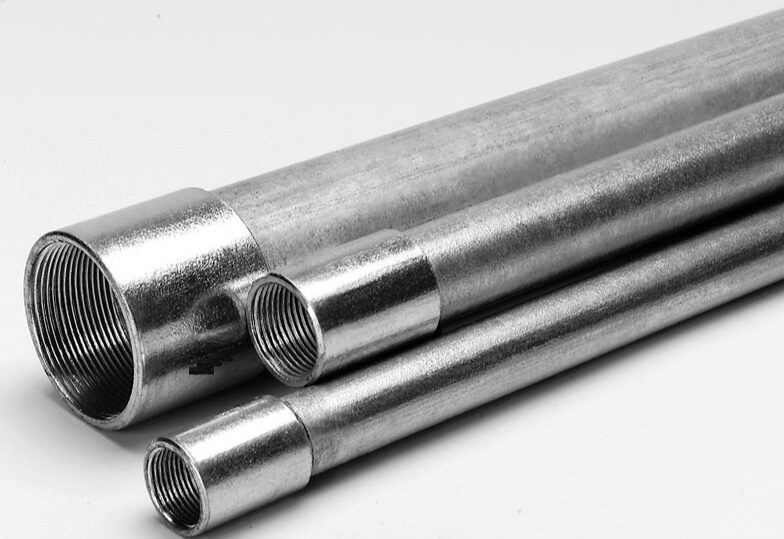
El conducto metálico rígido (RMC) es una canalización roscada de sección circular diseñada para la protección física y el tendido de conductores y cables. (Consulte el artículo 344 del NEC)
La construcción de conductos metálicos rígidos (RMC) está regulada por diversas normas, como la NEC 344.100, que especifica los materiales que se pueden utilizar para fabricar RMC. Según esta norma, los RMC deben estar fabricados con uno de los siguientes materiales: acero con revestimientos protectores, aluminio, latón rojo, acero inoxidable.
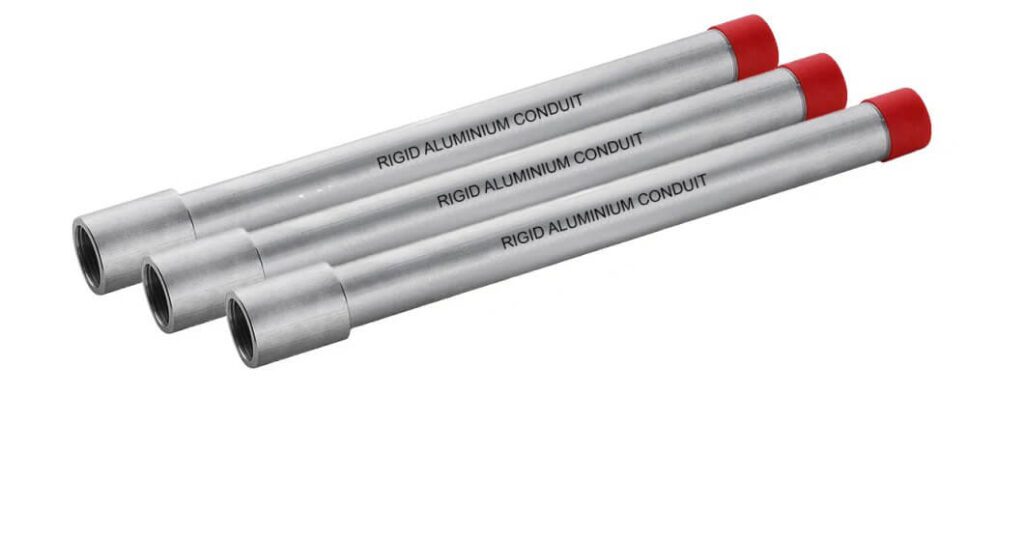
Cabe destacar que el conducto rígido de acero galvanizado (GRC) es un tipo específico de conducto metálico rígido (RMC) fabricado con acero galvanizado. El proceso de galvanización consiste en recubrir el acero con una capa de zinc para mejorar su resistencia a la corrosión, lo que lo hace especialmente adecuado para aplicaciones industriales y de exterior donde la exposición a la humedad, productos químicos u otros elementos corrosivos es un factor importante.
Dado que el GRC se conoce comúnmente como RMC, puede haber cierta confusión al momento de realizar la compra. Por lo tanto, es esencial confirmar con su proveedor exactamente qué materiales se utilizan en la construcción del conducto para asegurarse de que cumple con los requisitos específicos de su proyecto. Esta distinción es importante porque, si bien el GRC ofrece una excelente durabilidad y resistencia a la corrosión, otros materiales como el aluminio, el latón rojo o el acero inoxidable pueden ser más adecuados según la aplicación y las condiciones ambientales.
Además del conducto rígido galvanizado (GRC), existen otros tipos de conductos rígidos, como el conducto rígido de aluminio (RAC) y el conducto rígido de acero (RSC), cada uno con funciones específicas según las propiedades de su material. Los nombres de estos conductos indican directamente el material del que están hechos.
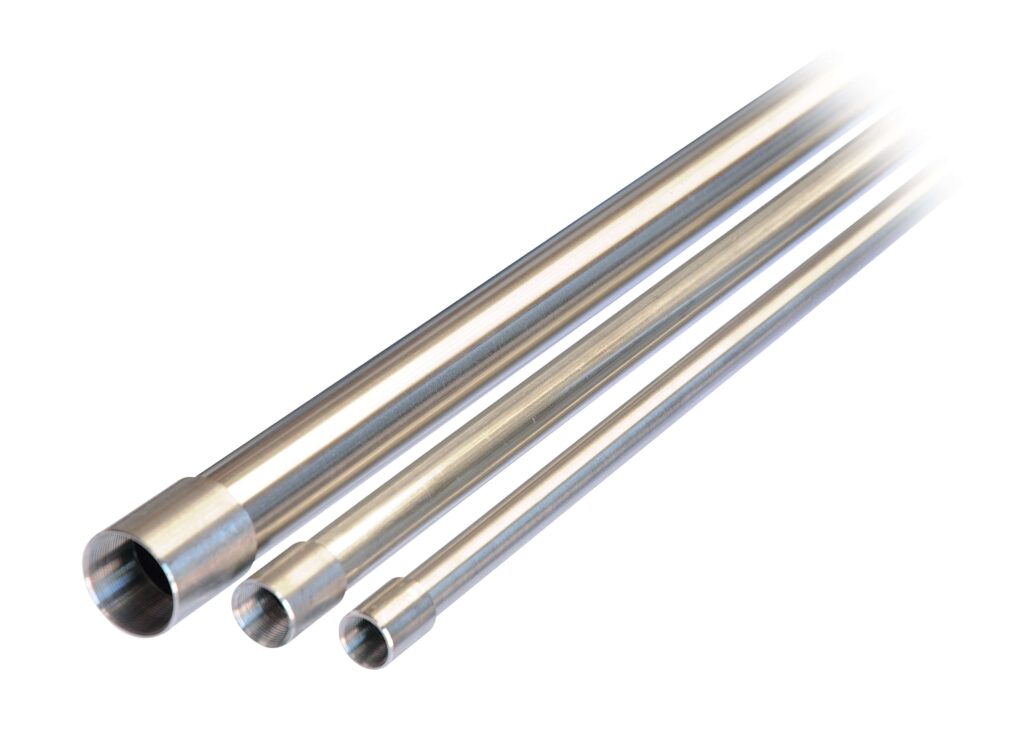
El conducto de aluminio rígido (RAC) está hecho de aluminio liviano pero duradero, lo que ofrece una excelente resistencia a la corrosión y lo hace ideal para aplicaciones tanto en interiores como en exteriores donde la facilidad de manejo y el peso reducido son beneficiosos.
Por otro lado, el conducto de acero rígido (RSC) está construido con acero robusto, lo que proporciona una resistencia superior y protección mecánica para el cableado eléctrico en entornos hostiles o de alto impacto.
Tanto RAC como RSC ofrecen ventajas distintivas según las condiciones y requisitos de instalación, brindando a los usuarios flexibilidad para elegir el material de conducto adecuado para sus necesidades específicas.
Verifique siempre las especificaciones del material con su proveedor para asegurarse de obtener el tipo de conducto adecuado para sus necesidades, especialmente cuando el término “RMC” se usa indistintamente con “GRC”.”
Conducto metálico intermedio (IMC)
El Conducto Metálico Intermedio (CMI) es una canalización roscada de acero de sección circular, diseñada para la protección física y el tendido de conductores y cables. (Consulte el artículo 342 del NEC)
El conducto metálico intermedio (IMC) debe estar hecho de uno de los siguientes materiales: acero con revestimientos protectores y acero inoxidable. El conducto metálico intermedio (IMC) pesa aproximadamente 33% menos que el conducto metálico rígido (RMC).
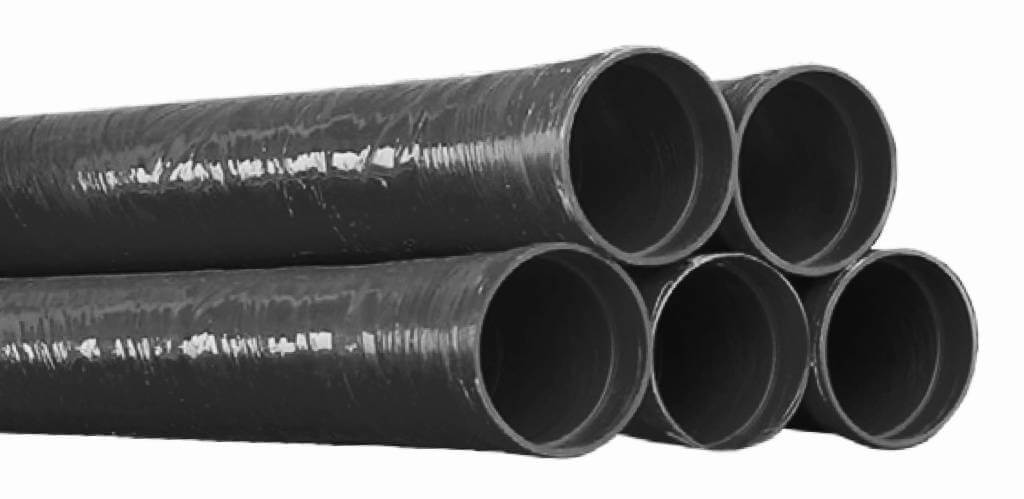
El conducto de resina termoendurecible reforzada (RTRC) es una canalización rígida no metálica de sección circular, con acoplamientos, conectores y accesorios integrados o asociados para la instalación de conductores y cables eléctricos. (Consulte el artículo 353 del NEC)
El conducto RTRC, también conocido como conducto de fibra de vidrio, se crea enrollando en tensión hebras de fibra de vidrio sobre un mandril giratorio, antes de impregnar las hebras con resina y curarlas a alta temperatura, lo que da como resultado una alta resistencia a la flexión y resistencia a altas temperaturas. El RTRC se caracteriza por su resistencia a la corrosión, estabilidad UV, rango de temperatura superior (incluido un excelente manejo a bajas temperaturas).
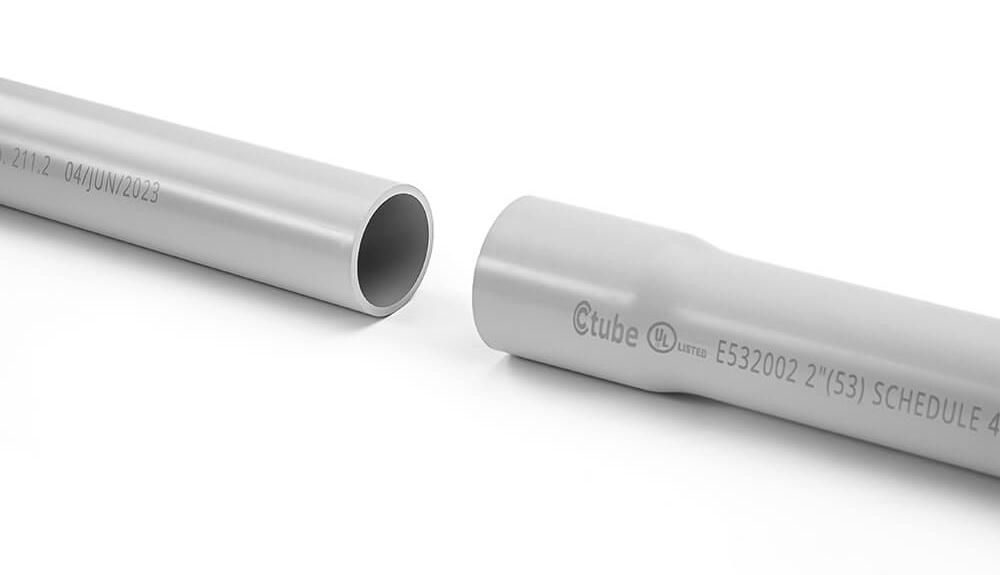
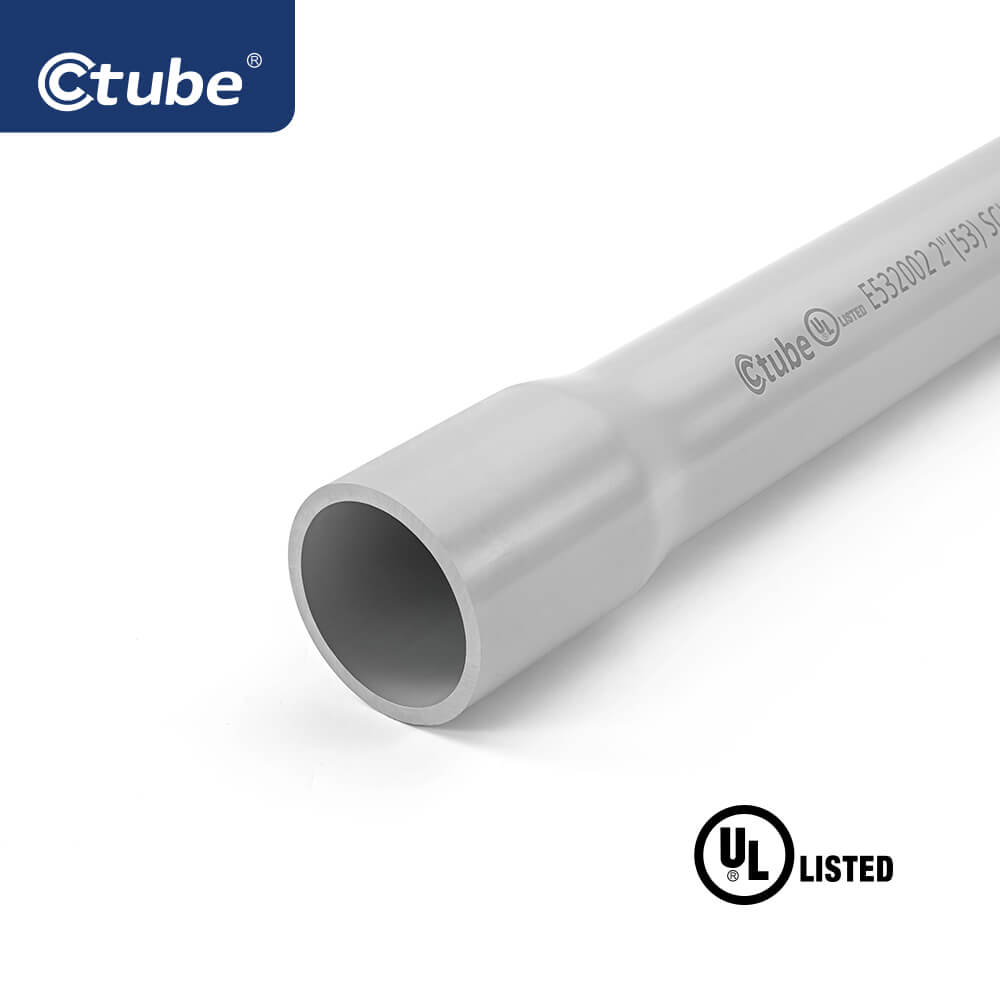
El conducto rígido de cloruro de polivinilo (PVC) es una canalización rígida no metálica de sección circular. (Consulte el artículo 352 del NEC)
Los conductos de PVC rígido están fabricados con cloruro de polivinilo, un plástico muy duradero conocido por su excepcional resistencia a la humedad, los productos químicos y los factores ambientales. La fórmula específica del PVC que se utiliza para los conductos suele incluir aditivos para mejorar propiedades como la resistencia a los rayos UV, la flexibilidad y la resistencia al impacto. Estos aditivos garantizan que el conducto funcione bien en diversas condiciones, incluidas las condiciones climáticas extremas y la exposición a la luz solar.
4.3 ¿Cuáles son los tamaños de los conductos rígidos?
RTRC es un poco más específico y, según la información de algunos de los proveedores, sabemos que la fibra de vidrio tiene una variedad de diferentes tipos de conductos eléctricos para cumplir con los requisitos de diferentes tipos de trabajos.
| CMR | CMI | Conducto de PVC (SCH 40) | RTC-RTC | ||||
|---|---|---|---|---|---|---|---|
| 1/2 | 0.104 | 1/2 | 0.078 | 1/2 | 0.109 | 3/4 | Espesor |
| 3/4 | 0.107 | 3/4 | 0.083 | 3/4 | 0.113 | 1 | SW = Pared estándar |
| 1 | 0.126 | 1 | 0.093 | 1 | 0.133 | 1-1/4 | MW = Pared media |
| 1-1/4 | 0.133 | 1-1/4 | 0.095 | 1-1/4 | 0.14 | 1-1/2 | HW = Pared gruesa |
| 1-1/2 | 0.138 | 1-1/2 | 0.1 | 1-1/2 | 0.145 | 2 | XW = Pared extra pesada |
| 2 | 0.146 | 2 | 0.105 | 2 | 0.154 | 2-1/2 | |
| 2-1/2 | 0.193 | 2-1/2 | 0.15 | 2-1/2 | 0.203 | 3 | |
| 3 | 0.205 | 3 | 0.15 | 3 | 0.216 | 3-1/2 | |
| 3-1/2 | 0.215 | 3-1/2 | 0.15 | 3-1/2 | 0.226 | 4 | |
| 4 | 0.225 | 4 | 0.15 | 4 | 0.237 | 4-1/2 | |
| 5 | 0.245 | 5 | 0.28 | 5 | |||
| 6 | 0.268 | 6 | N / A | 6 | |||
| 8 | 0.322 | ||||||
| *Aquí se utiliza la pulgada como unidad para medir el espesor de la pared.* | |||||||
Por ejemplo, la serie IPS tiene pared estándar (SW), espesor .070, pared media (MW), espesor .096, pared pesada (HW), espesor 110, pared extra pesada (XW), espesor 250.
Es importante tener en cuenta que las dimensiones que se indican aquí, junto con el espesor de pared correspondiente, pueden variar ligeramente según el proveedor. Estas variaciones se encuentran dentro del rango estándar aceptable. Para obtener información específica sobre el espesor de pared, confirme directamente con el proveedor.
4.4 ¿Cuál es la ventaja del conducto rígido?
Durabilidad y resistencia: El conducto rígido es muy duradero y resistente a daños físicos. Su sólida construcción protege el cableado eléctrico de impactos, aplastamientos y otros riesgos potenciales, lo que lo hace adecuado tanto para instalaciones expuestas como ocultas en entornos exigentes.
Protección contra factores ambientalesEl conducto rígido ofrece una excelente protección contra elementos ambientales como la humedad, los productos químicos y la radiación UV. Esto lo hace ideal para instalaciones exteriores, cableado subterráneo y entornos donde la exposición a condiciones adversas es un riesgo.
Resistencia al fuegoCiertos tipos de conductos rígidos, como los de acero, ofrecen propiedades ignífugas, lo que ayuda a contener la propagación de las llamas en caso de incendio. Esto mejora la seguridad general del sistema eléctrico.
Larga vida útilGracias a su robusta construcción y resistencia a la corrosión y al desgaste, el conducto rígido ofrece una larga vida útil. Esto reduce la necesidad de reemplazos o reparaciones frecuentes, lo que se traduce en menores costos de mantenimiento a largo plazo.
Versatilidad en aplicacionesEl conducto rígido es versátil y se puede utilizar en una amplia gama de aplicaciones, desde entornos residenciales hasta industriales. Es adecuado tanto para instalaciones superficiales como subterráneas, así como para entornos especiales como zonas costeras o entornos de alta temperatura.
4.5 ¿Cuál es la aplicación del conducto rígido?
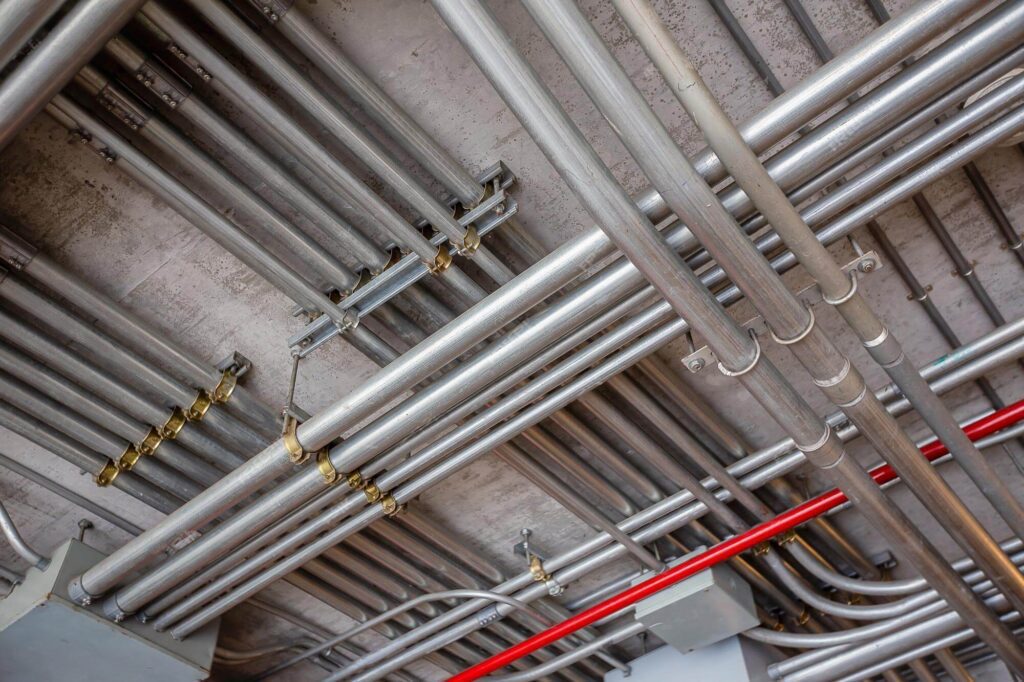
Instalaciones exteriores y entradas de servicioEl conducto rígido es ideal para tramos exteriores expuestos, entradas de servicio e instalaciones en paredes exteriores donde la canalización puede estar expuesta a la intemperie, contacto físico o impactos accidentales. Su robusta construcción de pared y sus recubrimientos protectores ofrecen una resistencia duradera a la humedad, la exposición a los rayos UV y la corrosión.
Instalaciones industriales y fabricación pesadaFábricas, plantas de producción, refinerías y entornos de fabricación pesada suelen utilizar conductos rígidos debido a que las carretillas elevadoras, la maquinaria y las actividades de manipulación de materiales presentan altos riesgos mecánicos. Los conductos rígidos proporcionan la máxima protección para sistemas de cableado críticos gracias a su superior resistencia a los impactos y robustez estructural.
Ubicaciones peligrosas (áreas clasificadas)Las plantas químicas, las instalaciones petroquímicas, las plantas de tratamiento de aguas residuales y las zonas de almacenamiento de materiales inflamables suelen requerir conductos rígidos debido a su capacidad de contención y compatibilidad con accesorios antideflagrantes. Esto ayuda a reducir el riesgo de ignición en entornos clasificados.
Instalaciones SubterraneasLos conductos rígidos se utilizan comúnmente para conductores de servicio subterráneos y vías enterradas donde la presión del suelo, la humedad y las condiciones de movimiento pueden dañar los conductos más ligeros. Su rigidez y sus recubrimientos resistentes a la corrosión garantizan una fiabilidad a largo plazo.
Áreas públicas de alto tráficoLas estaciones de transporte público, estadios, estacionamientos e infraestructuras públicas se benefician de la excepcional resistencia al impacto de los conductos rígidos. Su robusta construcción ayuda a prevenir daños causados por el público, carritos, vehículos o equipos.
Instalaciones estructurales que requieren soporte adicionalEn situaciones en las que el sistema de conductos también puede servir como soporte mecánico (por ejemplo, para montar cajas de tiro, cajas de conexiones u otros accesorios), la resistencia y la capacidad de soportar carga de los conductos rígidos ayudan a mantener la estabilidad del sistema.
Entornos corrosivos o hostilesCon opciones como galvanizado en caliente, revestimientos de PVC o aleaciones resistentes a la corrosión, los conductos rígidos pueden soportar entornos marinos, regiones costeras, instalaciones de procesamiento de alimentos y zonas de exposición química donde la protección contra la corrosión es crucial.
5. EMT vs. Conducto rígido: una comparación práctica
Elegir entre conductos EMT y rígidos suele depender de un equilibrio entre el nivel de protección, las condiciones de instalación, el coste y los requisitos de la normativa. Si bien los EMT ofrecen versatilidad y ligereza, y se utilizan ampliamente en proyectos comerciales e industriales ligeros, los conductos rígidos (disponibles en acero, aluminio, PVC, fibra de vidrio y otros materiales) ofrecen un espectro más amplio de durabilidad y resistencia ambiental. Dado que los conductos rígidos abarcan una gran variedad de materiales y estándares, su rendimiento puede variar considerablemente entre productos.
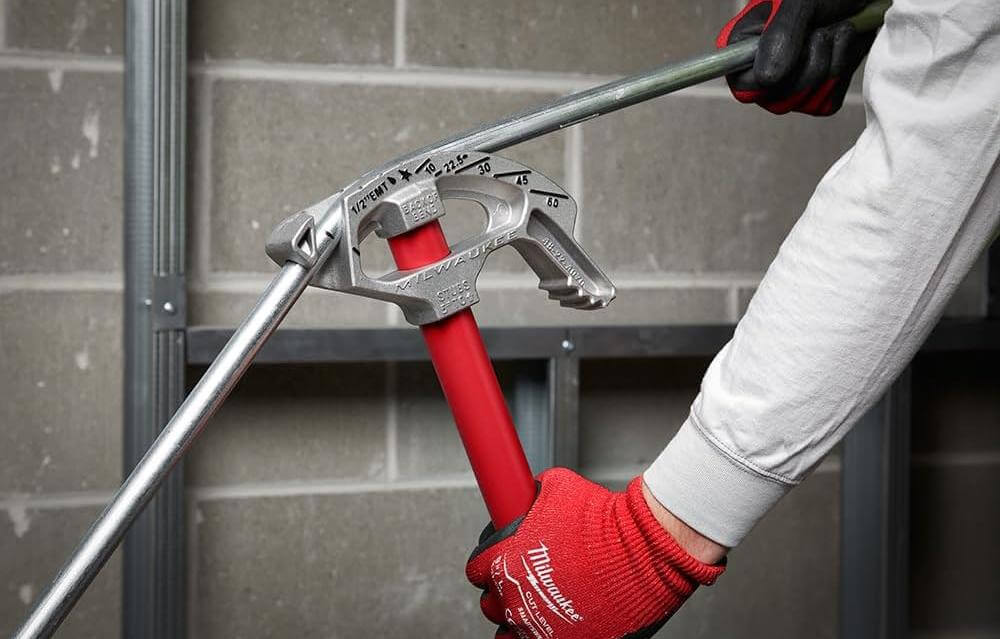
Para ayudar a los lectores a comprender las diferencias principales, la siguiente tabla resume las características más comúnmente comparadas entre los conductos EMT y los conductos rígidos. Este resumen destaca las tendencias generales en lugar de especificaciones estrictas.
| Categoría | EMT (tubería metálica eléctrica) | Conducto rígido (metal, PVC o fibra de vidrio) |
|---|---|---|
| Material y estructura | Acero de pared delgada; estructura ligera; interior liso. | Puede ser de acero, PVC o fibra de vidrio; de pared gruesa y más robusta. |
| Espesor de la pared | De pared delgada, sin rosca | De pared gruesa; los tipos de metal son roscables |
| Peso | Ligero; fácil de manipular e instalar. | Más pesado; varía según el material (acero > PVC > FRP) |
| Flexibilidad / Capacidad de doblado | Fácil de doblar con una dobladora manual; radios estrechos posibles | Flexibilidad limitada; el metal requiere una dobladora hidráulica; el PVC a menudo requiere calor |
| Resistencia mecánica | Resistencia moderada al impacto/aplastamiento | Alta protección física; soporta entornos de trabajo pesado |
| Resistencia a la corrosión | Recubierto de zinc; rendimiento moderado frente a la corrosión | Depende del material: acero galvanizado (bueno), acero recubierto de PVC (excelente), PVC/FRP (excelente) |
| Idoneidad ambiental | Ideal para espacios interiores secos o controlados. | Adecuado para interiores/exteriores, subterráneos, lugares corrosivos o hostiles. |
| Temperatura e inflamabilidad | Gobernado por UL 797 / UL 797A | Varía según el estándar: metal (alto), PVC/FRP (depende del material) |
| Conexión a tierra/unión | Proporciona una ruta de conexión a tierra confiable para el equipo. | El metal proporciona conexión a tierra; el PVC/FRP no (requiere un conductor de conexión a tierra separado) |
| Blindaje EMI | Buen blindaje | Metal rígido: excelente; PVC/FRP: ninguno |
| Herramientas de instalación | Herramientas sencillas: dobladora manual, cortadora, escariadora | Herramientas exigentes: roscadora (metal), dobladora hidráulica (metal), calentador (PVC) |
| Mano de obra de instalación | Más rápido y fácil; menor coste laboral | Más lento; más pasos y manejo más pesado |
| Compatibilidad de accesorios | Accesorios de compresión o de tornillo de fijación específicos para EMT | Depende del material: roscado (metal), cemento solvente (PVC), adhesivo (FRP) |
| Uso típico en interiores | Edificios comerciales, industria ligera, instituciones | Salas de máquinas, plantas industriales, áreas públicas expuestas |
| Uso exterior/subterráneo | Limitado sin protección adicional | Gran idoneidad; ampliamente utilizado en exteriores y subterráneos. |
| Ubicaciones peligrosas | No se especifica comúnmente | Se requiere con frecuencia para ubicaciones peligrosas de clase I/II/III |
| Costo – Material | Más bajo | Alto (metal), moderado (PVC), medio-alto (FRP) |
| Costo – Instalación | Menor costo total de instalación | Mayor debido a mano de obra/herramientas |
| Vida útil | Largo tiempo en entornos controlados | Muy largo; excelente en entornos exigentes. |
| Mejor para | Instalaciones limpias, secas y de riesgo bajo a moderado | Aplicaciones industriales o exteriores duras, corrosivas y de alto impacto. |
Esta comparación es solo una referencia general. Dado que los conductos rígidos incluyen múltiples materiales y normas de prueba, y dado que el rendimiento varía considerablemente entre tipos, esta tabla no debe utilizarse como única base para la selección de productos.
Al planificar una instalación, revise siempre las hojas de datos técnicos, las certificaciones y los valores de prueba de su proveedor para asegurarse de que el conducto cumpla con los requisitos ambientales, mecánicos y reglamentarios de su proyecto.
6. Conclusión
Elegir el conducto adecuado, ya sea EMT, conducto metálico rígido, PVC o LSZH, es fundamental para garantizar el rendimiento, la seguridad y la fiabilidad a largo plazo del sistema eléctrico. Cada tipo de conducto ofrece ventajas únicas en cuanto a resistencia, resistencia a la corrosión, rendimiento térmico, coste y facilidad de instalación.
Debido a la amplia variedad de materiales, normas y requisitos de aplicación de los conductos, es importante que contratistas, ingenieros e inspectores consideren las condiciones reales del proyecto en lugar de basarse en una sola característica o una comparación generalizada. Factores como la exposición ambiental, el impacto físico, la resistencia química, los requisitos de flexión y el cumplimiento normativo siempre deben guiar la selección final.
Además, el rendimiento de los conductos puede variar significativamente entre fabricantes. La tolerancia a la temperatura, la resistencia a los rayos UV, la resistencia al impacto y las propiedades de envejecimiento a largo plazo se ven directamente influenciadas por la calidad de la materia prima, la formulación de la resina, los estabilizadores y los recubrimientos protectores. Por ejemplo, Tubo C’'s Conducto de baja emisión de humo y cero halógenos (LSZH) La serie, diseñada específicamente para seguridad contra incendios y aplicaciones de baja emisión de humo, está diseñada para funcionar de manera confiable de –45 °C a +150 °C (de –49 °F a 302 °F).
Nuestro Conducto de PVC La serie Solar está diseñada para ofrecer robustez, resistencia química y un uso comercial e industrial típico, mientras que los conductos de PVC de la serie Solar están formulados para entornos exteriores con altas temperaturas, manteniendo un rendimiento estable desde -15 °C hasta +105 °C (+5 °F a 221 °F). Estas diferencias demuestran cómo los diferentes materiales pueden satisfacer diversas necesidades de proyectos.
¡Gracias por leer! Esperamos que este artículo te sea útil.
Si tiene un proyecto o necesita más información sobre nuestros conductos, no dude en contactarnos. ¡Le deseamos un proyecto exitoso y sin contratiempos!
Preguntas frecuentes
¿Cuál es la diferencia entre el conducto EMT y el IMC?
El IMC (conducto metálico intermedio) es más pesado y duradero que el EMT (tubería metálica eléctrica), pero más liviano que el RMC (conducto metálico rígido).
EMT tiene paredes delgadas, es liviano y fácil de doblar, lo que lo hace ideal para aplicaciones en interiores donde la velocidad de instalación y la rentabilidad son importantes.
El IMC, con sus paredes más gruesas y su aleación de acero más resistente, ofrece mayor protección contra daños físicos y corrosión, lo que lo hace adecuado tanto para interiores como para exteriores. Ofrece un equilibrio entre durabilidad y facilidad de manejo, lo que lo convierte en una opción versátil en numerosas instalaciones eléctricas.
¿RMC es lo mismo que RGS o EMT?
El acero galvanizado rígido (RGS) es un tipo específico de RMC. En esencia, RGS significa RMC de acero galvanizado.
RMC e IMC comparten muchas características: ambos utilizan extremos roscados, accesorios roscados y, a veces, accesorios sin rosca.
IMC tiene paredes ligeramente más delgadas pero utiliza una aleación más fuerte para mantener la resistencia general, lo que lo hace más liviano, más rentable y ofrece un poco más de capacidad de llenado en el mismo tamaño comercial.
El EMT es diferente: no se puede roscar y, en su lugar, utiliza conectores de tornillo de fijación o de compresión. El EMT se usa comúnmente en interiores y no es adecuado para lugares expuestos a daños físicos, donde se requerirían RMC o IMC.
¿Se pueden doblar los tubos EMT y los conductos rígidos?
Sí. El EMT se puede doblar fácilmente debido a sus paredes delgadas y construcción liviana, lo que lo hace ideal para doblarlo en campo con dobladoras manuales estándar.
Sin embargo, los conductos metálicos rígidos son mucho más difíciles de doblar debido a su grosor y resistencia. Si bien existen equipos para doblarlos, generalmente no se recomienda que la mayoría de los instaladores lo hagan en obra. En muchos casos, es más práctico usar codos y accesorios de fábrica, o bien optar por conductos flexibles cuando se requieren cambios de dirección.
¿Qué normas regulan los conductos EMT y rígidos?
Varias normas importantes rigen la construcción, el rendimiento y la instalación de EMT y conductos rígidos:
Código Eléctrico Nacional (NEC)
Artículo 358: Requisitos de instalación para EMT.
Artículos 342, 344, 355, 352: Requisitos para conductos metálicos rígidos y conductos de PVC rígidos.
Normas de Underwriters Laboratories (UL)
UL 797: Requisitos de seguridad y pruebas de rendimiento para EMT.
UL 6: Ensayos físicos, mecánicos y de resistencia a la corrosión para conductos metálicos rígidos.
UL 651: Requisitos para conductos rígidos de PVC de las series 40 y 80.
Instituto Nacional Estadounidense de Estándares (ANSI)
ANSI C80.3: Dimensiones y tolerancias para EMT.
ANSI C80.1: Requisitos para conductos rígidos de acero, incluyendo propiedades del material y recubrimientos.
Asociación Canadiense de Normas (CSA)
CSA-C22.2 N.° 83.1: Técnico en emergencias médicas y codos.
CSA C22.2 N.° 45.2: Conducto metálico rígido.
CSA C22.2 N.° 211.2: Conductos y accesorios de PVC rígido.
Estos ejemplos se proporcionan solo como referencia. Para aplicaciones específicas, consulte siempre los documentos estándar originales y verifique el cumplimiento con la información técnica proporcionada por el proveedor.


 English
  French
  Spanish
  German
  Arabic
  Indonesian
  Vietnamese