
1. Pendahuluan
Sourcing high-quality PPR pipes from China is a proven strategy for international MEP contractors and wholesale distributors to protect project margins. However, treating PPR as a low-tech commodity is a multi-million dollar mistake. In high-pressure commercial plumbing and HVAC networks, your piping system isn’t just an expense—it’s an engineering specification.
To stop wasting procurement hours on superficial catalog browsing, this guide moves past entry-level explanations to deliver an authoritative, science-backed material audit. We crack open the true engineering metrics behind Polypropylene Random Copolymer, decrypt the hidden cost drivers in Chinese manufacturing pricing structures, and provide a battle-tested technical checklist to ensure your supply chain remains failure-free for the next 50 years.
2. The Molecular Foundation of PPR Pipe: Why “Random Copolymer” Matters
To understand the advantages of PPR pipe, one must look at the microscopic level. Not all polypropylene is created equal.
The Chemistry of Resilience
At its core, PPR pipe is produced through the Random Copolymerization of propylene and ethylene. In a standard polypropylene (PP-H), the molecules are arranged in a very rigid, uniform pattern.
However, in PPR pipe, small amounts of ethylene (typically 3% to 5%) are “randomly” inserted into the long chains of propylene.
Note: This data is for reference only; specific formulations and polymer structures may vary among different raw material suppliers and specialized grades.
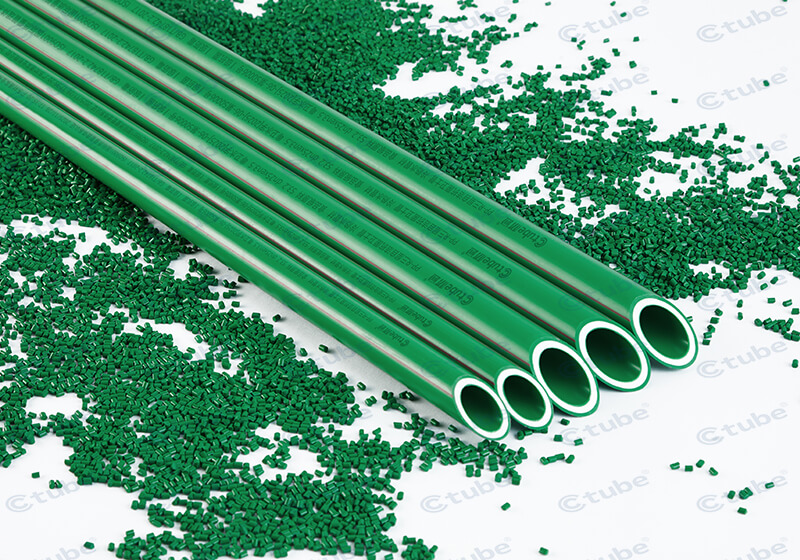
The Science of Crystallinity: This specific concentration is not arbitrary. It is the result of rigorous material science aimed at optimizing the Crystalline Structure. In simple terms, while standard polypropylene is highly crystalline (very rigid and organized), the random ethylene molecules act as a “disruptor.” They break up these large, stiff crystalline regions and create more “amorphous” (flexible) zones.
If the ethylene content is too low, the pipe becomes too crystalline and brittle, increasing the risk of “Environmental Stress Cracking.” If it exceeds the optimal threshold, the material’s Long-term Hydrostatic Strength (LTHS) begins to degrade, compromising its ability to hold high pressure at elevated temperatures over decades.
An Intuitive Breakdown: To visualize the difference, imagine standard polypropylene (PP-H) as a bundle of straight, perfectly parallel ropes. Because these ropes are so neatly organized (highly crystalline), they are strong when pulled in one direction, but they can easily slide past one another or snap at the gaps when subjected to sudden bending or localized pressure.
In PPR pipe, however, the randomly integrated ethylene molecules act like “strategic knots” tied along those ropes. These knots disrupt the simple, rigid parallel alignment, forcing the long molecular chains to intertwine and interlock with one another.
The Result: When the pipe is hit by an external impact or stressed by internal hydraulic pressure, these “molecular knots” (and the flexible zones they create) absorb the energy and prevent micro-cracks from spreading. This balance of “hardness” and “toughness” is what makes PPR so durable.
Thermal Stability and Pressure Endurance
The random distribution of these molecules creates a material that doesn’t just “sit” there; it performs. For professionals, the key metric is the Hydrostatic Pressure Strength.
Because of the random copolymer structure, PPR exhibits a high Melt Flow Rate (MFR) and superior long-term hydrostatic strength. This allows the pipe to handle continuous hot water temperatures of up to 70°C for a projected lifespan of 50 years, with a short-term peak tolerance of 95°C.
Ordinary plastic pipes under long-term hot water stress are like an old rubber band left in the sun. Initially elastic, the heat and tension eventually cause the molecular chains to snap and loosen. In a plumbing system, this leads to thinning walls, seepage, and sudden bursts.
PPR, by contrast, acts like a “smart protective net” woven from high-strength fibers. Even at a constant 70°C, these “fibers” remain tightly interlocked. This structure doesn’t just withstand the continuous “pushing” of high-pressure water—it ensures the system remains as tough as day one, even after decades of use, effectively eliminating thermal fatigue.
Tips Profesional: Want to learn more about SDR & Pressure Rating? Read our expert tutorial on Temperature Limits, SDR Ratings.
Engineering Specification: Material Science & Structural Fatigue Limits
To design or source a reliable pressurized fluid network, professionals must evaluate PPR based on its molecular performance and structural layer integrity rather than just unit price.
A critical technical metric is the Inner Wall Smoothness. Premium PPR systems feature an absolute surface roughness coefficient of just 0,007 mm (compared to metal pipes which range from 0.02 mm to 0.05 mm). This microscopic smoothness eliminates friction loss, prevents calcium scaling accumulation, and dramatically reduces pipeline pressure drop. In large-scale commercial MEP designs, lower fluid resistance directly translates to reduced pumping power requirements, saving up to 15% in long-term facility energy costs.
Furthermore, selecting the right structural layer composition dictates the safety boundary of your installation:
PPR Pipe Structural Layer & Application
| Material Configuration | Technical Metric / Pressure Boundaries | Ideal Engineering Application |
| Standard 1-Layer PPR | 100% Virgin Type 3 Polypropylene. High hydrostatic strength at standard ambient temps. | General domestic cold/hot water distribution, high cost-efficiency projects. |
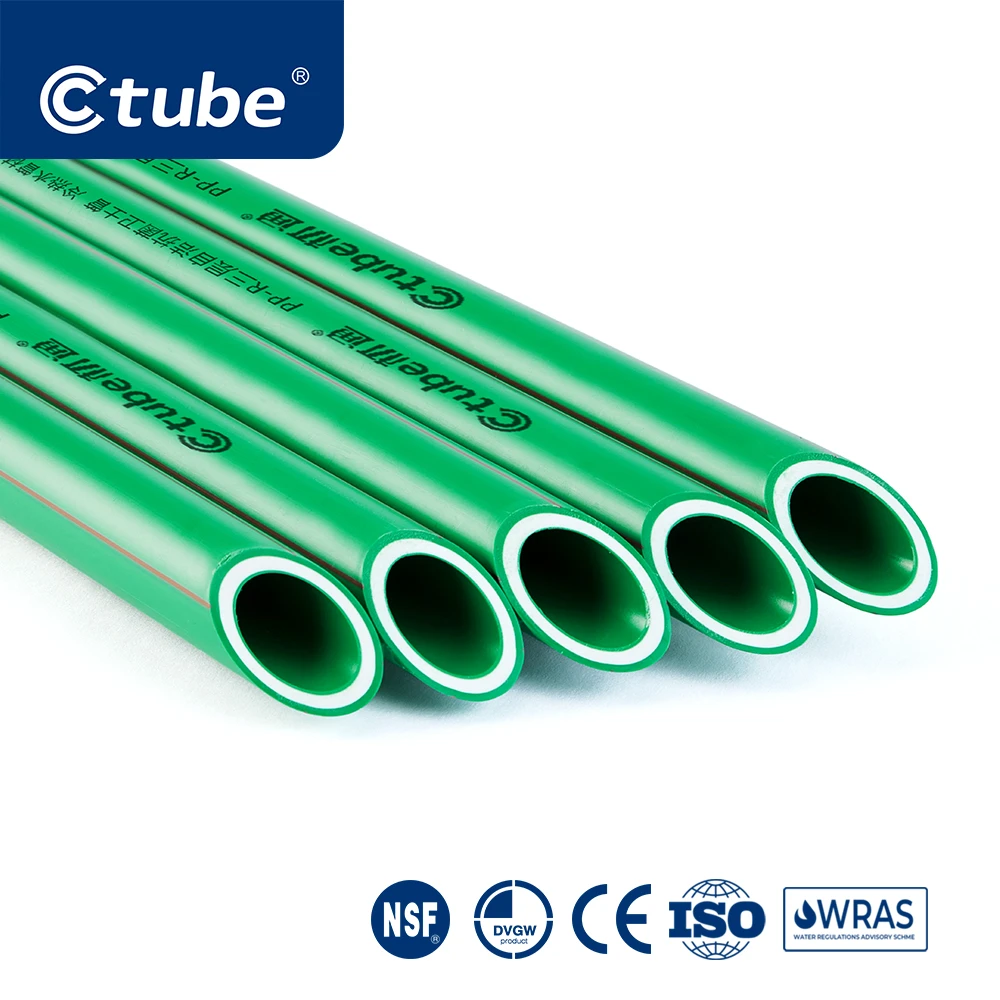
| Advanced 2-Layer PPR | Specialized Anti-Bacterial Inner Layer co-extruded with an outer protective PPR matrix. | Pure water networks, food-processing facilities, hospital and laboratory fluid piping. |
| Heavy-Duty 3-Layer FR-PPR | PPR + Glass Fiber Reinforced Composite Center Layer + PPR. Reduces linear expansion by 75%. | High-temperature HVAC riser mains, exposed outdoor lines, boiler connection loops. |
3. Thermal and Acoustic Physics — The Invisible Benefits
While the durability of a piping system is a primary concern for engineers, the daily comfort of the end-user depends on two invisible factors: thermal efficiency and noise control.
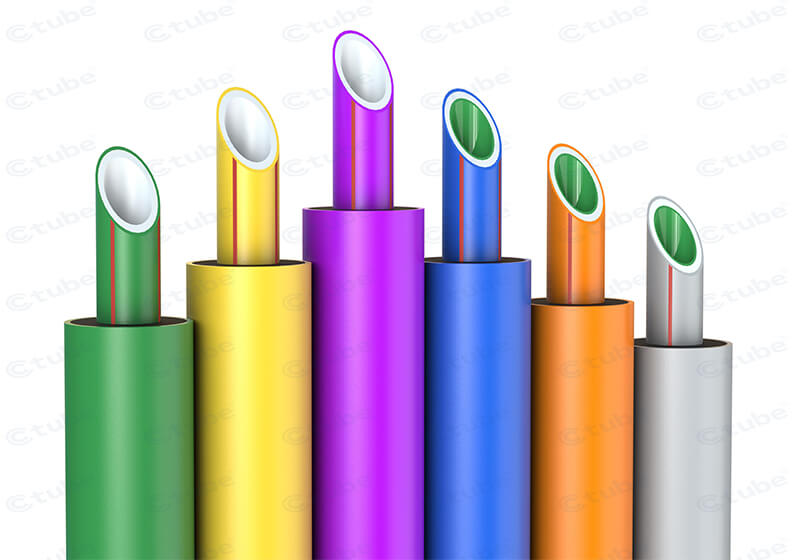
Superior Thermal Insulation (Energy Efficiency)
One of the standout physical properties of PPR is its low Thermal Conductivity, which is measured at approximately 0.24 W/mK.
In heat transfer physics, material conductivity determines how much energy is lost to the environment during fluid transport. Compared to copper (approx. 400 W/mK) or carbon steel (approx. 50 W/mK), PPR acts as a natural insulator. This significantly reduces “standing heat loss” in hot water circulation systems, maintaining water temperature for longer periods without requiring additional energy from the boiler.
Imagine drinking hot water on a freezing winter day. If you use a metal cup, the walls become hot to the touch almost instantly, yet the water cools down rapidly. However, if you switch to a thick-walled polymer cup, the heat is locked securely inside.
PPR piping acts like a “custom-made down jacket” for your home’s hot water system. It ensures that heat is barely lost during the water’s long journey through the pipes. This doesn’t just mean you get hot water at the tap faster; it also significantly reduces your monthly energy bills.
Acoustic Damping: The Silent Water Pipe
The “Random Copolymer” structure discussed in Chapter 2 doesn’t just add strength—it also provides excellent sound-deadening properties through Viscoelastic Damping.
Metallic pipes are rigid and highly conductive of sound; they act like “transmitters” for the vibrations caused by high-velocity water flow or “water hammer” effects. PPR, being a viscoelastic material, has a high internal damping coefficient. It absorbs mechanical vibrations and dissipates them as trace amounts of heat rather than reflecting them as noise.
Metal pipes act like a “long loudspeaker” when water flows rapidly. Whether it’s a toilet flushing upstairs or a faucet being turned on, the resulting vibrations travel easily along the rigid pipe walls and echo throughout the entire house.
PPR pipes, however, come with a built-in “muffler” effect. Because the material is both resilient and elastic, it possesses the unique ability to absorb vibrations. Even when high-velocity water strikes the pipe walls, the sound is “digested” by the material itself rather than being amplified. This creates a much quieter home environment, allowing you to say goodbye to the annoying sound of rushing water behind your walls.
Condensation Resistance: Protecting Your Infrastructure
In many piping systems, “sweating” (condensation) is a major hidden threat. PPR offers a scientific solution to this common problem.
Condensation occurs when the surface temperature of a pipe falls below the dew point of the surrounding air. Due to PPR’s low thermal conductivity, the temperature gradient between the internal fluid and the external pipe surface is steep. This means the outer wall of a PPR pipe remains close to the ambient temperature, even when transporting chilled water.
In the summer, cold water pipes are often covered in dense beads of water. This condensation doesn’t just corrode the pipe supports; it also leads to damp, moldy walls and dripping ceilings.
PPR pipes act as if they have a built-in “insulating shell.” Because the material conducts heat very slowly, the “chill” from the cold water inside has a hard time reaching the outer surface. As a result, the pipe wall doesn’t become ice-cold, which naturally prevents it from “sweating.” This is crucial for protecting interior decorations and keeping the building structure dry and healthy.
4. Hydraulic Excellence & Hygiene — The “Mirror” Inside
While the molecular structure provides strength, the surface physics of the pipe’s interior determines the water quality and the efficiency of the entire system.
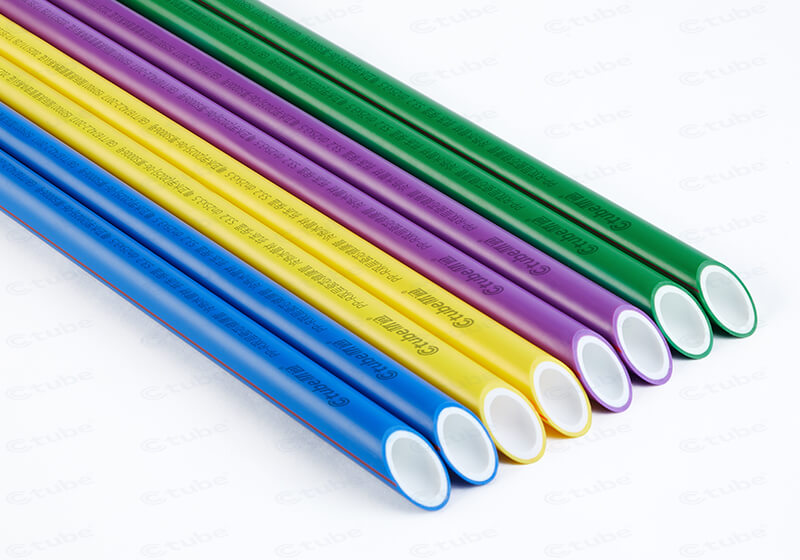
Low Surface Roughness: The Science of Friction
PPR is renowned for its exceptionally smooth internal surface, often characterized by a very low Surface Roughness Coefficient, typically around 0.007 mm (For reference only).
In hydraulic engineering, the Hazen-Williams C-factor for PPR is exceptionally high (usually around 150). This low absolute roughness means there is minimal friction between the water and the pipe wall. As a result, there is a significantly lower Pressure Drop across the system, allowing pumps to operate more efficiently and requiring less energy to maintain flow rates.
Anti-Scaling and Biofilm Resistance
The smooth, non-polar surface of PPR doesn’t just reduce friction; it acts as a high-tech barrier against contamination.
Because of the low surface energy and minimal roughness, calcium and magnesium ions (limescale) cannot find “anchorage” points to precipitate on the pipe walls. Furthermore, this lack of microscopic crevices prevents the formation of biofilms—the slimy layers where bacteria like Legionella thrive.
Ketahanan Korosi
Unlike copper or galvanized steel, PPR is an inert polymer, meaning it does not react with water or common construction chemicals.
Global Compliance and Hydrostatic Certification Matrix
A scientifically superior piping system must validate its performance through independent, unyielding international laboratory testing. When auditing an extrusion factory, their standard operating procedures (SOP) must align with these three benchmark certifications:
PPR Pipe Three Common Standard Table
| Certification / Standard | Regulatory Jurisdiction | Technical Testing Focus | Critical B2B Project Impact |
| DIN 8077 / 8078 | Germany / Global | Long-Term Hydrostatic Strength & Dimensional Tolerances | Guarantees the polymer can withstand a continuous 50-year structural lifespan under stress. |
| NSF/ANSI 14 & 61 | North America / International | Toxicological Extraction & Material Purity | Certified 100% lead-free and non-toxic; zero chemical leaching into potable water. |
| WRAS | United Kingdom / Commonwealth | Organoleptic and Microbiological Material Testing | Confirms the inner walls will not promote biofilm, bacterial, or microbial growth. |
5. The Science of Heat Fusion — Creating a Monolithic System
The most common failure point in any plumbing system is the joint. However, PPR turns this weakness into a strength through a process called Heat Fusion.
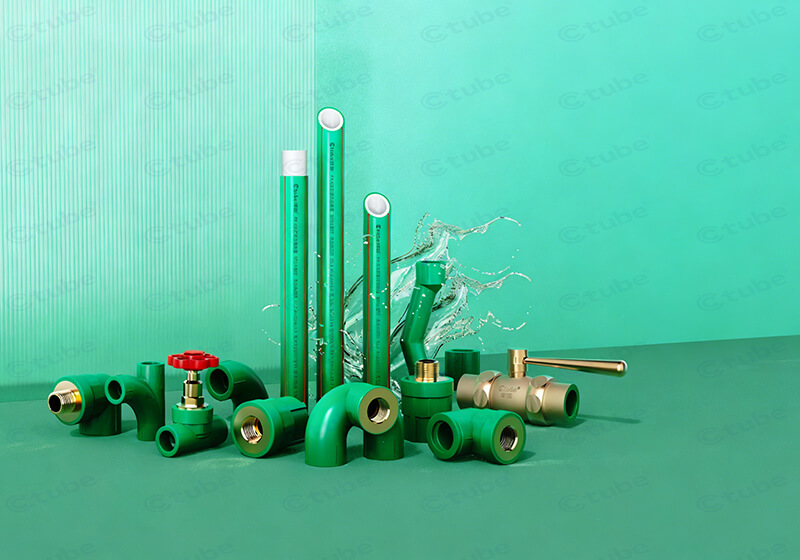
Molecular Intertwining
Unlike PVC which uses chemical glues, or copper which relies on mechanical soldering, PPR joints are created by melting the pipe and fitting together.
When heated to the fusion temperature (typically 260°C), the semi-crystalline structure of the PPR softens into a molten state. When the pipe and fitting are joined, the random polymer chains from both parts move across the interface, creating interfacial molecular entanglement. As the joint cools, it recrystallizes into a single, continuous piece of material.
Why the Joint is Stronger Than the Pipe
One of the most remarkable aspects of a proper PPR fusion joint is that the joint area becomes the strongest part of the entire system.
Because the fusion zone has a slightly higher wall thickness and the molecular chains have been “re-locked” through controlled recrystallization, the joint often exhibits higher burst pressure resistance than the pipe itself.
The “No-Leak” Integrity
In the long run, this “Monolithic” structure is the reason why PPR systems can easily last for over 50 years buried inside walls or floors.
6. Brand Substitution: Premium Chinese Extrusion vs. European Legacy Brands
For decades, overseas procurement managers defaulted to ultra-expensive European legacy brands (such as Aquatherm) to guarantee project safety, assuming Chinese imports inherently carried a higher failure risk.
From a material science perspective, this premium gap has closed. The fundamental quality of a PPR pipe is determined by its molecular stability—specifically its Oxidative Induction Time (OIT). When a Chinese factory utilizes identical European-grade 100% virgin resin (such as Borealis or Sabic) and maintains strict continuous ultrasonic wall-thickness tracking on the line, the resulting extrusion matches the structural integrity of European brands at a fraction of the corporate marketing markup.
By shifting from an elite legacy brand to an agile, high-precision Chinese manufacturer that strictly respects international specifications, B2B importers can reduce material procurement costs by 40% to 60% without sacrificing a single PSI of pressure rating or violating local building codes.
7. Wholesale Pricing Drivers: Demystifying the Chinese Cost Structure
When evaluating volume quotes from China, a suspiciously low price is always a red flag. To understand where hidden compromises occur, bulk buyers must understand the three core cost pillars that drive genuine PPR manufacturing pricing:
-
Pillar 1: Resin Purity Index: 100% virgin polymer is a globally traded commodity with a stable baseline price. Suppliers offering prices significantly below the market average are universally blending 20% to 40% recycled regrind plastics into the extrusion, causing the pipe to become brittle and prone to catastrophic cracking under water hammer shocks.
-
Pillar 2: SDR Wall Thickness Deviations: A common margin-cutting tactic involves quoting for a Heavy-Duty SDR 6 (PN20) wall thickness but recalibrating the extrusion line to run at an SDR 7.4 (PN16) dimension. This missing 15% of material weight directly hollows out the pipe’s long-term temperature resistance.
-
Pillar 3: The Brass Component Grade: Threaded metal-to-plastic transition fittings require premium, heavy-gauge CW617N or DZR (Dezincification Resistant) brass. Cheap quotes substitute this with recycled scrap brass, which suffers from zinc leaching and cracks under standard mechanical tightening torque.
👉Want the latest wholesale prices? Contact the Ctube sales team for the latest 2026 price list!
8. The PPR Color Myth: Why Green Doesn’t Equal Eco-Friendly
One of the most persistent misconceptions among sourcing teams is that green or white PPR pipes are inherently superior or cleaner than grey ones. This is pure marketing fiction.
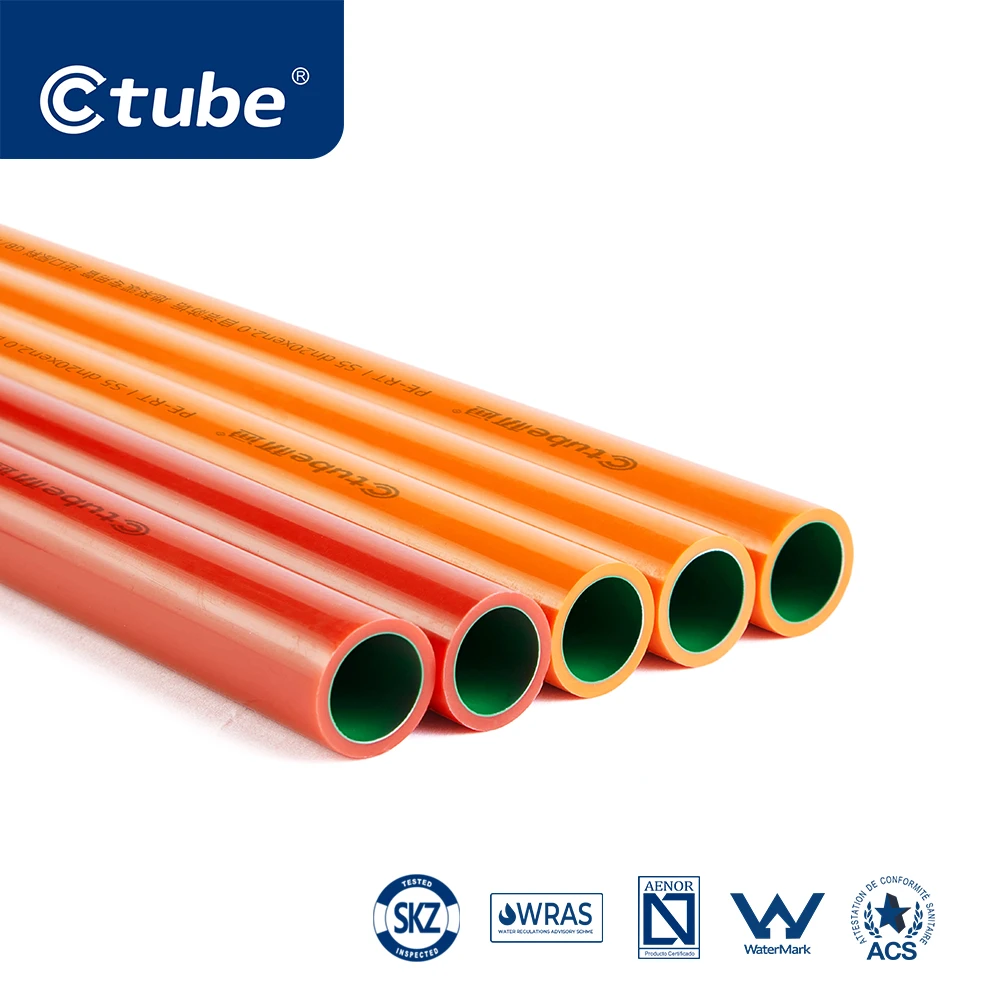
Raw, unadulterated Polypropylene Random Copolymer is naturally translucent or milky white. The final color of the pipe is determined entirely by a 2% color masterbatch additive injected during extrusion. Green, grey, white, or blue pipes can possess identical mechanical characteristics.
The real technical question to ask your factory isn’t what color the pipe is, but is the masterbatch certified food-grade and 100% opaque? If the pipe wall allows light penetration, UV rays will interact with the water, creating a breeding ground for severe algae growth inside the pipeline network within months.
9. Sustainability and Total Cost of Ownership (TCO)
In modern construction, the focus has shifted from “lowest initial cost” to “maximum long-term value.” PPR excels in this category, offering a compelling case for both the environment and the wallet.
When evaluating a piping system, professionals look at the Total Cost of Ownership (TCO), which includes initial purchase, installation labor, maintenance, and potential failure costs.
PPR is designed for a service life of at least 50 years under standard operating conditions (70°C, 10 bar). Its resistance to scale, corrosion, and chemical degradation means that the Operational
Expenditure (OPEX) is nearly zero. In contrast, metallic systems often require costly chemical treatments or premature replacement due to corrosion.
It is important to note that while PPR is engineered for longevity, the specific service life may vary depending on the product material grade and the quality of professional installation.
Unlike PVC, PPR does not contain chlorine or heavy metal stabilizers (like lead), which can leach into the water or release toxic fumes during a fire. Furthermore, PPR is 100% recyclable. At the end of its long life cycle, it can be ground down and repurposed into other plastic products, supporting a Circular Economy.
10. The 1-Minute RFQ Audit Checklist for Serious PPR Buyers
Before authorizing a wire transfer for a bulk container load, issue these four technical questions directly to your supplier’s engineering team. If they fail to provide immediate, documented proof, reconsider your partner:
-
“Can you provide a 3rd-party laboratory OIT report at 200°C exceeding 30 minutes for this batch?” (Verifies 100% virgin resin material status)
-
“What is the exact metallurgical grade of the brass inserts inside your threaded fittings?” (Ensures DZR / CW617N compliance against heavy metal leaching)
-
“Do you employ continuous, real-time ultrasonic diameter and wall-thickness monitoring on the live extrusion lines?” (Guarantees zero blind spots or structural deviation across the entire run)
-
“Can you provide a verified light-transmission test certificate proving complete pipeline opacity?” (Guarantees prevention of internal biological/algae fouling)
11. Partnering with Ctube: The Agile Solution for High-Spec Infrastructure
Pada Ctube, we don’t expect our partners to rely on blind trust—we welcome rigid technical scrutiny. Built specifically to service international MEP contractors, engineering developers, and high-volume B2B distributors, we bridge the gap between volatile low-tier markets and rigid, overpriced legacy brands.
Our Manufacturing Mandate:
-
Zero-Compromise Purity: Every PPR piping system we export is crafted from 100% virgin Type 3 copolymer. Every batch undergoes rigorous internal OIT evaluation and standard dimension ratio validation.
-
Certified Global Readiness: Our factory production lines run in absolute alignment with DIN 8077/8078, NSF, and WRAS requirements, ensuring seamless local municipal inspection approvals for your projects.
-
Advanced Multi-Layer Capabilities: We specialize in advanced co-extrusion engineering, including customized antimicrobial linings and glass-fiber reinforced (FR-PPR) three-layer systems for complex HVAC installations.
-
Agile B2B Customization & Logistics: We offer flexible OEM branding, custom length slicing, and intelligent mixed-container nesting (pipes loaded with matching socket-fusion fittings and valves) to minimize your ocean freight overhead.
👉 Contact Our Technical Sourcing Team for a Product Catalog & Factory-Direct OEM Quote!
12. Conclusion
Piping systems are the vital ‘vessels’ of any structure. Invisible and tucked away, they are the silent guardians of your living standards. When you choose PPR, you aren’t just buying a product—you are embracing a ‘set-it-and-forget-it’ way of life.
Ctube elevates industry benchmarks by combining advanced R&D with a wide array of single and multi-layer PPR piping options. Our advanced anti-bacterial technology is available across our entire range, ensuring peak water hygiene and long-term defense against bacterial growth.
Whether your requirements are standard or highly specialized, Ctube remains committed to the highest levels of quality and safety. Contact us to discover how our latest PPR developments can benefit your infrastructure.

13. FAQs
How does PPR behave in sub-zero temperatures? Does it crack when water freezes?
PPR has better elasticity than metallic pipes, meaning it can slightly expand if water freezes inside. However, like most materials, it becomes more brittle in extreme cold (below 0°C). In regions with freezing climates, we recommend insulating the pipes to prevent water from freezing. If the system is not in use during winter, it should be drained to avoid structural stress caused by ice expansion.
Is there a risk of "plastic taste" or chemicals leaching into the drinking water?
No. PPR is a non-polar and chemically inert material. Unlike some other plastics, it does not require chemical glues or solvents (which contain VOCs) for joining, nor does it contain heavy metal stabilizers like lead. It is widely certified for "potable water" use globally, ensuring that the water remains as pure at the tap as it was at the source.
Can PPR pipes be recycled at the end of their service life?
Yes, PPR is a thermoplastic, which means it can be melted and reshaped multiple times without significantly degrading its chemical properties. This makes it 100% recyclable. Unlike thermoset plastics or composite pipes with glued layers, pure PPR can be granulated and reused in the production of various plastic goods, contributing to a lower carbon footprint and a circular economy.
Is PPR resistant to "Water Hammer" effects?
Yes, PPR is significantly better at handling water hammer than metallic pipes. Water hammer occurs when a valve is closed suddenly, sending a shockwave through the fluid. Because PPR has a lower Modulus of Elasticity compared to copper or steel, the pipe walls can slightly deform to absorb the kinetic energy of the pressure surge. This natural damping reduces the stress on the joints and minimizes the "banging" noise in the walls.
What is the exact meaning of PPR pipe in modern commercial construction?
PPR stands for Polypropylene Random Copolymer (Type 3). In commercial engineering, it defines a highly reliable thermoplastic pressure piping system joined via homogenous thermal socket fusion, optimized for hot and cold potable water distribution and industrial fluid routing.
Is a high-quality PPR pipe truly 100% corrosion-free over its entire lifespan?
Yes. Unlike traditional copper or galvanized iron lines, pure PPR is completely non-polar. It cannot react chemically with dissolved minerals, chlorine, acids, or alkalis, making it completely immune to rust, scale build-up, and chemical pitting.
What is the continuous temperature and pressure threshold for high-tier PPR systems?
Premium PPR systems are designed to operate continuously at 70°C (158°F) under standard working pressures for 50 years. They are engineered to safely absorb short-term thermal spikes up to 95°C (203°F) without experiencing structural or joints deformation.
Can PPR pipes be used for chilled water air conditioning loops without sweating?
Yes. PPR possesses an exceptionally low thermal conductivity (0.24 W/mK). This inherent insulation effect drastically slows down heat transfer, mitigating exterior surface condensation (sweating) and making it far more energy-efficient than uninsulated metal pipes in HVAC designs.
How do I know if my pipeline layout requires 3-layer fiberglass FR-PPR instead of standard 1-layer PPR?
Standard 1-layer PPR is perfect for buried networks or short indoor plumbing runs. However, for long, vertically exposed riser mains or high-temperature HVAC loops, you should specify 3-layer glass fiber reinforced PPR (FR-PPR). Its integrated center core reduces linear thermal expansion by 75%, preventing pipe sagging and eliminating the need for expensive expansion loops.
What is Ctube’s Minimum Order Quantity (MOQ) for custom-branded or custom-color PPR orders?
Ctube proudly supports agile B2B procurement with highly flexible MOQ structures compared to traditional mega-conglomerates. We evaluate MOQs based on total container volume and facilitate mixed-loading patterns—allowing you to bundle diverse SDR ratings and fitting packages into a single shipment.
What is the typical factory production lead time and delivery cycle for custom Ctube OEM orders?
Our standard manufacturing lead time is 15 to 25 days from formal order confirmation to port loading, depending on the complexity of your custom requirements (such as multi-layer co-extrusion profiles or custom inkjet branding specs). We maintain transparent pipeline tracking to ensure your infrastructure timeline stays on schedule.



 English
  French
  Spanish
  German
  Arabic
  Indonesian
  Vietnamese