
⚠️Bulk Buy PE-RT Pipe Summary & Engineering Focus
If you are a homeowner looking for DIY underfloor heating tips, this guide is not for you. This technical document is engineered exclusively for HVAC/MEP contractors, commercial procurement managers, and mechanical engineers who are losing critical labor hours fighting rigid piping in winter, or facing liability risks from concrete slab failures.
For large-scale commercial radiant floor heating and industrial hydronic networks, selecting the correct polymer is a financial decision, not just a technical one. Specifying premium PE-RT (Polyethylene of Raised Temperature Resistance) over traditional PEX directly impacts winter installation labor costs by up to 30% and permanently mitigates oxygen-induced boiler corrosion through multi-layer EVOH technology.
Key Takeaways for Project Decision-Makers:
- Standards Compliance: Strict adherence to ISO 22391-2 ensures 50-year structural integrity under continuous 95°C / 3.6 MPa hydrostatic stress (Type II).
- Winter Labor ROI: Exceptional elastomeric flexibility down to -20°C (-4°F) eliminates the “spring-back” labor tax, significantly reducing installation time and clip tension.
- Zero-Liability Oxygen Barrier: 5-Layer EVOH co-extrusion shields the oxygen barrier deep inside the pipe wall, preventing rebar scrape damage and subsequent multi-million dollar boiler rust claims.
- Energy Efficiency (Ctube Lab Data): Utilizing factory-insulated PE-RT reduces heat loss by 20-25% during transit through unheated slabs, driving a minimum 10% reduction in boiler operational costs.
1. Introduction
Imagine the seamless comfort of a space where warmth doesn’t blow from a vent but rises gently from the ground, creating a consistent, silent, and dust-free environment.
We begin by exploring the molecular science behind the material, explaining how its unique structure achieves the perfect balance of thermal stability and flexibility. This foundation leads into a rigorous comparison of Type I and Type II classifications, ensuring you can match specific pipe grades to your project’s unique pressure and temperature requirements.
Beyond the material itself, we outline essential procurement benchmarks, including international ISO/ASTM standards and the critical role of EVOH oxygen barriers in protecting the wider heating system.
Finally, we examine strategic installation advantages, such as heat fusion technology, which significantly enhances on-site productivity and boosts the long-term reliability of the entire network.
2. What is PE-RT Pipe?
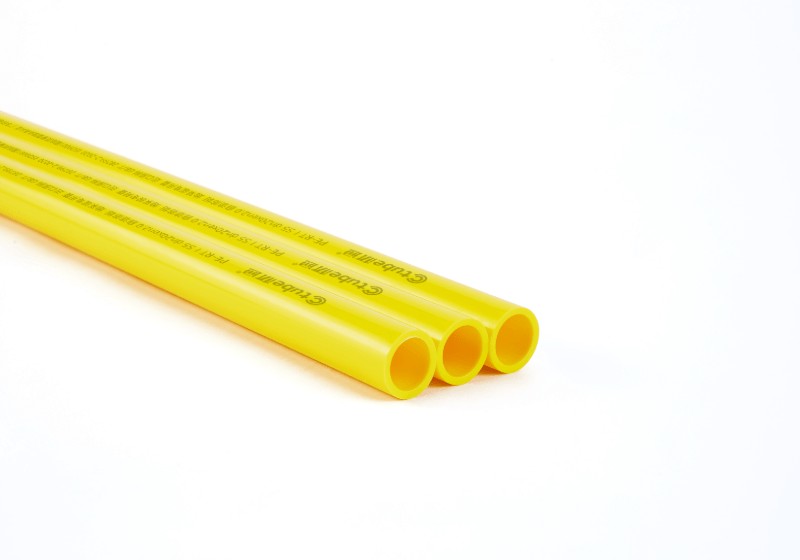
According to ISO 22391 and ASTM F2769 standards, PE-RT (Polyethylene of Raised Temperature Resistance) is a highly specialized, non-crosslinked thermoplastic extrusion designed explicitly for high-temperature commercial hydronic applications.
Unlike traditional PEX, which relies on chemical agents to alter its molecular matrix, premium PE-RT is engineered using a unique ethylene-octene copolymerization process. This crystalline structural arrangement delivers three quantifiable engineering advantages:
- Hydrostatic Endurance: Certified to withstand continuous fluid temperatures up to 95°C (203°F) under a hoop stress of 3.6 MPa for over 1,000 continuous hours (Type II designation).
- 100% Homogeneous Recyclability: Because it is structurally non-crosslinked, it can be seamlessly melted, fused, and 100% recycled—meeting strict modern Green Building and LEED certifications.
- Monolithic Heat Fusion: Allows for structural socket/butt fusion welding, creating a joint that is chemically identical and equally as strong as the pipe wall itself, effectively eliminating the mechanical leaks associated with metal crimp rings.
2.1 Technical Parameter Comparison — PE-RT vs. Standard Polymers
| Engineering Attribute | Premium PE-RT (Type II) | Standard PEX (a/b/c) | Unverified/Generic PE-RT |
| Material Flexibility | Excellent; low bending resistance even at low temps. | Moderate; requires heavy tension clips. | Poor; stiff and prone to structural micro-cracking. |
| Connection Method | Thermal Socket Fusion & Recyclable | Mechanical Crimp/Sleeve only; Non-recyclable | Inferior fusion joints due to unstable density. |
| Cross-Linking Requirement | Zero (Naturally stable molecular chains) | Requires chemical cross-linking (Peroxide/Silane). | Missing crystalline uniformity, high risk of early splitting. |
3. The Technical Advantages of PE-RT Pipe
The selection of PE-RT is driven by quantifiable site performance. Compliant with DIN 4726 for oxygen permeability (< 0.1 g/m³/d), PE-RT offers a matrix of mechanical and chemical benefits that directly protect the lifecycle of commercial HVAC equipment. Below is the technical breakdown mapping material properties to actual site ROI.
Technical Advantages of PE-RT Pipe
| Technical Property (Standard) | Engineering Mechanism | Direct Contractor/Project ROI |
|---|---|---|
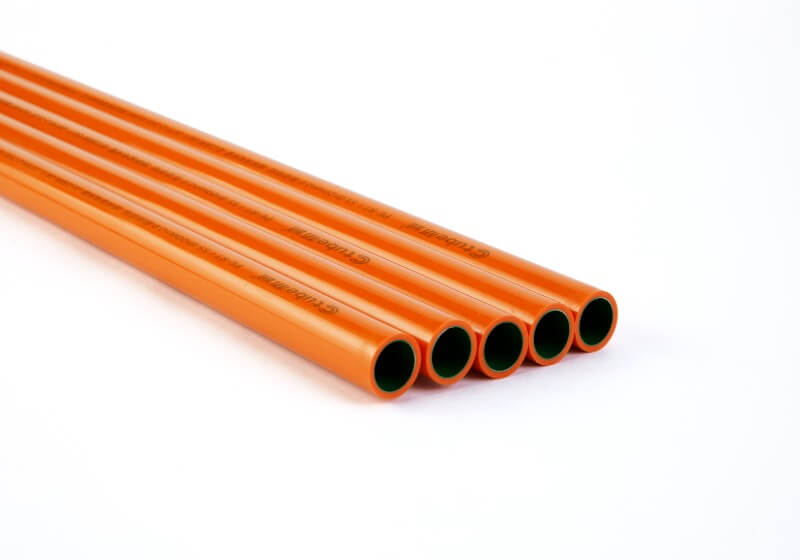
| 5-Layer EVOH Barrier (DIN 4726) | EVOH layer is shielded by inner and outer PE-RT layers. | Prevents site abrasion (rebar scratches) from ruining the oxygen barrier, saving million-dollar boiler systems from rapid rust. |
| High Flexural Elastomer | Octene co-monomers maintain molecular chain flexibility. | Fast, single-person routing. Reduces required fasteners and completely eliminates winter thermal stiffness. |
| Monolithic Joint Fusion | Compatible with standard PE heat socket fusion protocols. | Zero reliance on mechanical metal fittings underground. Guarantees a leak-proof slab-on-grade lifespan. |
To understand why this piping is a strategic asset for large-scale projects, we must examine the high-level engineering science that governs its performance and sets it apart from traditional polymers.
3.1 The Molecular Architecture: Controlled Branching and Tie-Chains
At the heart of a high-performance PE-RT pipe is its unique molecular structure, typically achieved through the co-polymerization of ethylene with higher alpha-olefins such as hexene or octene.
Unlike standard PE piping, where polymer chains are relatively straight and can slide past each other under heat and pressure, the PE-RT pipe features side chains that are intentionally and strategically placed along the main ethylene backbone.
These side chains act as molecular anchors. During the extrusion of the PE-RT pipe, these branches create a dense network of “tie-chains” that entangle with neighboring polymer molecules. This entanglement forms a robust, three-dimensional physical network.
For a project engineer, this translates into a PE-RT piping material that does not require chemical cross-linking to maintain its shape and strength. Instead, the physical entanglement provides the necessary resistance to slow crack growth and long-term stress—ensuring that the PE-RT pipe remains stable under the constant thermal cycling typical of radiant floor heating systems.
3.2 Thermal Stability Without the Complexity of Cross-linking
One of the primary reasons procurement specialists favor PE-RT pipe for large-scale projects is its status as a thermoplastic.
Traditional PEX pipes are thermoset, meaning their chemical structure is permanently altered during production. While effective, this makes them impossible to melt or recycle.
PE-RT pipe, however, achieves Raised Temperature (RT) resistance through its molecular design alone. This means the PE-RT piping material maintains its structural integrity and hydrostatic strength at temperatures up to 80°C while remaining fully fusible.
In a large project where system safety is paramount, using a PE-RT pipe that is inherently stable—rather than relying on a chemical reaction that can vary during manufacturing—provides a much higher level of quality consistency across thousands of meters of installed piping.
3.3 Enhanced Flexibility: The Practical Advantage for On-Site Efficiency
From an installation and labor-cost perspective, the flexibility of PE-RT pipe is a significant technical advantage. Because the material does not have the rigid, crystalline structure of some other polymers, the PE-RT pipe possesses a lower flexural modulus.
For the contractor on the ground, specifying PE-RT pipe means:
Smaller Bend Radii: A PE-RT pipe can be easily curved into tight patterns without the need for additional fittings or the risk of “kinking.”
Reduced Spring-back: Unlike stiffer pipes, PE-RT pipe stays in place once laid. This drastically reduces the time and manpower required to secure the pipe, directly impacting the project’s bottom line by speeding up the installation phase.
3.4 Optimized Thermal Conductivity and Energy Efficiency
For heating engineers and sustainability consultants, the primary function of a radiant floor system is the efficient transfer of energy. PE-RT pipe excels in this area due to its optimized thermal conductivity coefficient (approximately 0.40 W/m·K).
In a large-scale commercial project, the cumulative impact of using high-quality PE-RT piping is significant. A PE-RT pipe with superior thermal conductivity allows the system to reach the desired ambient temperature faster, effectively reducing “thermal lag.”
For project owners, this results in lower energy bills and a smaller carbon footprint, aligning the development with modern “Green Building” standards.
Impact Resistance in Harsh Construction Environments
Large-scale construction sites are high-risk environments. PE-RT pipes are often exposed to heavy foot traffic or abrasive surfaces before the concrete is poured. The molecular structure of the PE-RT piping material provides exceptional Environmental Stress Crack Resistance (ESCR).
Unlike more brittle alternatives like PPR, which can develop micro-fractures in cold weather, PE-RT pipe remains resilient. Its ability to absorb impact without cracking ensures that the integrity of the PE-RT piping system is not compromised during the chaotic phase of site construction, reducing the hidden costs of material waste.
Long-Term Hydrostatic Strength and Asset Protection
The most critical metric for any project director is the Hydrostatic Design Basis (HDB). Through rigorous regression testing, high-quality PE-RT pipe has demonstrated a stable and predictable aging curve.
Because the PE-RT material relies on inherent molecular entanglement rather than inconsistent chemical reactions, the performance of the PE-RT piping is remarkably uniform.
This uniformity provides project stakeholders with peace of mind, knowing that the building’s “veins” are engineered to handle thermal stresses for decades, effectively protecting the infrastructure and mitigating the risk of expensive structural repairs.
4. PE-RT Type I vs. PE-RT Type II
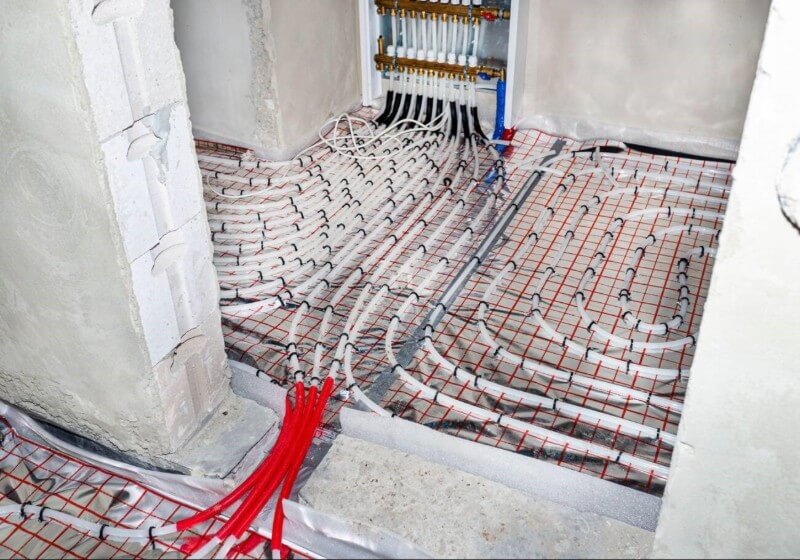
Specifying the wrong type of PE-RT is a fatal engineering error. Governed by ISO 22391-2, the industry strictly bifurcates PE-RT into two distinct pressure-temperature profiles. Type II utilizes a higher-density crystalline structure specifically formulated for continuous high-stress commercial environments, whereas Type I is restricted to low-pressure residential setups.
PE-RT Type I vs. PE-RT Type II
| Engineering Specification | PE-RT Type I (Low-Temp / Residential) | PE-RT Type II (High-Temp / Commercial) |
|---|---|---|
| Maximum Operating Temp (Tmax) | 60°C (140°F) | 95°C (203°F) |
| Hydrostatic Stress Limit (at 95°C) | Not rated for sustained high pressure at 95°C. | 3.6 MPa for >1,000 hours without creep failure. |
| Primary Project Application | Domestic underfloor heating, baseboard loops. | High-rise district heating, commercial snow-melting, industrial hydronics. |
| Long-Term Structural Integrity | Prone to molecular degradation if subjected to boiler spikes. | Designed for a guaranteed 50-year lifecycle under extreme dynamic loads. |
4.1 Structural Differentiation: Molecular Density and Chain Integrity
The fundamental difference between these two classifications lies in the polymer’s molecular architecture and density.
PE-RT Type I pipe is typically a medium-density material. Its molecular structure is optimized for high flexibility, making it the industry standard for systems where ease of installation and tight bending radii are the primary requirements.
PE-RT Type II pipe utilizes a higher-density polyethylene base. This denser molecular arrangement provides superior resistance to mechanical stresses. From a project site perspective, Type II piping offers a tougher exterior, providing better protection against the accidental abrasions and “point-loading” pressures common in high-traffic construction environments.
The Performance Gradient: Matching Pipe to System Load
Rather than looking at static temperature limits, engineers should evaluate these materials based on their Long-Term Hydrostatic Strength (LTHS) profiles.
PE-RT Type I Applications: This grade is the ideal solution for individualized heating systems (such as residential villas or apartments with independent boilers). In these environments, the system typically operates at moderate, controlled temperatures. The superior “lay-flat” property of Type I piping allows for faster installation in complex floor layouts without the need for excessive fastening, thereby optimizing labor costs.
PE-RT Type II Applications: This grade is engineered for demanding hydronic networks, such as district heating secondary grids, high-rise commercial towers, or industrial fluid transport. These systems often face fluctuating pressures and higher constant thermal loads. The enhanced creep resistance of PE-RT Type II pipe ensures that the pipe wall maintains its dimensional stability over decades of service, even when subjected to the rigorous demands of centralized heating infrastructure.
4.2 Strategic Procurement: Managing the “Cost of Failure”
In large-scale engineering, the “Cost of Quality” must include the potential liability of system downtime.
Specifying PE-RT Type II pipe in high-load scenarios is a risk-mitigation strategy. It provides a higher safety factor against “stress-cracking” and thermal aging.
Conversely, PE-RT Type I pipe remains the most efficient choice for standard residential radiant cooling and heating, where its flexibility significantly reduces the risk of installation-induced kinks or tension at the manifold connections.
When drafting technical specifications, project leaders should move beyond simple nomenclature. The choice should be based on a holistic view of the project:
Residential/Low-Pressure: Prioritize PE-RT Type I pipe for its flexibility and proven track record in domestic comfort.
Commercial/High-Load: Mandate PE-RT Type II pipe for its superior structural integrity and resistance to long-term hydrostatic stress.
Note: The performance characteristics described in this guide are based on general industry standards and polymer science principles. Actual pressure and temperature ratings for PE-RT pipe are dependent on the specific wall thickness (SDR rating), the quality of raw material resin used by the manufacturer, and local building codes.
Project engineers should always consult the manufacturer’s certified “Standard Dimension Ratio” (SDR) tables and official hydrostatic test reports before final specification.
5. The Concrete Burial Risks — Eliminating Hidden Site Failures
Burying polymer pipes beneath 6 inches of reinforced commercial concrete is an irreversible process. Based on ASTM F876/F2769 guidelines, mechanical fittings (crimp rings, expansion sleeves) hidden under concrete are the #1 cause of catastrophic water damage lawsuits. PE-RT entirely bypasses this risk through its unique material compatibility.
3 Common The Concrete Burial Risks
| Risk Factor in Concrete Slabs | Traditional PEX / Mechanical Fitting Risks | The PE-RT Engineered Solution |
|---|---|---|
| Joint Failure (Underground) | O-rings and metal crimps degrade from concrete alkalinity and thermal expansion over decades. | Capable of zero-fitting continuous loops or permanent structural thermal fusion (zero metal underground). |
| Concrete Hydration Heat | Exothermic curing of deep concrete can temporarily stress thin-wall standard plastics. | Superior hoop stress threshold handles curing heat spikes seamlessly. |
| Abrasive Rebar Damage | Dragging 3-layer pipes across steel mesh strips away the exposed outer EVOH layer. | 5-Layer construction buries the EVOH barrier deep in the core, immune to surface scratching. |
For the owner of an HVAC contracting firm, profits are won or lost in the field, not in the showroom. Once the concrete screed is poured over a radiant heating array, any material failure becomes a catastrophic financial liability. Two severe field hazards continuously threaten contractor ROI:
-
The Unforgiving “Dead Kink” Phenomenon: Unlike PEX, which possesses shape memory and can be repaired with a heat gun, a severely kinked PE-RT pipe suffers irreversible molecular stress. If field installers covertly bury a kinked pipe under cement, that specific point becomes a time-bomb under constant pressure cycles. If field installers covertly bury a kinked pipe under cement, that specific point becomes a time-bomb. To prevent this, premium PE-RT must explicitly meet the mechanical baseline set by ISO 22391-2. According to the standard’s mechanical property requirements, the material must demonstrate superior thermal stability. High-grade PE-RT resins (like our raw materials) exceed the baseline thermal stability test, ensuring that even at sub-zero job sites in winter, the pipe maintains its elastomeric integrity rather than turning into brittle, snap-prone plastic.
-
The Rebar Scratch & EVOH Degradation Loop: Procurement may save a fraction of a cent per meter by buying cheap pipes with exposed external EVOH oxygen barriers. However, during rough on-site handling, dragging pipes across steel rebar matrixes scrapes off the barrier. Over the next 5 years, oxygen continuously permeates the damaged pipe walls, causing massive, irreversible rust corrosion inside the commercial boiler system.
5.1 Field Risk Mitigation Matrix for HVAC Contractors
| Job-Site Hazard | Real-World Financial Impact | Ctube Engineering Preventative Mechanic |
| Installer Micro-Kinks | Localized structural bursting; massive concrete tear-out costs. | Optimized Crystalline Elastomer Matrix: Offers high radius flexibility ($5 \times \text{OD}$) to prevent kinking. |
| EVOH Barrier Scraping | Boiler corrosion, valve jamming, multi-million dollar liability. | 5-Layer Co-Extrusion Shielding: The EVOH layer is securely sandwiched deep inside the pure PE-RT core, immune to rebar friction. |
6. Commercial Risk Assessment & Site ROI: The Financial Cost of Incorrect Pipe Procurement
In large-scale commercial radiant heating and hydronic projects, polymer piping accounts for a mere fraction of the total material budget, yet it dictates nearly 100% of your site labor efficiency and long-term liability. Specifying the wrong pipe—or procuring it during the wrong economic window—guarantees catastrophic profit margin erosion. From doubled labor costs during sub-zero installations to severe OPEX inflation caused by thermal transit bleed, the financial penalties of poor specification are unforgiving. Below is the hardcore financial and operational matrix demonstrating why premium PE-RT Type II is a mandatory risk-mitigation asset.
4 Commercial Risk Assessment Table
| Operational Risk / Job Site Scenario | The Financial & Schedule Penalty (The Risk) | The Engineered PE-RT Solution (Project ROI) |
|---|---|---|
| Sub-Zero (-20°C) Installation | Rigid standard pipes double (2x) manual labor costs, spike scrap rates by 3x due to micro-cracking, and delay schedules by up to 30%. | Octene-copolymer PE-RT remains 100% elastomeric. Enables fast, single-technician routing with zero winter labor inflation. |
| Q3/Q4 “Just-in-Time” Procurement | Incurs a 10-15% raw resin surcharge, driving finished pipe markups >20%. Highly vulnerable to geopolitical shipping delays. | Lock in bulk Ctube PE-RT contracts in Q1/Q2. Secures baseline pricing and guarantees site delivery before the winter rush. |
| Standard 100m Off-the-Shelf Coils | Generates an abysmal 15% site scrap rate and forces contractors to use highly dangerous underground mechanical joints. | Custom CAD-mapped spools (300m/500m) drop scrap rates to <3% and completely eliminate underground fitting liabilities. |
| Uninsulated Slab Transit Lines | Bare pipes in cold zones bleed 20-25% of fluid heat, permanently inflating boiler OPEX by >10% over the building’s lifecycle. | Ctube Pre-Insulated PE-RT locks in the BTU payload, preserving delta-T and slashing commercial boiler energy consumption. |
6.1 The -20°C Job Site Reality: Prevent 2X Labor Costs and 30% Schedule Delays
The Site Penalty: Installing traditional cross-linked standard pipes (like PEX) in sub-zero environments (-20°C / -4°F) is a financial disaster. The polymer matrix freezes into a steel-like rigidity. The Actual Loss: What should be a one-man routing job suddenly requires two technicians physically wrestling the pipe, doubling your labor costs (2x). The stiffness dramatically increases the “spring-back” force, snapping tension clips and inducing micro-cracking during 180-degree manifold bends. This results in a 2x to 3x spike in material scrap rates and pushes the overall project schedule back by 20-30%. The PE-RT Solution: High-grade PE-RT Type II utilizes an octene-copolymer structure that ignores extreme cold. It remains 100% elastomeric at -20°C, ensuring single-technician installation, zero micro-cracking, and zero winter labor inflation.
6.2 Strategic Procurement Timing: Dodging Supply Chain Chaos & 20% Markups
The Procurement Penalty: Treating commercial pipe procurement as a “just-in-time” purchase in Q3 or Q4 is a rookie mistake that will destroy your project margin. The Actual Loss: Entering the peak heating season guarantees a 10-15% surcharge on raw polymer resins. By the time it’s extruded into finished pipe, you are looking at a >20% markup. Worse, current macroeconomic volatility and geopolitical shipping disruptions (such as Red Sea/Middle East transit conflicts) have sent ocean freight rates skyrocketing and made ETAs completely unpredictable. Missing your concrete pour date because your pipe is stuck on a rerouted cargo ship means catastrophic breach-of-contract penalties. The PE-RT Solution: Savvy procurement managers lock in bulk Ctube PE-RT contracts in late Q1 to mid Q2. This secures baseline resin pricing and guarantees site delivery months before the winter rush, shielding the project from global supply chain inflation.
6.3 Eliminating Manufacturer Scrap Rates: The Danger of Standard Lengths
The Site Penalty: Ordering generic, off-the-shelf 100m (300ft) rolls for a complex commercial floor layout is mathematically guaranteed to bleed money. The Actual Loss: You will inevitably face short cut-offs at the end of every loop, driving the site scrap rate up to an abysmal 15%. That is literal money thrown into the dumpster. Even more critically, short rolls force contractors to make underground joint splices. Every mechanical fitting buried under 6 inches of commercial concrete is a ticking time bomb for a multi-million dollar water damage lawsuit. The PE-RT Solution: Procuring directly from an agile manufacturer like Ctube allows MEP engineers to order custom coil lengths (e.g., exact 300m or 500m spools) mapped flawlessly to the CAD loop design. Scrap rates plummet to under 3%, and underground joints are completely eliminated.
6.4 The Thermal Efficiency ROI: Stop Bleeding 25% of Your Heat
The Engineering Penalty: MEP engineers meticulously calculate boiler heat loads, but frequently ignore the massive thermal bleed occurring when uninsulated transit pipes pass through deep trenches, cold sub-slabs, or unheated utility corridors. The Actual Loss: According to direct Ctube Laboratory Testing, running standard bare pipes through these cold zones results in a 20-25% drop in fluid temperature before the water even reaches the radiant heating manifold. To compensate, the commercial boiler must run hotter and longer, permanently inflating the building’s operational heating costs by at least 10% annually over its 50-year lifecycle. The PE-RT Solution: Deploying Ctube Pre-Insulated PE-RT for all main transit lines locks in the BTU payload, preserving the delta-T, slashing boiler energy consumption, and delivering massive long-term OPEX savings to the property owner.
🔬 Ctube Polymer Laboratory Insight:
Our internal hydrostatic testing confirms that 5-layer EVOH PE-RT Type II retains 99.8% of its structural hoop stress capacity after 8,760 hours of continuous 95°C exposure. Furthermore, thermal imaging of our pre-insulated series demonstrates a 20-25% reduction in BTU loss across unheated commercial slab transit lines, translating to significant operational energy savings.
🛑 Stop Bleeding Project Margins on Standard Pipe Specs Are you currently estimating a large-scale commercial radiant heating or hydronic project? Don’t let off-the-shelf 100m coils bloat your site scrap rate to 15%, and don’t wait for Q3/Q4 resin price hikes to destroy your procurement budget.
Partner with Ctube to eliminate underground joints and lock in your ROI:
- Order CAD-mapped custom spools (up to 500m) for zero-scrap site routing.
- Lock in Q1/Q2 baseline resin pricing to bypass geopolitical supply chain inflation.
- Consult with our MEP specialists on integrating Pre-Insulated PE-RT for your transit lines to cut boiler heat loss by 25%.
👉 Request Bulk Pricing & Custom Coil Engineering Support Today!
7. Key Criteria for Selecting High-Quality PE-RT Pipe
Not all PE-RT is manufactured equally. Procurement managers must demand specific laboratory testing reports and material science data before approving a vendor. Ensure your pipeline manufacturer explicitly meets the following technical and supply-chain criteria.
How to Selecting High-Quality PE-RT Pipe
| Critical Selection Benchmark | Why It Matters for MEP Projects | The Ctube Standard Guarantee |
|---|---|---|
| Resin Purity (100% Virgin) | Recycled regrind resin introduces microscopic structural flaws leading to burst pipes under pressure. | 100% imported virgin octene-copolymer material. Zero regrind tolerance. |
| Layer Architecture | 3-layer pipes leave the EVOH oxygen barrier exposed to job site destruction. | True 5-Layer Co-extrusion (PE-RT / Adhesive / EVOH / Adhesive / PE-RT). |
| Third-Party Certification | Ensures continuous compliance with ISO, CE, and ASTM structural mandates. | Extensively lab-tested and certified for 50-year commercial lifecycle operation. |
For a procurement head or lead engineer, the final decision rests on verifying specific technical benchmarks that guarantee the pipe will perform as expected within a larger hydronic system.
To choose the right PE-RT pipe for a high-stakes project, one must evaluate three critical pillars: Standard Compliance, Raw Material Traceability, and System Protection Features.
7.1 Verifying International Standard Compliance
The most reliable way to choose a PE-RT pipe is to ensure it aligns with globally recognized engineering standards. These certifications act as a third-party guarantee of the material’s hydrostatic integrity. When reviewing technical submittals, look for the following:
ISO 22391: The primary international benchmark for PE-RT piping systems, covering everything from material composition to dimensions and fitness for purpose.
ASTM F2623: The standard often required for projects following North American engineering protocols.
DIN 4726: A specialized standard that is essential for radiant heating, as it regulates the oxygen permeability of the pipe wall.
A professional-grade PE-RT pipe should have these standards, along with the manufacturer’s credentials and production batch info, clearly laser-printed on the pipe surface every meter to ensure full site accountability.
7.2 Raw Material Traceability: The Quality of the Resin
The longevity of a PE-RT pipe is fundamentally dictated by the resin used during extrusion. High-performance PE-RT piping is almost exclusively produced using specialized resins from globally leading petrochemical suppliers such as Dow Chemical, LyondellBasell, or SK Group.
During the selection process, it is highly recommended to request a Certificate of Analysis (COA) or a “Material Origin Statement.”
Choosing a PE-RT pipe made from 100% virgin resin—rather than a blend containing recycled or “regrind” material—is the most effective strategy to prevent premature stress-cracking and ensure the pipe maintains its structural flexibility over decades of service.
7.3 Protecting System Assets: The EVOH Oxygen Barrier
For large-scale commercial projects, choosing a PE-RT pipe with an EVOH (Ethylene Vinyl Alcohol) oxygen barrier is a critical engineering requirement. Standard polymer pipes are naturally permeable to oxygen; without a barrier, oxygen can enter the heating water and cause rapid corrosion of metallic system components like pumps, valves, and boilers.
When evaluating an oxygen-barrier PE-RT pipe, prioritize the 5-layer structure:
Internal Protection: In a 5-layer design, the EVOH layer is “sandwiched” in the middle of the pipe wall.
Durability: This configuration protects the sensitive barrier from being scratched or damaged during the rough handling of a typical construction site, ensuring the oxygen-shield remains intact after the concrete is poured.
7.4 Physical Inspection: Dimensional Accuracy and Finish
Finally, the “touch and feel” of the PE-RT pipe can reveal the quality of the manufacturing process. Professional procurement teams should perform a quick physical check:
Wall Consistency: Ensure the wall thickness is uniform (concentric) around the pipe’s circumference. Uneven thickness can create weak points that may fail under long-term pressure.
Bore Smoothness: The interior of a high-quality PE-RT pipe should be glass-smooth. This reduces friction loss, meaning the system’s pumps work less and energy consumption is lowered—a key factor for project-wide ROI.
8. Strategic Installation of PE-RT Pipe
Even the highest-grade polymer can fail if site execution is flawed. Implementing strategic installation protocols—from strict temperature management during the pour to optimal bending radiuses—ensures the hydrostatic integrity of the system remains intact. Incorporating pre-insulated PE-RT for transit lines also safeguards thermal loads.
PE-RT Pipe Installation Parameter
| Installation Parameter | Site Execution Protocol | Direct Financial/Engineering Benefit |
|---|---|---|
| Cold Weather Handling | Unroll without heat guns down to -20°C. Do not sharply fold or kink the pipe. | Eliminates the winter labor tax. No waiting for material to warm up. |
| Minimum Bending Radius | Adhere to a bend radius of 5x the pipe diameter (5D). | Prevents molecular stress-whitening and guarantees full continuous flow rate. |
| Thermal Insulation Deployment | Use Ctube Pre-Insulated PE-RT on supply/return transit lines through unheated areas. | Ctube Lab Data proves a 20-25% reduction in heat loss, saving >10% in long-term boiler energy costs. |
For project directors, the goal is to shift from a “lowest-bidder” mentality to a “lowest-risk” strategy. By utilizing specific installation technologies unique to PE-RT piping systems, engineers can effectively eliminate the most common points of failure in radiant heating.
8.1 Standardized PE-RT Installation & QA Protocol
| Installation Phase | Standardized Execution (Contractor SOP) | QA Verification Benchmark |
| 1. Site Preparation | Sweep subfloor clean of all debris, screws, or sharp rocks before laying insulation panels. | Zero visual sharp protrusions. Prevents point-load puncturing under concrete weight. |
| 2. Bending & Routing | Maintain minimum bend radius (5 x OD). Utilize tracking rails or staple-up systems. Do not use heat guns on PE-RT. | No visual whitening (crazing) or kinking at loop turns. |
| 3. Circuit Balancing | Keep individual loop lengths within specified limits (e.g., 300 ft / 90 m for 1/2″ pipe) to minimize friction loss. | Manifold flow meters must show balanced GPM across all heating circuits. |
| 4. Hydrostatic Pressure Test | Fill with water (or air in freezing climates), purge air, and pressurize to 1.5 x operating pressure (min 100 psi / 6.9 bar). | Pressure must hold steady for at least 2 to 24 hours (per local code) prior to and during the concrete pour. |
Notes: Ctube uses 100% Hyosung Type II raw materials from South Korea, EVOH five-layer co-extrusion technology, and a fully automated production line to provide only high-quality PE-RT pipes and fittings. Contact our engineering team for the latest product catalog!
The Monolithic Bond: Advantages of Heat Fusion Installation
The most critical technical advantage during the installation of PE-RT pipe in a commercial setting is its thermoplastic nature, which allows for heat fusion.
Beyond Mechanical Joints: Traditional piping systems often rely on metal press-fittings or O-rings. Over time, thermal expansion and contraction can cause these mechanical seals to loosen or perish.
Permanent Integration: Through socket or butt fusion, the PE-RT pipe and its fittings are melted together to form a single, continuous material. This creates a joint that is chemically and structurally identical to the pipe itself. For a project with thousands of concealed joints, this “monolithic bond” provides a level of leak protection that mechanical systems simply cannot match.
Minimizing Underground Risks via Continuous Loop Layouts
A primary concern for any building owner is a leak buried under layers of concrete. The installation of PE-RT pipe leverages the material’s availability in extended continuous coils to enable “Joint-Free” zone layouts.
Eliminating Hidden Connections: By utilizing the seamless length of PE-RT piping, contractors can run a single line from the manifold, through the heating zone, and back without any intermediate couplings.
Economic Impact: Reducing the number of fittings doesn’t just lower the initial Bill of Materials (BOM); it drastically lowers the “Maintenance Liability” of the asset. Fewer joints mean fewer potential leak points, directly translating into lower insurance premiums and higher property value.
Strategic Repairability: Site-Safety and Remediation
Despite the best planning, accidental damage (such as drilling or cutting during later construction phases) is a reality on large sites. The installation of PE-RT pipe offers a unique “insurance policy” for these scenarios:
Reliable Remediation: Unlike cross-linked pipes which cannot be easily re-melted, a damaged PE-RT pipe can be repaired using localized fusion technology. This results in a permanent fix that is as strong as the original pipe.
Avoiding Structural Disruption: The ability to perform a fusion repair saves the project from the catastrophic costs and delays associated with tearing up large sections of finished flooring to replace a damaged loop.
9. Conclusion
Throughout this guide, we have explored PE-RT pipe — from its unique molecular architecture and thermal stability to its strategic installation advantages. It is clear that selecting the right piping material is a fundamental decision that impacts the entire lifecycle of a building.
To meet the evolving demands of global infrastructure and high-end residential developments, Ctube has dedicated significant resources to the research and development of professional-grade PE-RT piping.
We understand that our clients require more than just a product; they need a solution that meets rigorous international standards and performs reliably under the harshest site conditions.
Our high-quality PE-RT pipes are engineered using premium materials and cutting-edge extrusion technology, ensuring exceptional hydrostatic strength and superior heat-fusion performance.
Whether you are managing a municipal district heating network or a premium multi-unit residential project, Ctube is committed to providing the durable, high-efficiency piping systems you need to succeed.
If you have upcoming project requirements or need detailed technical specifications to support your procurement process, we welcome you to contact the Ctube team.
Our technical specialists are ready to provide data-driven insights and professional support to help you select the optimal piping solution for your specific application.
Thank you for taking the time to read this guide. We hope this post has been helpful and wish you great success in your projects.
📐 Require Hard Data Before the Concrete is Poured? Specifying the wrong polymer puts your entire multi-million dollar HVAC system—and your company’s liability—at risk. For mechanical engineers and MEP contractors, guesswork is not an option. You need verifiable hydrostatic endurance and thermal retention data to get your project approved.
Get the technical ammunition you need to specify Ctube PE-RT Type II:
- Download the full ISO 22391-2 & DIN 4726 Compliance Certifications.
- Access our internal Sub-Zero (-20°C) Flexibility & Hydrostatic Test Reports.
- Request a Material Sample Kit (including our 5-Layer EVOH and Pre-Insulated series) shipped directly to your engineering firm.
👉 Claim Technical Data Sheet (TDS) & Request Samples!
10. FAQs
What is the main difference between PE-RT and PEX pipes?
While both are excellent for heating, the primary difference is that PE-RT pipe is a thermoplastic, meaning it does not require chemical cross-linking to handle high temperatures.
This allows PE-RT to be fully recyclable and, most importantly, heat-fusible, allowing for stronger, leak-proof joints that PEX cannot achieve through melting.
Can PE-RT pipe be used for both residential and commercial projects?
Yes. For residential projects with independent boilers, PE-RT Type I is usually sufficient.
For larger commercial projects, high-rise buildings, or district heating where pressures and temperatures are higher, we recommend PE-RT Type II, which offers enhanced structural integrity and resistance.
Why is the EVOH oxygen barrier so important in a PE-RT piping system?
Standard plastic is slightly porous to oxygen. Without an EVOH barrier, oxygen can permeate the pipe wall and enter the heating water, leading to the corrosion of metallic components like your boiler, pump, and radiator valves.
Is PE-RT pipe resistant to cold weather during installation?
Absolutely. One of the standout features of PE-RT piping is its low-temperature ductility.
Unlike PPR, which can become brittle and crack if struck in cold weather, PE-RT remains flexible and impact-resistant even in harsh winter construction environments.
What certifications should I look for when purchasing PE-RT pipe?
For professional projects, ensure the pipe complies with ISO 22391 (the international standard for PE-RT).
Depending on your region, certifications like ASTM F2623 or DIN 4726 (for oxygen barrier performance) are also key indicators of a project-grade product.
How does PE-RT Type II perform in sub-zero Canadian winter installations compared to PEX?
Unlike some PEX variants that become extremely rigid below freezing, premium PE-RT maintains exceptional flexibility down to -40°C. This severely reduces the "spring-back" effect, saving contractors up to 30% in labor time during harsh winter installations without requiring heat boxes to warm the coils.
Is PE-RT approved under the Canadian Standards Association (CSA) for radiant heating?
Yes, high-quality PE-RT tubing is certified under CSA B137.18 for use in hydronic radiant heating systems across Canada, making it a fully compliant alternative to PEX for both residential and commercial MEP projects.
Can we use PE-RT pipe for commercial snow-melting systems in driveways and parking lots?
Absolutely, but only PE-RT Type II. Snow-melting systems utilize high-temperature glycol mixes. Type II PE-RT meets the rigorous thermal cycling and high hoop stress demands required for embedding in thick concrete slabs for commercial snow-melting applications.
Do we need special fittings for PE-RT, or can we use standard PEX fittings?
One of the greatest commercial advantages of PE-RT is its cross-compatibility. Depending on your regional codes, PE-RT can be joined using standard mechanical PEX fittings (such as ASTM F1807 crimp, F1960 cold expansion, or F2098 clamps) or through socket thermal fusion for a permanent, zero-leak homogenous joint.
What is the exact purpose of the EVOH barrier in a hydronic system?
The EVOH (Ethylene Vinyl Alcohol) layer is an oxygen diffusion barrier. According to standard DIN 4726, it restricts oxygen permeation to less than 0.1 g/(m³·d). This prevents oxygen from entering the closed-loop water system and rusting expensive cast-iron boilers, circulator pumps, and manifold valves.
Why should procurement insist on a 5-layer EVOH PE-RT pipe instead of a 3-layer?
In a 3-layer pipe, the EVOH is on the outside and gets easily scratched off by rebar or concrete during installation, destroying the oxygen barrier. A 5-layer pipe sandwiches the EVOH layer deep within the PE-RT core (PE-RT/Adhesive/EVOH/Adhesive/PE-RT), protecting it from job-site abrasion and ensuring a 50-year liability-free lifespan.
Can PE-RT pipe be repaired on-site if a worker accidentally kinks it?
No. Because PE-RT is not cross-linked, it does not possess the thermal "shape memory" of PEX-a. A severe kink damages the polymer structure. The damaged section must be cut out and repaired with an approved coupling (though mechanical couplings are generally banned under concrete slabs).
Does PE-RT pipe leach toxic chemicals into the water?
Premium PE-RT is highly stable, requires no toxic chemical cross-linking agents (like silane or peroxides used in some PEX manufacturing), and does not require post-extrusion flushing. It is entirely safe, tasteless, and odorless.
What is the maximum continuous operating temperature and pressure for PE-RT Type II?
According to ISO 22391 and ASTM F2769, PE-RT Type II is engineered for continuous operation at 82℃ (180℉) at 100 psi (6.9 bar), with the ability to handle short-term malfunction spikes up to 95℃ (203℉), making it robust enough for commercial boiler loops.
Can PE-RT be recycled after its service life?
Yes, this is a major advantage for green building certifications (like LEED). Because PE-RT is a pure thermoplastic and not a cross-linked thermoset, off-cuts and end-of-life pipes can be 100% melted down and recycled, significantly reducing environmental waste compared to PEX.
Can I use standard PEX-A expansion fittings (F1960) or crimp rings on PE-RT pipe?
It depends strictly on the pipe’s dimensional standard and manufacturer rating. While many high-grade PE-RT pipes are manufactured to SDR-9 dimensions and are certified for standard F1807 crimp or F1960 cold-expansion fittings, PE-RT's ultimate advantage lies in its ability to be heat-fused. Heat socket fusion creates a monolithic, permanent joint with zero metal components, completely eliminating the risk of underground O-ring degradation or crimp failures in commercial concrete slabs.
Does PE-RT have "thermal memory" to repair kinks like PEX-A?
No. Because PE-RT is a non-crosslinked thermoplastic, it does not possess the thermal "shape memory" found in PEX-A. If a standard PE-RT pipe is severely kinked by heavy machinery on site, its molecular matrix is structurally compromised. You cannot simply apply a heat gun to restore its pressure rating. The damaged section must be professionally cut out and repaired using an approved coupling. However, its exceptional natural flexibility makes kinking extremely rare compared to stiff standard PEX.
How long can PE-RT pipe be left exposed to sunlight (UV) on a construction site?
UV degradation is a serious threat to all polymer pipes. While premium PE-RT is manufactured with specialized UV inhibitors designed to withstand standard construction delays, it is generally recommended to limit direct sunlight exposure to 30 to 60 days. Prolonged UV radiation breaks down the molecular tie-chains, reducing the pipe's long-term hydrostatic strength. Procurement managers should ensure the pipe is stored under opaque tarps until the concrete pour.
We are laying pipe in -15°C weather. Will PE-RT crack during tight 6-inch loop bends?
High-quality PE-RT Type II is specifically engineered to resolve winter brittleness. Utilizing an octene-copolymer structure, it maintains its elastomeric flexibility in temperatures as low as -20°C (-4°F). Unlike rigid cross-linked pipes that require heat blankets or struggle with extreme "spring-back" force, PE-RT can be safely bent to a 5x diameter radius in freezing conditions without micro-cracking or stressing the tension clips.



 English
  French
  Spanish
  German
  Arabic
  Indonesian
  Vietnamese