
1. Introducción
In the world of construction and home improvement, most of the attention goes to what we can see—the elegant faucets, the marble tiling, or the high-tech showerheads.
However, the true “backbone” of any functional building lies hidden behind the walls. We are talking about the DWV (Drain-Waste-Vent) system.
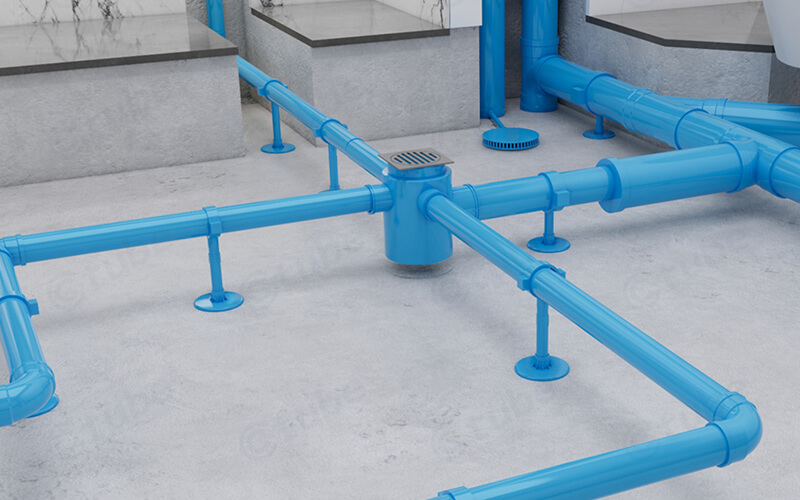
For contractors, engineers, and procurement officers, selecting the right drainage pipe is a strategic decision that balances operational reliability with project profitability. A high-performance DWV network ensures that waste is removed efficiently while maintaining the delicate atmospheric pressure balance required to keep sewer gases out of living spaces.
Conversely, a sub-standard system often leads to recurring maintenance issues—ranging from persistent odors and noise complaints to costly leaks that can compromise a building’s structural integrity.
In this guide, we will break down the complexities of modern DWV solutions. We will explore the physics of how drains actually work, the vital importance of venting, and why uPVC has become the industry’s premier material for durability and flow efficiency.
2. What is a DWV System?
At first glance, a plumbing network is just a series of pipes hidden behind walls.
However, for industry professionals, a DWV (Drain-Waste-Vent) system is a precision-engineered pressure vessel. It serves as the building’s “circulatory system,” where three distinct subsystems must work in perfect synchronization to maintain hygiene and structural safety.
The “D” and “W” portions of the system represent the liquid and solid removal side of the network. The Drain component is responsible for carrying “greywater”—the wastewater from sinks, showers, and floor drains.
The primary engineering challenge here is the management of soaps, hair, and kitchen fats that can accumulate over time. In professional plumbing systems, internal smoothness is a non-negotiable requirement.
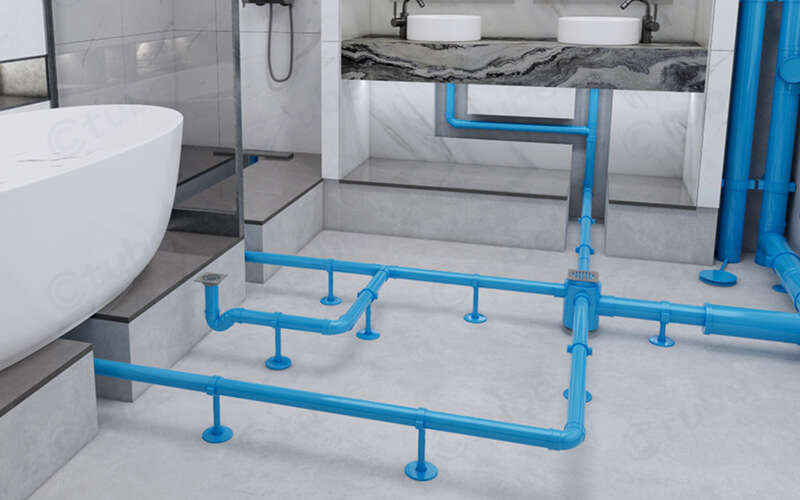
A pipe with a low friction coefficient, such as uPVC, ensures that water moves quickly enough to keep the line “self-scouring,” which effectively prevents the slow-flow issues and biofilm buildup that lead to expensive maintenance calls.
While drainage handles liquids, the Waste lines are designed for “blackwater,” the discharge from toilets and urinals. This is the most demanding part of the system as it must handle high-volume, high-velocity surges containing solid waste.
Structural rigidity and diameter consistency are key here. In large-scale residential or commercial projects, the waste pipe must be robust enough to resist sagging over long horizontal runs. If a pipe “bellies” or sags due to material weakness, solids will inevitably settle, leading to catastrophic blockages. This is a major reason why the unplasticized rigidity of uPVC is technically superior to more flexible plastic alternatives.
The Vent is perhaps the most misunderstood yet critical component for project success. Unlike the other two, vent pipes do not carry water; they carry air and sewer gases. Their primary role is to regulate atmospheric pressure within the entire system. Think of a toilet flush as a piston moving through a cylinder; as that volume of water falls down a vertical stack, it creates a powerful vacuum behind it.
Without a properly engineered venting system to introduce fresh air and break that vacuum, the resulting suction would pull the water out of the P-traps—the protective water seals under every sink and floor drain.
Once that seal is compromised, foul-smelling and potentially hazardous sewer gases can freely enter the building. Therefore, a well-designed vent ensures that gravity drainage remains consistent and odors remain outside.
3. Why Material Matters: The Advantages of uPVC
When people discuss the specifications for a robust plumbing system, the conversation almost inevitably gravitates toward uPVC (Unplasticized Polyvinyl Chloride).
The widespread adoption of uPVC over traditional materials or even standard PVC stems from its specialized “unplasticized” formulation.
While various materials exist for drainage pipes, uPVC has become the global benchmark for high-stakes commercial and residential projects.
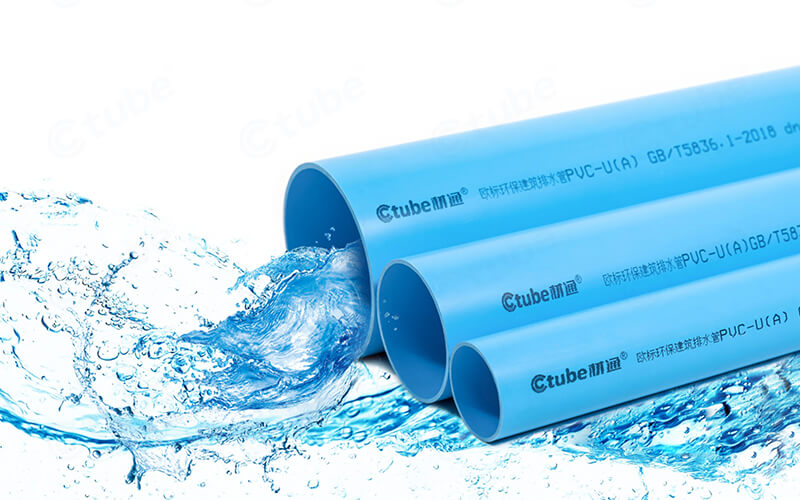
This preference isn’t merely a matter of trend; it is rooted in the material’s unique physical and chemical properties that solve the persistent challenges in DWV (Drain-Waste-Vent) engineering.
Structural Rigidity and Sag Resistance
Unlike standard PVC, which contains plasticizers to increase flexibility, uPVC is intentionally engineered to be “unplasticized.” This makes the material significantly more rigid. In DWV systems, maintaining a consistent slope is critical for gravity-fed drainage.
The structural integrity of uPVC ensures that the pipes resist “sagging” or “belly formation” over long horizontal runs. By preventing these dips, uPVC ensures that waste never becomes stagnant, effectively eliminating a primary cause of blockages and hydraulic failure in large-scale plumbing networks.
Superior Chemical and Corrosion Resistance
The chemical stability of uPVC pipe offers a level of protection that is essential in an era of aggressive household and industrial cleaning agents.
While metal pipes are susceptible to oxidation and rust, uPVC remains virtually inert. This resistance extends to the sulfuric acid naturally produced by sewer gases, which can corrode lesser materials over time.
Exceptional Hydraulic Efficiency
The smooth internal finish of uPVC provides a critical advantage in fluid dynamics. Measured by a low Manning’s Roughness Coefficient, this ultra-smooth internal bore minimizes friction. High hydraulic efficiency allows waste to be transported effortlessly even at the minimum slopes required by modern building codes.
Furthermore, this smoothness prevents the attachment of biofilms and the accumulation of scale, which are the leading causes of chronic blockages and “gurgling” noises within the walls.
Operational Efficiency and Installation Reliability
Beyond its physical properties, uPVC offers significant advantages during the construction phase. Its lightweight nature reduces the need for heavy lifting equipment, while its compatibility with solvent welding creates “molecularly fused” joints.
These joints can achieve strength comparable to the pipe body when properly installed, providing a highly reliable airtight and watertight performance. This ease of installation significantly reduces on-site labor costs and minimizes the risk of joint fatigue or “ghost leaks” appearing years after project completion.
Acoustic Comfort and Environmental Safety
Modern uPVC formulations are also designed to meet the rising demand for “quiet plumbing” in luxury and high-density developments. By optimizing wall thickness and material density, uPVC can effectively dampen the sound of rushing water, addressing one of the most common tenant complaints.
4. Key Selection Criteria for DWV Systems
For procurement officers and lead contractors, the transition from understanding material benefits to project execution requires a rigorous selection framework.
Choosing a uPVC drainage pipe is not merely a matter of matching blueprints; it involves evaluating specific performance metrics to ensure the system handles peak hydraulic loads without failure.
To navigate this process effectively, we must analyze the system through several critical dimensions, ensuring long-term reliability and cost-efficiency.
How to Evaluate the “Grade” of uPVC
Not all uPVC is manufactured to the same standard. When choosing a supplier, move beyond the surface and look for these technical indicators:
Wall Thickness Consistency: In high-rise projects, even a 0.5mm deviation in wall thickness can compromise the “ring stiffness” of the pipe under the weight of several floors. Ensure the pipe meets the specific SDR (Standard Dimension Ratio) required by your engineer.
Surface Integrity: Inspect the internal bore of a sample. It should be “glass-smooth” to the touch. Any visible grain or texture is a sign of poor resin quality, which will lead to biofilm buildup and future blockages.
Practical Sourcing: The “Full-System” Checklist
One of the most common mistakes in large-scale procurement is focusing solely on the linear meter cost of the pipe while ignoring the fittings. To ensure a leak-proof installation, follow these selection rules:
Tolerance Matching: Always source pipes and fittings (bends, tees, and traps) from the same manufacturer. High-precision solvent welding relies on an “interference fit”—where the pipe slightly melts into the fitting. If tolerances are off by even a fraction of a millimeter, the joint will be weak.
Specialized Components: Does the supplier offer specialized sweep bends to reduce turbulence? Or eccentric reducers to prevent air pockets? A professional DWV system is built on these specialized geometries that optimize hydraulic flow.
Acoustic Performance and Noise Mitigation
As urban living standards evolve, acoustic comfort has become a baseline requirement. The sound of rushing water is a frequent tenant complaint that can be mitigated at the procurement stage.
Decibel Reduction: When selecting pipes for luxury residential or hospitality projects, look for mineral-reinforced or high-density acoustic uPVC. These specialized formulations are designed to absorb structural vibrations and airborne noise, meeting strict decibel (dB) requirements without the need for bulky external insulation or the installation difficulty of heavy cast iron.
Structural Integrity and Long-Term Load
BearingA pipe’s ability to maintain its shape under external pressure is vital, especially for underground installations or pipes embedded in concrete.Crush Strength and Ring Stiffness: Ensure the selected drainage pipe has the appropriate ring stiffness.
High-quality uPVC resists deforming under the weight of backfill or the structural shifts of a building. This rigidity prevents “belly formation” (sagging), ensuring that the slope remains consistent and the system remains self-scouring over its 50-year lifespan.
International Compliance and Standards Verification
A reputable DWV solution must align with the rigorous mechanical requirements of ASTM D1785 or ASTM D2665, which dictate the specific wall thickness, pressure tolerances, and impact resistance necessary for structural reliability.
Beyond basic material dimensions, high-tier projects often require specialized safety and health certifications. For example, NSF/ANSI 14 certification ensures that the piping system meets strict performance and toxicological standards for plastic piping components.
5. Conclusión
In the landscape of modern architecture and large-scale urban development, the DWV (Drain, Waste, and Vent) system serves as the critical “respiratory and digestive” network of a building.
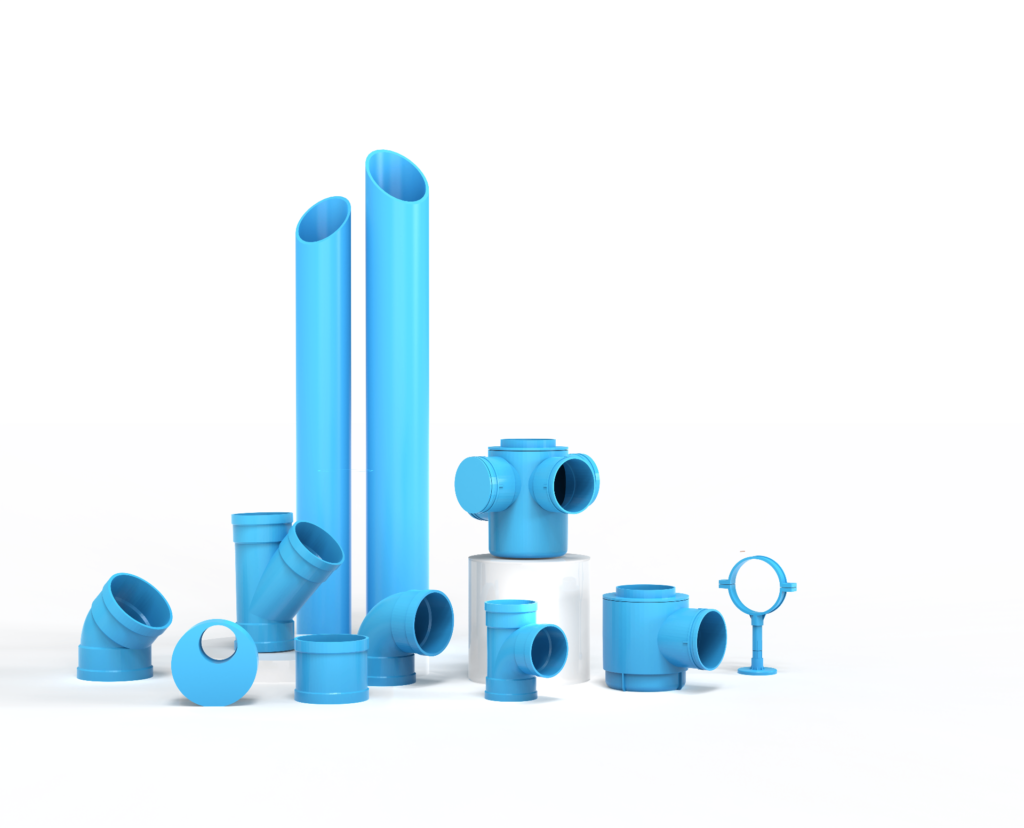
As we have explored throughout this guide, the transition from legacy materials to high-performance uPVC is not merely a trend, but a calculated response to the demand for greater longevity, hydraulic efficiency, and operational reliability.
By moving beyond a simple cost-per-meter analysis and focusing on deep technical metrics—such as resin purity, ring stiffness, and international compliance—project stakeholders can effectively mitigate the risks of structural failure, chronic blockages, and costly retrofits.
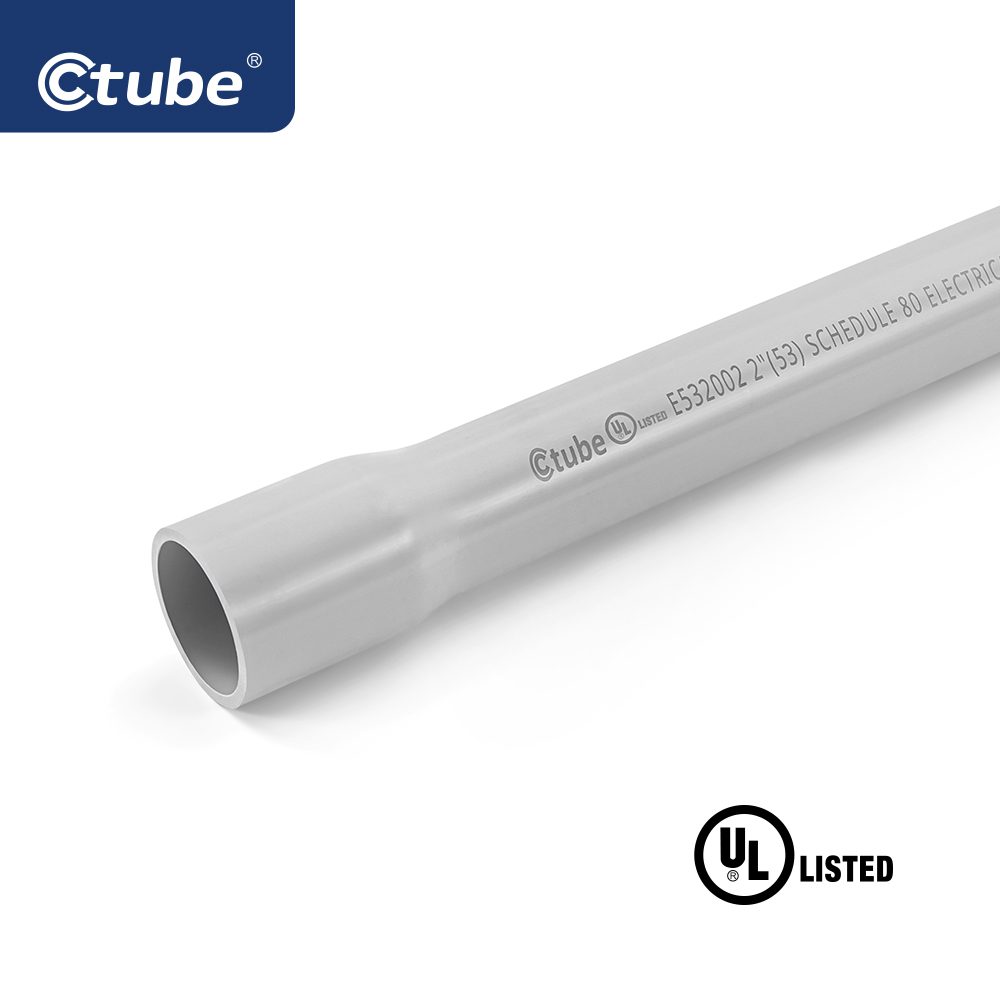
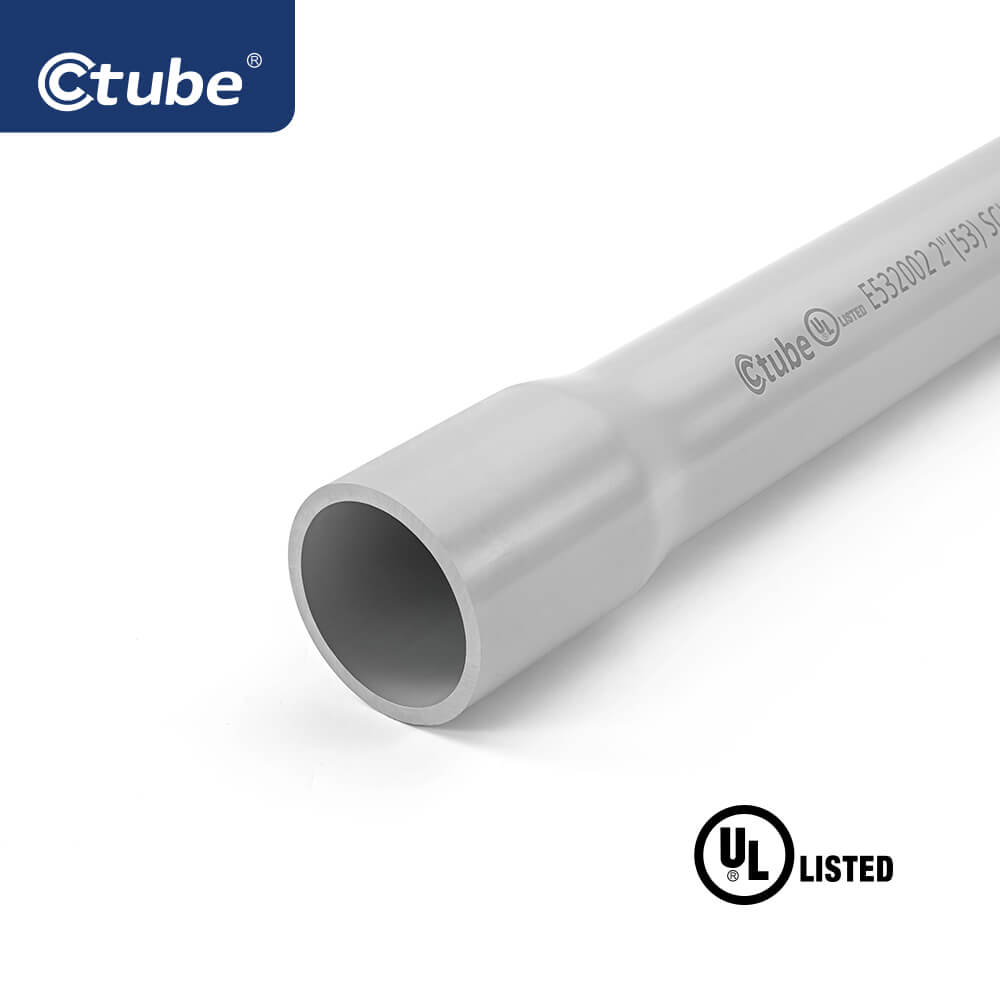
En Tubo C, we understand that the reliability of a high-rise or commercial complex depends on the integrity of the components hidden behind its walls. We are proud to introduce our newest uPVC DWV Pipe Series, a product line meticulously engineered to bridge the gap between rigorous global standards and real-world installation challenges.
Our new series is the culmination of advanced extrusion technology and high-purity resin selection, designed specifically to provide a seamless, low-friction environment that ensures clog-free performance under the most demanding conditions.
Beyond the pipe itself, we offer a unified system of matching fittings to ensure a perfect molecular bond during solvent welding, eliminating the “ghost leaks” and joint fatigue often associated with mismatched components. Whether you are scaling a luxury residential development or an industrial landmark, Ctube provides the systemic synergy required to future-proof your investment.
We would like to express our gratitude for the time you have spent engaging with this guide. Hope this guide is helpful and wish you success in your upcoming projects.


 English
 French
 Spanish
 German
 Arabic
 Indonesian
 Vietnamese