
1.Beyond Residential: Why Commercial DWV Requires a Different Approach
In commercial MEP engineering, a failed Drain, Waste, and Vent (DWV) system isn’t just a maintenance headache—it’s a catastrophic financial liability. While residential DIY projects might survive with generic foam-core plastics, commercial plumbing networks face aggressive chemical discharges, immense hydrostatic stack pressures, and rigorous building code inspections.
Specifying non-compliant DWV materials can lead to failed pressure tests and concrete slab tear-outs, forcing contractors to absorb rework costs that are typically 300% to 400% higher than the initial installation budget. Compared to the devastating impact of project delays and liquidated damages, investing in code-compliant, solid-core uPVC is the most cost-effective insurance policy for your project.
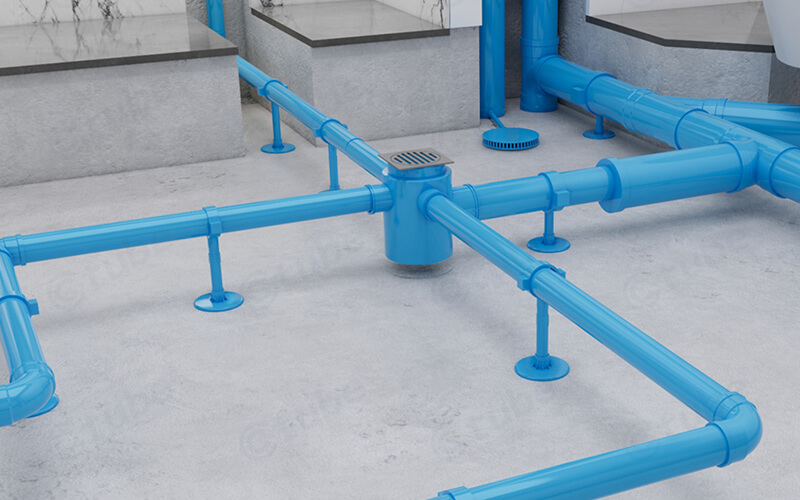
📌 Executive Summary for MEP Professionals
- Code Compliance is Absolute: Strictly specify unplasticized PVC (uPVC) conforming to the latest regional mandates: ASTM D2665-25 (North America), AS/NZS 1260:2017 (ANZ), or EN 1329-1:2026 (Europe).
- Vulnerable Environments Demand More: Hospitals and schools require DWV systems that not only handle high temperatures (up to 180°F/82.2°C industrial limits) but also guarantee zero biological hazards or toxic sewer gas leaks.
- Integritas Struktural: Rely on hard data. Ensure your pipes meet strict Ring Bending Stiffness (SN ratings) Dan 5% deflection limits to survive heavy trench backfill and concrete encasement without ovalization.
2. What is a Commercial DWV Pipe? (Engineering Definition)
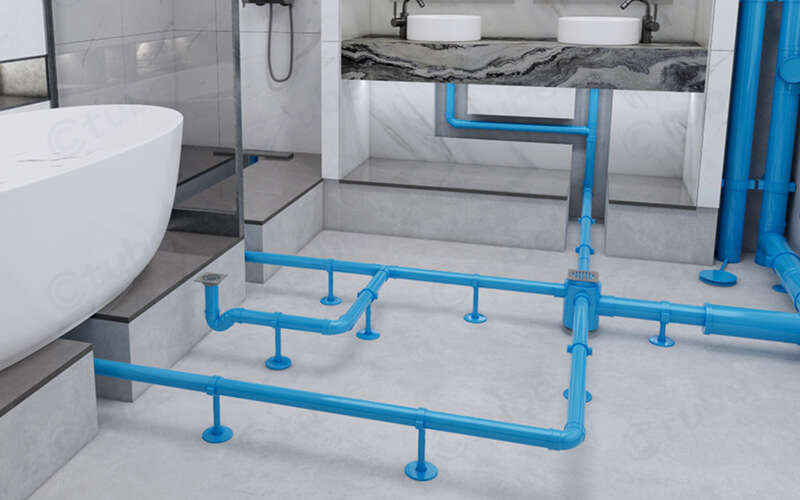
In commercial MEP (Mechanical, Electrical, and Plumbing) engineering, a DWV (Drain, Waste, and Vent) system is a complex, gravity-driven network designed to safely remove greywater and blackwater from a facility while neutralizing internal pneumatic pressure. Unlike pressurized water supply lines, DWV systems operate at atmospheric pressure and rely on exact pipe sloping, hydraulic flow dynamics, and specific sweep fittings to prevent solid waste blockages.
To understand the mechanical requirements, we must break down the three distinct functions:
2.1 The Functional Components of DWV (Hydraulic & Pneumatic Data)
| Component | Engineering Function | Critical MEP Parameter / Hard Data |
|---|---|---|
| Drain (D) | Transports greywater (showers, sinks) and blackwater (toilets) to the municipal sewer. | Must maintain a minimum slope (grade) of 1/4 inch per foot (2%) for pipes ≤ 2½”, or 1/8 inch per foot (1%) for pipes 3″ to 6″ to achieve self-cleaning velocity. |
| Waste (W) | Refers specifically to the liquid discharge that does not contain human waste (feces). | Operates entirely on gravity. Requires high-ring-stiffness piping (e.g., SN8/SN10 or Sch 40) to prevent belly formation and stagnant water pooling. |
| Vent (V) | Equalizes pneumatic pressure in the drainage system to prevent trap seal siphonage (blowouts). | Vent stacks must extend outdoors. Without this equalization, a negative pressure spike will suck the water out of P-traps, allowing lethal and highly corrosive Hydrogen Sulfide (H2S) sewer gas into the building. |
A pipe with a low friction coefficient, such as uPVC, ensures that water moves quickly enough to keep the line “self-scouring,” which effectively prevents the slow-flow issues and biofilm buildup that lead to expensive maintenance calls.
While drainage handles liquids, the Waste lines are designed for “blackwater,” the discharge from toilets and urinals. This is the most demanding part of the system as it must handle high-volume, high-velocity surges containing solid waste.
Structural rigidity and diameter consistency are key here. In large-scale residential or commercial projects, the waste pipe must be robust enough to resist sagging over long horizontal runs. If a pipe “bellies” or sags due to material weakness, solids will inevitably settle, leading to catastrophic blockages. This is a major reason why the unplasticized rigidity of uPVC is technically superior to more flexible plastic alternatives.
The Vent is perhaps the most misunderstood yet critical component for project success. Unlike the other two, vent pipes do not carry water; they carry air and sewer gases. Their primary role is to regulate atmospheric pressure within the entire system. Think of a toilet flush as a piston moving through a cylinder; as that volume of water falls down a vertical stack, it creates a powerful vacuum behind it.
Without a properly engineered venting system to introduce fresh air and break that vacuum, the resulting suction would pull the water out of the P-traps—the protective water seals under every sink and floor drain.
Once that seal is compromised, foul-smelling and potentially hazardous sewer gases can freely enter the building. Therefore, a well-designed vent ensures that gravity drainage remains consistent and odors remain outside.
3. Why Material Matters: The Advantages of uPVC
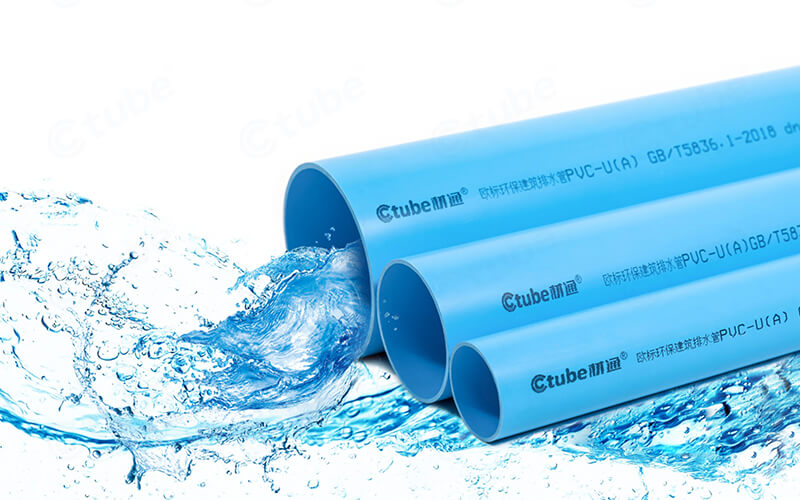
When people discuss the specifications for a robust plumbing system, the conversation almost inevitably gravitates toward uPVC (Unplasticized Polyvinyl Chloride).
The widespread adoption of uPVC over traditional materials or even standard PVC stems from its specialized “unplasticized” formulation.
While various materials exist for drainage pipes, uPVC has become the global benchmark for high-stakes commercial and residential projects.
This preference isn’t merely a matter of trend; it is rooted in the material’s unique physical and chemical properties that solve the persistent challenges in DWV (Drain-Waste-Vent) engineering.
Structural Rigidity and Sag Resistance
Unlike standard PVC, which contains plasticizers to increase flexibility, uPVC is intentionally engineered to be “unplasticized.” This makes the material significantly more rigid. In DWV systems, maintaining a consistent slope is critical for gravity-fed drainage.
The structural integrity of uPVC ensures that the pipes resist “sagging” or “belly formation” over long horizontal runs. By preventing these dips, uPVC ensures that waste never becomes stagnant, effectively eliminating a primary cause of blockages and hydraulic failure in large-scale plumbing networks.
Superior Chemical and Corrosion Resistance
The chemical stability of uPVC pipe offers a level of protection that is essential in an era of aggressive household and industrial cleaning agents.
While metal pipes are susceptible to oxidation and rust, uPVC remains virtually inert. This resistance extends to the sulfuric acid naturally produced by sewer gases, which can corrode lesser materials over time.
Exceptional Hydraulic Efficiency
The smooth internal finish of uPVC provides a critical advantage in fluid dynamics. Measured by a low Manning’s Roughness Coefficient, this ultra-smooth internal bore minimizes friction. High hydraulic efficiency allows waste to be transported effortlessly even at the minimum slopes required by modern building codes.
Furthermore, this smoothness prevents the attachment of biofilms and the accumulation of scale, which are the leading causes of chronic blockages and “gurgling” noises within the walls.
Operational Efficiency and Installation Reliability
Beyond its physical properties, uPVC offers significant advantages during the construction phase. Its lightweight nature reduces the need for heavy lifting equipment, while its compatibility with solvent welding creates “molecularly fused” joints.
These joints can achieve strength comparable to the pipe body when properly installed, providing a highly reliable airtight and watertight performance. This ease of installation significantly reduces on-site labor costs and minimizes the risk of joint fatigue or “ghost leaks” appearing years after project completion.
Acoustic Comfort and Environmental Safety
Modern uPVC formulations are also designed to meet the rising demand for “quiet plumbing” in luxury and high-density developments. By optimizing wall thickness and material density, uPVC can effectively dampen the sound of rushing water, addressing one of the most common tenant complaints.
4. Commercial DWV Pipe Material Comparison: uPVC vs. PVC, Cast Iron, and ABS
One of the most frequent errors in procurement is treating all plastic pipes identically. Specifying the wrong polymer or metal for a commercial DWV system drastically accelerates pipe failure, corrosion, and maintenance costs.
- uPVC (Unplasticized PVC) vs. Standard PVC: This is a critical distinction. Standard PVC often contains plasticizers to make it more flexible, which reduces its structural rigidity. uPVC is completely unplasticized, meaning it offers exceptional ring bending stiffness and resistance to severe chemical degradation. For gravity-fed DWV systems requiring exact long-term sloping without deflection, solid-core uPVC is the ultimate commercial standard.
- Cast Iron: Historically used for its acoustic dampening properties. However, it is exceptionally heavy, labor-intensive to install, and highly susceptible to internal tuberculation and Hydrogen Sulfide (H2S) corrosion.
- ABS (Acrylonitrile Butadiene Styrene): Identifiable by its black color. While highly impact-resistant at cold temperatures, it contains BPA, has a lower tensile strength than uPVC, and is strictly prohibited in many commercial fire zones due to its combustible nature and toxic smoke generation.
4.1 Material Performance Matrix for Commercial DWV
| Bahan | Tensile Strength / Rigidity | Max Continuous Discharge Temp | Chemical & H2S Resistance | Commercial Application Verdict |
|---|---|---|---|---|
| Solid-Core uPVC (ASTM D2665 / EN 1329) | High (Unplasticized). High ring stiffness (SN8+). Resists soil load ovalization. | 140°F (60°C) | Exceptional. Completely inert to H2S sulfuric acid and harsh cleaning solvents. | Top Tier. Ideal for underground sewers, vertical stacks, and sanitary drainage. |
| Cellular-Core PVC (ASTM F891) | Low. Prone to crushing under heavy trench backfill. | 140°F (60°C) | Good. | Avoid in Commercial. Suitable only for light residential/DIY plumbing. |
| Cast Iron (No Hub) | Extreme. But subject to heavy weight-induced hanger failure. | 212°F (100°C) | Poor. Rusts and scales internally when exposed to sewer gases. | Niche. Used strictly where extreme fire-stopping or acoustic control is the only priority. |
| ABS (ASTM D2661) | Moderate. Subject to bowing in horizontal runs if unsupported. | 140°F (60°C) | Moderate. Degrades quickly under UV exposure. | Limited. Mostly residential. Banned in many commercial strict-code zones. |
Stop gambling with substandard materials on million-dollar contracts. Switch to high-ring-stiffness, corrosion-proof uPVC. Contact Ctube to claim uPVC DWV Chemical Resistance & Specifications ke verify compliance for your next project.
5. Global MEP Standards & Code Compliance for DWV Systems
Specifying the correct material standard is the foundation of project handover. A DWV system that fails to meet local codes will not pass the final plumbing inspection, rendering the entire building legally uninhabitable.
5.1 North America: ASTM D2665-25 (Latest Revision)
- Applicability: The definitive standard for solid-core PVC plastic drain, waste, and vent pipe and fittings across the USA and Canada (aligned with IPC/UPC).
- Why It Matters: Failing ASTM D2665 compliance means structural vulnerability. If a non-compliant pipe cracks under a foundation slab, the demolition, slab tear-out, and business disruption will cost multiples of the original MEP contract.
- Key Technical Parameters:
- Pipe Stiffness: Mandates specific minimum stiffness at 5% deflection (e.g., 310 psi for 4-inch pipes / 2140 kPa) to prevent flattening.
- Ketahanan terhadap benturan: Pipes must withstand a minimum impact resistance of 60 ft-lbf (81 J) at 73°F (23°C), ensuring durability during rough construction handling.
- Temperature Limits: Standard specs apply up to typical use, but industrial waste exceeding 180°F (82.2°C) requires specific approval and system modifications.
5.2 Australia & New Zealand: AS/NZS 1260:2017
- Applicability: The mandatory benchmark for uPVC pipes and fittings for gravity drainage in the ANZ region.
- Why It Matters: Deep trenching in commercial builds puts immense earth loads on horizontal lines. Ignoring the specific SN (Stiffness Nominal) classification leads to severe pipe ovalization, joint seal failure, and massive subterranean leaks.
- Key Technical Parameters:
- Ring Bending Stiffness: Pipes are classified by short-term tests (SN4, SN6, SN8, SN10, SN16). Commercial projects typically mandate SN6 to SN10 for structural plain-wall pipes.
- Impact Characteristics: True Impact Rate (TIR) must remain below 10% at 20°C using specified mass drop heights.
- Visual Compliance: Standard specifies strict color tolerances (Pearl Grey N11 to Cloud Grey N22) for rapid on-site inspector verification.
5.3 Europe & UK: EN 1329-1:2026
- Applicability: The most updated European standard for uPVC soil and waste discharge systems inside building structures (Application area “B” or “BD”).
- Why It Matters: European regulations are extremely strict regarding material purity and thermal performance. Using adulterated plastics with excessive fillers will cause pipes to warp and fail during prolonged hot water discharges.
- Key Technical Parameters:
- Material Purity: Strictly requires a PVC-U content of ≥ 80% by mass for pipes and ≥ 85% for injection-moulded fittings.
- Thermal Resilience: Must pass the Vicat Softening Temperature (VST) of ≥ 79°C and exhibit a longitudinal reversion of ≤ 5% at 150°C.
- Internal Pressure Resistance: Zero failure during a rigorous 1,000-hour water-in-water test at 60°C under 10 MPa stress.
Ensuring full compliance across different continents is complex. Ctube’s manufacturing lines are strictly calibrated to meet ASTM, AS/NZS, and EN requirements. Get the latest catalog today!
6. Key Selection Criteria for DWV Systems
For procurement officers and lead contractors, the transition from understanding material benefits to project execution requires a rigorous selection framework.
Choosing a uPVC drainage pipe is not merely a matter of matching blueprints; it involves evaluating specific performance metrics to ensure the system handles peak hydraulic loads without failure.
To navigate this process effectively, we must analyze the system through several critical dimensions, ensuring long-term reliability and cost-efficiency.
How to Evaluate the “Grade” of uPVC
Not all uPVC is manufactured to the same standard. When choosing a supplier, move beyond the surface and look for these technical indicators:
Wall Thickness Consistency: In high-rise projects, even a 0.5mm deviation in wall thickness can compromise the “ring stiffness” of the pipe under the weight of several floors. Ensure the pipe meets the specific SDR (Standard Dimension Ratio) required by your engineer.
Surface Integrity: Inspect the internal bore of a sample. It should be “glass-smooth” to the touch. Any visible grain or texture is a sign of poor resin quality, which will lead to biofilm buildup and future blockages.
Practical Sourcing: The “Full-System” Checklist
One of the most common mistakes in large-scale procurement is focusing solely on the linear meter cost of the pipe while ignoring the fittings. To ensure a leak-proof installation, follow these selection rules:
Tolerance Matching: Always source pipes and fittings (bends, tees, and traps) from the same manufacturer. High-precision solvent welding relies on an “interference fit”—where the pipe slightly melts into the fitting. If tolerances are off by even a fraction of a millimeter, the joint will be weak.
Specialized Components: Does the supplier offer specialized sweep bends to reduce turbulence? Or eccentric reducers to prevent air pockets? A professional DWV system is built on these specialized geometries that optimize hydraulic flow.
Acoustic Performance and Noise Mitigation
As urban living standards evolve, acoustic comfort has become a baseline requirement. The sound of rushing water is a frequent tenant complaint that can be mitigated at the procurement stage.
Decibel Reduction: When selecting pipes for luxury residential or hospitality projects, look for mineral-reinforced or high-density acoustic uPVC. These specialized formulations are designed to absorb structural vibrations and airborne noise, meeting strict decibel (dB) requirements without the need for bulky external insulation or the installation difficulty of heavy cast iron.
Structural Integrity and Long-Term Load
BearingA pipe’s ability to maintain its shape under external pressure is vital, especially for underground installations or pipes embedded in concrete.Crush Strength and Ring Stiffness: Ensure the selected drainage pipe has the appropriate ring stiffness.
High-quality uPVC resists deforming under the weight of backfill or the structural shifts of a building. This rigidity prevents “belly formation” (sagging), ensuring that the slope remains consistent and the system remains self-scouring over its 50-year lifespan.
International Compliance and Standards Verification
A reputable DWV solution must align with the rigorous mechanical requirements of ASTM D1785 or ASTM D2665, which dictate the specific wall thickness, pressure tolerances, and impact resistance necessary for structural reliability.
Beyond basic material dimensions, high-tier projects often require specialized safety and health certifications. For example, NSF/ANSI 14 certification ensures that the piping system meets strict performance and toxicological standards for plastic piping components.
7. Specifying DWV Systems for High-Demand Commercial Scenarios
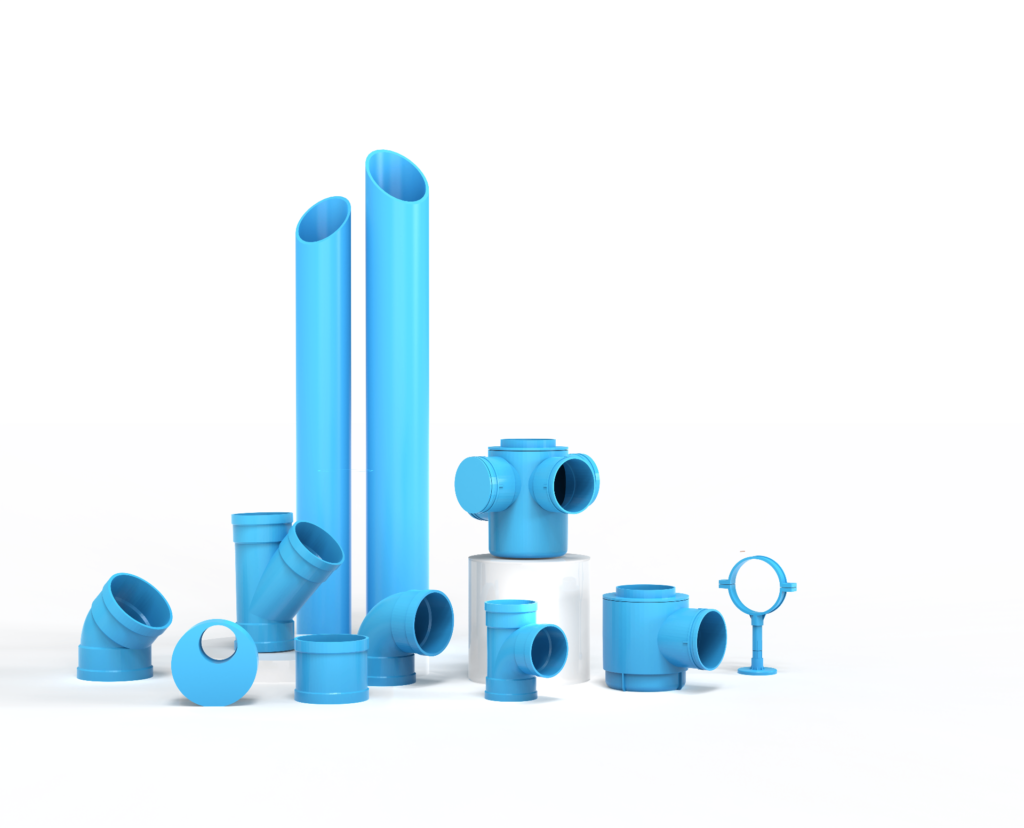
In critical infrastructure, DWV pipe selection goes far beyond basic temperature and flow metrics. It is about safeguarding human health.
7.1 Healthcare Facilities (Hospitals & Clinics) & Educational Institutions
In environments housing vulnerable populations, a plumbing failure is not an inconvenience; it is a severe biohazard.
- The Risk: Inadequate drainage capacity or failed pipe joints can lead to raw sewage back-ups, toxic sewer gas (H2S) permeation, and the spread of deadly pathogens.
- The Requirement: These systems demand massive Drainage Fixture Unit (DFU) capacities and must pass uncompromising initial hydrostatic pressure tests before wall-closure. Furthermore, hospitals frequently discharge harsh chemical disinfectants and autoclave waste.
- The Solution: High-density uPVC provides unparalleled chemical resistance against medical-grade solvents and maintains absolute joint integrity, ensuring a 100% leak-proof sanitary environment.
7.2 High-Rise Commercial Towers & Mixed-Use Developments
- The Risk: In vertical stacks spanning 30+ floors, falling wastewater generates violent pneumatic pressure shifts. Weak pipes can cause trap seals to blow out, allowing foul odors to flood luxury apartments.
- The Requirement: Robust wall thickness (Schedule 40 / SN10) and precision-engineered DWV sweep fittings are legally required to manage terminal velocity and maintain optimal venting airflow.
Working on a hospital, school, or high-rise tender? Don’t risk a biohazard or compliance failure. Request a Free Technical Consultation with Ctube’s MEP Piping Experts Today!
8. Kesimpulan
In the landscape of modern architecture and large-scale urban development, the DWV (Drain, Waste, and Vent) system serves as the critical “respiratory and digestive” network of a building.
As we have explored throughout this guide, the transition from legacy materials to high-performance uPVC is not merely a trend, but a calculated response to the demand for greater longevity, hydraulic efficiency, and operational reliability.
By moving beyond a simple cost-per-meter analysis and focusing on deep technical metrics—such as resin purity, ring stiffness, and international compliance—project stakeholders can effectively mitigate the risks of structural failure, chronic blockages, and costly retrofits.
Pada Ctube, we understand that the reliability of a high-rise or commercial complex depends on the integrity of the components hidden behind its walls. We are proud to introduce our newest uPVC DWV Pipe Series, a product line meticulously engineered to bridge the gap between rigorous global standards and real-world installation challenges.
Our new series is the culmination of advanced extrusion technology and high-purity resin selection, designed specifically to provide a seamless, low-friction environment that ensures clog-free performance under the most demanding conditions.
Beyond the pipe itself, we offer a unified system of matching fittings to ensure a perfect molecular bond during solvent welding, eliminating the “ghost leaks” and joint fatigue often associated with mismatched components. Whether you are scaling a luxury residential development or an industrial landmark, Ctube provides the systemic synergy required to future-proof your investment.
We would like to express our gratitude for the time you have spent engaging with this guide. Hope this guide is helpful and wish you success in your upcoming projects.
9. Pertanyaan yang Sering Diajukan
Can I use Cellular Core (Foam-Core) PVC for commercial DWV systems?
While foam-core PVC (ASTM F891) is lightweight and common in residential builds, most high-end commercial MEP specs strictly forbid it. Solid-core uPVC (ASTM D2665) is mandated for commercial buildings due to its superior acoustic dampening, structural ring stiffness, and higher resistance to impact and heavy equipment vibration.
What is the exact difference between Schedule 40 DWV and Schedule 40 Pressure PVC?
It comes down to hydraulic function. Pressure pipes (ASTM D1785) handle static pressure and utilize sharp 90-degree elbows. DWV pipes rely on gravity; therefore, DWV fittings use sweep curves (like sanitary tees and long-turn elbows) to guide solid waste without clogging. Never mix pressure fittings in a DWV system.
How do uPVC DWV pipes perform with commercial dishwasher high-temperature discharge?
Standard uPVC has a maximum continuous operating temperature of 140°F (60°C). For commercial kitchens discharging boiling water (180°F+), code requires the installation of a cooling interceptor or a transition to CPVC/Cast Iron for the immediate discharge zone before tying into the main uPVC DWV line.
Are uPVC DWV pipes resistant to sewer gases like Hydrogen Sulfide (H2S)?
Yes. Unlike cast iron, which is highly susceptible to corrosion and rust when exposed to sulfuric acid (formed by H2S gas in vent stacks), uPVC is completely inert to these gases. This ensures a multi-decade lifespan in main sanitary sewers without internal degradation.
What is the Maximum Drainage Fixture Unit (DFU) load for a 4-inch vertical uPVC stack?
According to the IPC (International Plumbing Code), a 4-inch vertical soil stack can typically handle up to 500 DFUs, provided the venting system is proportionally sized and installed correctly. Always refer to your local code sizing tables for exact compliance.
Do commercial uPVC DWV systems require firestops?
Absolutely. Whenever a uPVC DWV pipe penetrates a fire-rated wall or floor assembly, code dictates the use of an approved intumescent firestop collar or sealant that complies with ASTM E814 or UL 1479 to maintain the building's fire compartmentalization.
Can I use ABS DWV instead of uPVC in a commercial building?
Generally, no. ABS is predominantly a residential material. It has a lower structural rigidity compared to solid-core uPVC and is strictly prohibited in commercial buildings in many municipalities (especially in specific fire zones) due to its different combustion profile and toxic smoke emission.
How do you prevent uPVC pipe sagging in long horizontal commercial runs?
Proper hanger spacing is critical. For horizontal uPVC DWV runs, plumbing codes typically require structural support (clevis hangers or strap hangers) every 4 feet (1.2 meters) to prevent "belly" formation and ensure a consistent 1% to 2% grade.
What type of solvent cement is required for commercial uPVC DWV?
Commercial applications require a heavy-duty, medium-to-heavy body PVC solvent cement that meets ASTM D2564 standards. A purple primer (ASTM F656) is also legally required by inspectors in most jurisdictions to chemically soften the pipe and verify that the joint was properly prepped.
What documentation do procurement managers need for DWV submittals?
For commercial tenders, you must provide Technical Submittal Data Sheets detailing ASTM/AS-NZS compliance, dimensional tolerances, third-party lab testing certifications (like NSF or UL), and a comprehensive material safety data sheet (MSDS).


 English
  French
  Spanish
  German
  Arabic
  Indonesian
  Vietnamese