
1. Introduction
In modern plumbing systems, PPR pipes are widely recognized for their durability, corrosion resistance, and long service life. As a result, much of the attention in product selection is often focused on the pipe itself—its material quality, pressure rating, and manufacturing standards. However, in real-world installations, the overall reliability of a PPR system depends on more than just the pipe.
Every connection point within the system—whether it is a change in direction, a branch line, or a transition between different pipe sizes—relies on properly selected and installed PPR fittings. These components play a critical role in maintaining system integrity, ensuring leak-free performance, and supporting consistent pressure throughout the network. In fact, many common plumbing failures, such as leakage, weak joints, or flow restrictions, can often be traced back to incorrect fitting selection rather than issues with the pipe itself.
Global Market Insight: In recent years, emerging markets across Southeast Asia, the Middle East, and Africa have seen a massive shift toward high-pressure PN25 PPR systems. With the rapid expansion of high-rise commercial infrastructure, MEP engineers are prioritizing fittings that can consistently withstand severe water hammer effects and high-temperature stress without compromising the joint integrity.
This guide is designed to provide a clear and practical overview of PPR fittings. It will cover the most common types of fittings and their functions, explain standard sizing and compatibility considerations, and outline the key factors to evaluate when selecting fittings for different applications.
2. What Are PPR Pipe Fittings?
PPR pipe fittings are essential components used to connect, control, and direct the flow within a PPR piping system. Made from the same polypropylene random copolymer (PPR) material as the pipes themselves, these fittings are specifically designed to create a fully integrated and homogeneous piping network. This material consistency is not accidental—it is fundamental to how PPR systems achieve their long-term reliability.
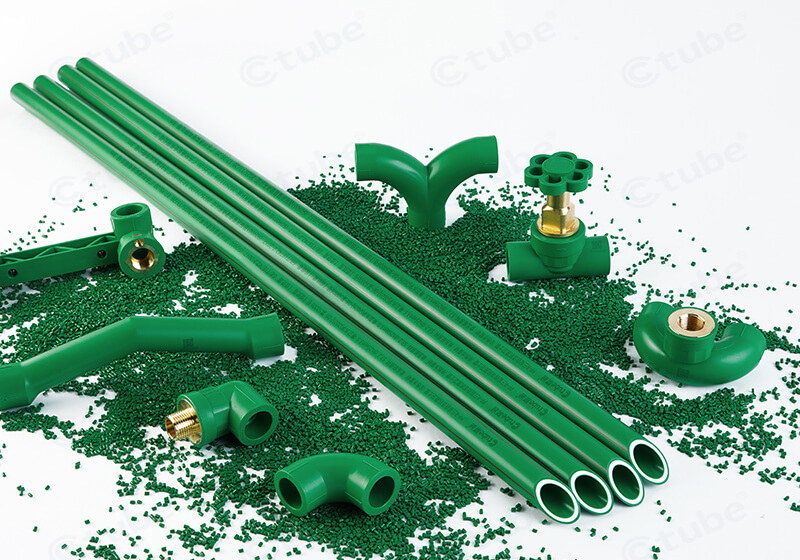
Unlike traditional threaded or mechanical connections, PPR fittings are typically joined to pipes through a heat fusion process. During installation, both the pipe end and the fitting socket are heated to a specified temperature and then joined together. As the material cools, the two components fuse into a single, continuous structure. This process eliminates the need for additional sealing materials—such as adhesives, gaskets, or thread compounds—significantly reducing the risk of leakage over time.
PPR fittings are available in a wide range of forms, each designed to serve a specific function within the system. Some fittings are used to change the direction of flow, others to create branch connections, and others to connect pipes of different sizes or allow for future maintenance. Understanding these basic roles is important, but equally important is recognizing that each type of fitting must be selected with attention to system requirements such as pressure, temperature, and layout design.
3. Common Types of PPR Fittings and Their Functional Categories
3.1 Quick Reference: Common PPR Fitting Types and Their Technical Purposes
Before diving into the detailed descriptions, here is a quick dataset outlining the primary functions and technical features of essential PPR fittings:
Common PPR Fitting Types & Purposes Table
| Fitting Type | Primary Purpose in Plumbing | Key Technical Feature |
| Couplings (Sockets) | Joins two straight PPR pipes of the same diameter. | Deep fusion zones for maximum burst resistance. |
| Elbows (45° / 90°) | Changes the direction of the pipeline to navigate corners. | Smooth inner walls to minimize friction loss. |
| Equal / Reducing Tees | Branches the pipeline to distribute water to different areas. | Reinforced crotch areas to handle flow pressure spikes. |
| Reducers | Connects a larger pipe to a smaller one. | Tapered interior design to maintain consistent flow dynamics. |
| Valves (Gate/Ball) | Controls or shuts off the flow of water within the system. | Brass/Chrome-plated cores for long-lasting leak prevention. |
| Threaded Brass Inserts | Transitions from plastic PPR to metallic fixtures (e.g., faucets, heaters). | Deep knurling on the brass to prevent spinning or pulling out. |
| End Caps | Permanently seals the end of a pipeline during or after construction. | High-thickness dome to withstand continuous line pressure. |
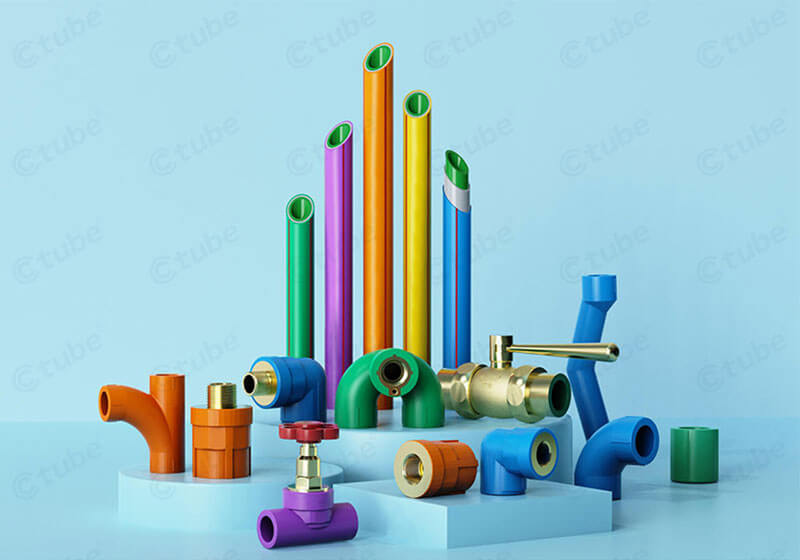
PPR fittings are available in a wide variety of designs to meet different installation and system requirements. While it is not practical to list every variation, most fittings can be grouped into several functional categories based on their role within the piping system. Understanding these categories makes it easier to select the right components for specific applications and simplifies system design.
3.2 Directional Change Fittings
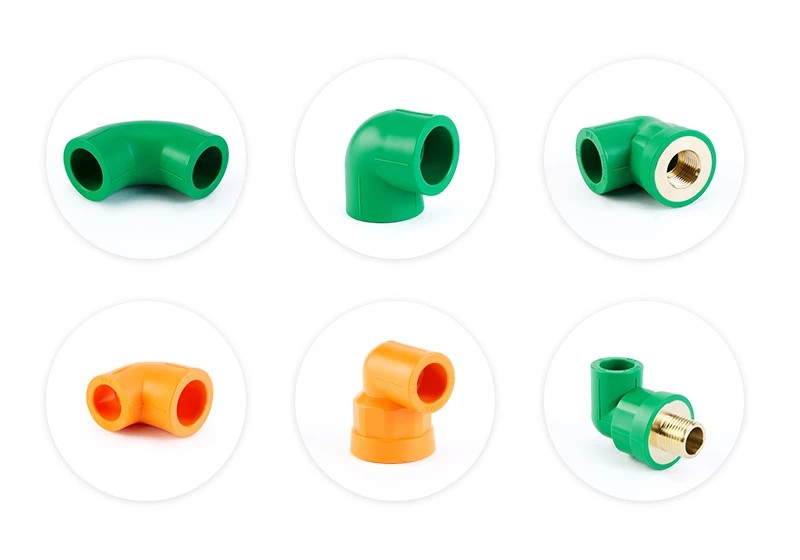
Directional fittings are used to alter the flow path within a piping system. These are essential in adapting pipe layouts to building structures such as walls, corners, and ceilings.
Common examples include 45-degree elbows and 90-degree elbows. A 90-degree elbow is typically used where space is limited and a sharp turn is required, while a 45-degree elbow provides a smoother transition that can help reduce flow resistance in certain applications.
In more complex layouts, specialized fittings such as bridge connectors (also known as crossover fittings) are used to allow pipes to cross over each other without direct interference. These are particularly useful in dense installations where multiple pipelines need to be routed within limited space.
Selecting the appropriate directional fitting helps maintain efficient flow while ensuring that the system layout remains practical and easy to install.
3.3 Branching and Distribution Fittings
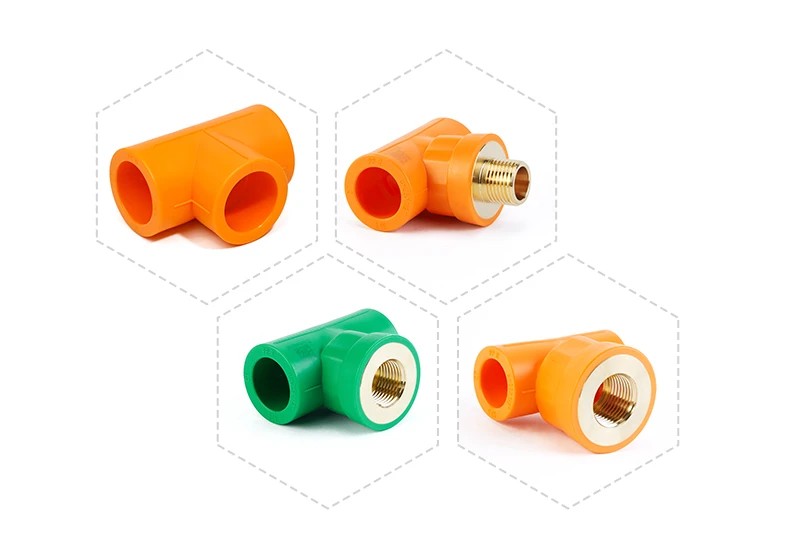
Branch fittings are used to divide the flow from a main pipeline into multiple directions. These are critical in systems where water needs to be distributed to several outlets or zones.
Typical fittings in this category include T-type 3-way connectors (tees), Y-type branch fittings, and specialized threaded tees such as U-type female threaded tees. Standard tees are widely used for perpendicular branching, while Y-type fittings allow for smoother flow division with less turbulence.
Threaded branch fittings are often applied when connecting to fixtures or equipment that require threaded interfaces. The choice between different branch types depends on factors such as flow requirements, pressure balance, and installation space.
Proper use of branching fittings ensures stable water distribution and minimizes pressure loss across the system.
3.4 Connection and Extension Fittings
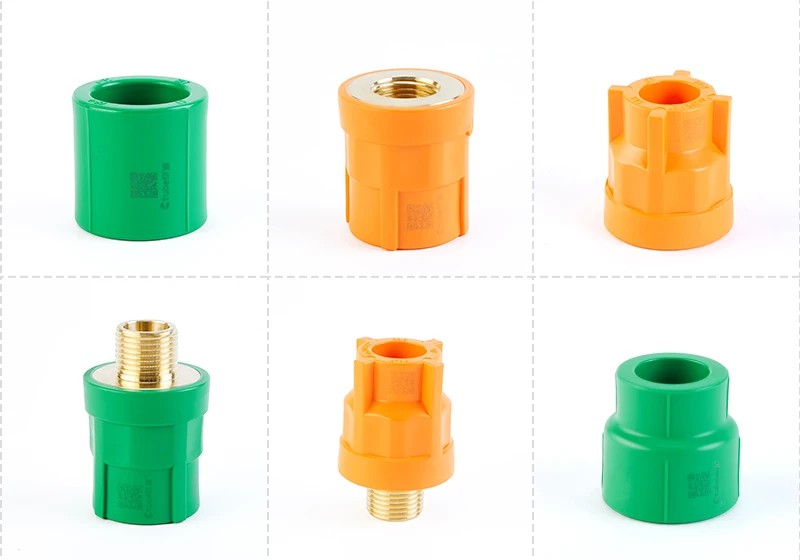
These fittings are used to connect pipes in a straight line or extend the length of a pipeline. Although simple in function, they are fundamental to maintaining system continuity.
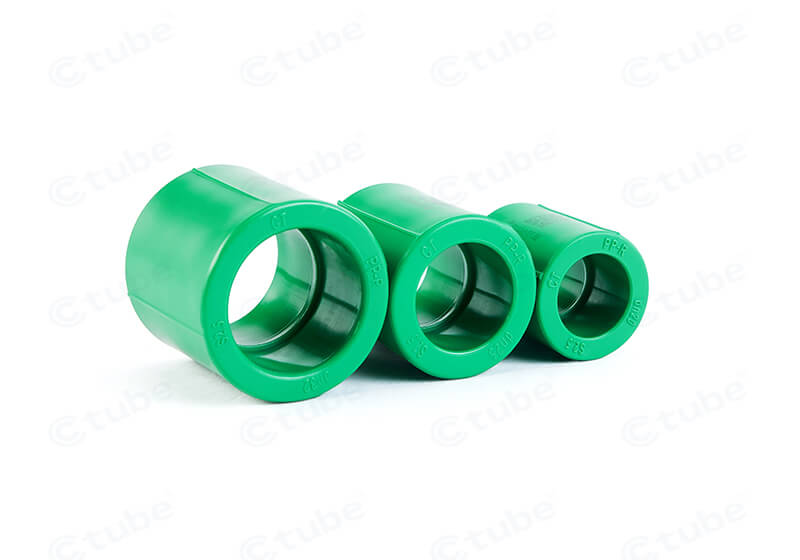
The most common example is the straight socket (coupling), which joins two pipes of the same diameter. These fittings are frequently used in long pipeline runs or when repairing damaged sections.
Because these connections rely on heat fusion, the dimensional accuracy and material quality of the fittings are especially important. Poor-quality couplings can lead to weak joints or misalignment, affecting the overall reliability of the system.
3.5 Termination and Closure Fittings
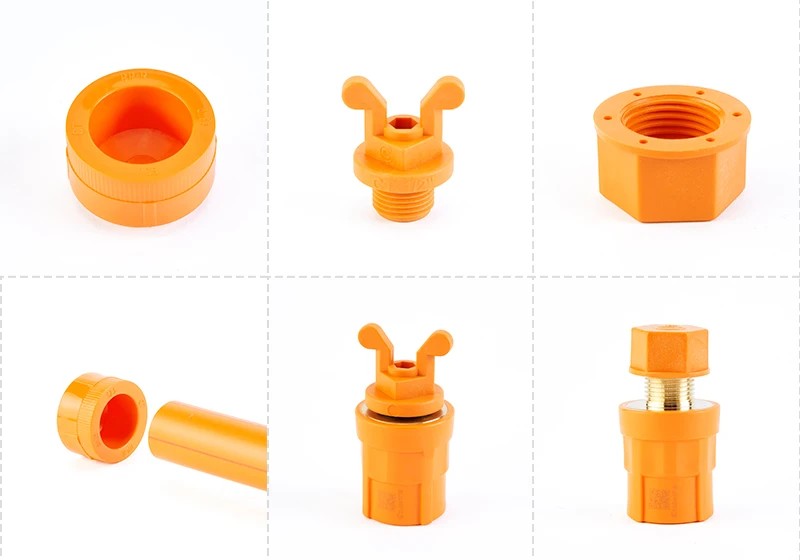
Termination fittings are used to seal the end of a pipeline or temporarily close off a section of the system.
End caps (stoppers) are the most common fittings in this category. They are typically used during system testing, phased construction, or when future expansion is planned. By securely closing pipe ends, they help maintain system pressure and prevent contamination.
Although often overlooked, proper termination is important for both safety and long-term system planning.
3.6 Control and Regulation Components
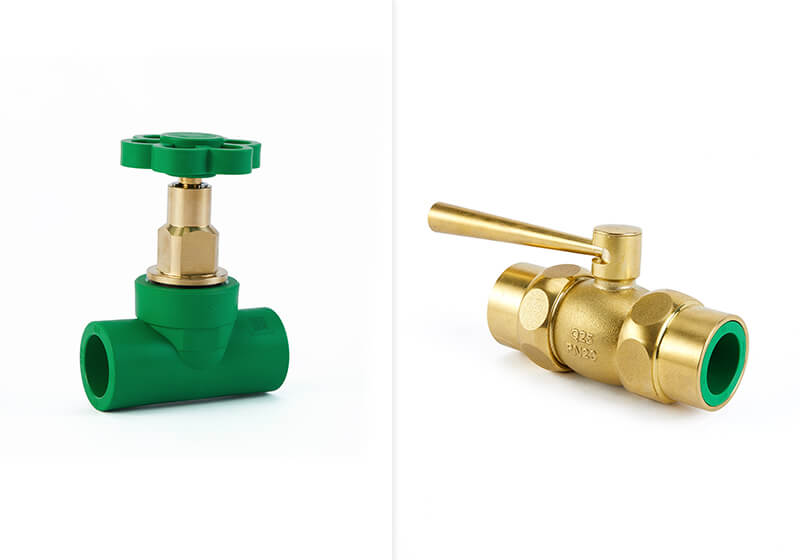
Control fittings are used to regulate or shut off the flow within the system. These components are essential for system operation, maintenance, and emergency control.
Common examples include gate valves and ball valves, including more advanced options such as brass double union valves. These valves allow sections of the system to be isolated without affecting the entire network.
Double union designs are particularly useful because they allow for easy removal and replacement of the valve without cutting the pipe, making maintenance more efficient.
Selecting the right type of valve depends on system pressure, usage frequency, and accessibility requirements.
3.7 Mounting and Support Components
In addition to flow-related fittings, a complete PPR system also requires proper mechanical support.
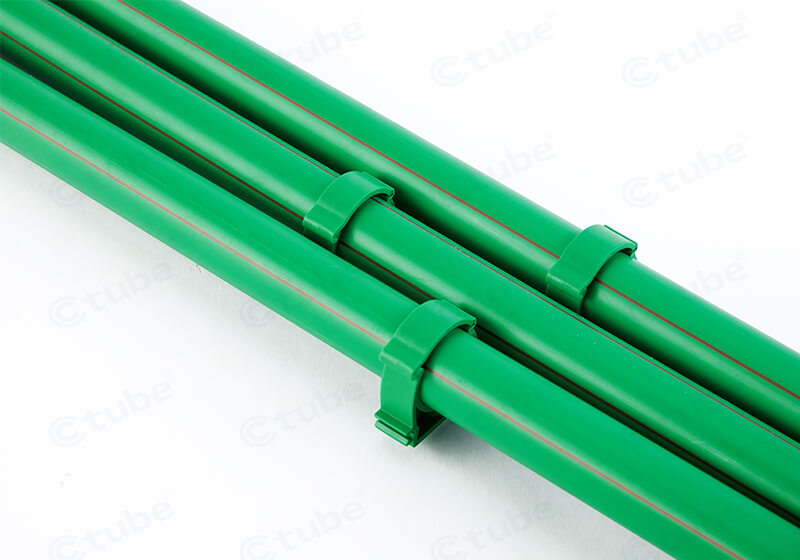
Pipe clips (support clamps) are used to secure pipes in position, maintain alignment, and reduce vibration or movement during operation. Proper spacing and installation of these supports are essential to prevent stress on joints and fittings.
Wall-mounted connection groups, such as double female connectors, are commonly used in areas where fixtures (e.g., faucets or mixers) are installed. These fittings provide a stable and precise interface between the piping system and end-use devices.
Although these components do not directly control flow, they play a critical role in ensuring installation quality and long-term system stability.
4. PPR Fittings Sizes and Compatibility
4.1 Standard PPR Fitting Sizes: The Complete Reference Chart
For plumbing contractors and wholesalers, selecting the right outer diameter (OD) and pressure rating (PN) is critical for system balancing. Below is our comprehensive size chart ranging from residential to heavy industrial applications:
PPR Fitting Sizes Chart
| Outer Diameter (mm) | Nominal Equivalent (Inches) | Primary Application Scenario | Recommended Pressure Rating |
| 20 mm | 1/2″ | Residential indoor hot/cold water plumbing | PN20 / PN25 (Hot Water) |
| 25 mm | 3/4″ | Main distribution lines in apartments | PN20 / PN25 |
| 32 mm | 1″ | Commercial branch lines / Small manifolds | PN16 / PN20 |
| 40 mm | 1 1/4″ | Low-rise building risers | PN16 / PN20 |
| 50 mm | 1 1/2″ | Mid-rise main supply lines | PN16 |
| 63 mm | 2″ | Commercial building mains / HVAC systems | PN10 / PN16 |
| 75 mm | 2 1/2″ | Industrial fluid transport | PN10 / PN16 |
| 90 mm | 3″ | High-capacity municipal water supply | PN10 |
| 110 mm | 4″ | Heavy industrial chilling / Plant piping | PN10 |
| 160 mm | 6″ | Large-scale agricultural or municipal infrastructure | PN10 |
Tips: Are you a wholesaler looking for a reliable supplier of full-size PPR fittings? Contact our export team for a complete product catalog and OEM pricing.]
In any PPR piping system, proper sizing and compatibility between pipes and fittings are essential for ensuring a secure and reliable connection. Even when high-quality materials are used, mismatched dimensions or incompatible specifications can lead to installation difficulties, weak joints, or long-term performance issues. For this reason, understanding how PPR fitting sizes are defined and how they correspond to pipe dimensions is a fundamental step in system design and product selection.
PPR fittings are typically sized based on the outer diameter (OD) of the pipe, which is measured in millimeters. Common sizes include 20 mm, 25 mm, 32 mm, 40 mm, 50 mm, and larger, depending on the application. Each fitting is designed to match a specific pipe size, and the socket dimensions are engineered to allow proper heat fusion during installation. Unlike threaded systems, where minor adjustments can sometimes be made, PPR systems require precise dimensional alignment to achieve a strong, leak-free joint.
In addition to basic size matching, pressure ratings also play an important role in compatibility. PPR pipes and fittings are usually classified according to pressure grades such as PN10, PN16, and PN20. These ratings indicate the maximum pressure the components can withstand under specified conditions. When selecting fittings, it is important to ensure that their pressure rating is equal to or higher than that of the pipe being used. Mismatched pressure classes may not cause immediate failure, but they can significantly reduce the overall safety margin of the system.
Another key consideration is standardization. While many PPR products follow international standards such as ISO or DIN, variations may still exist between manufacturers in terms of dimensional tolerances and production quality. Mixing pipes and fittings from different sources can sometimes result in poor fit or inconsistent fusion performance. For critical applications, it is generally recommended to use pipes and fittings from the same system or to verify compatibility through testing or supplier specifications.
4.2 Overcoming Installation Challenges: The Thermal Fusion Advantage
One of the biggest hidden costs for MEP contractors is joint failure during installation. The standard thermal fusion temperature for PPR is 260°C (500°F). Substandard fittings often feature uneven wall thickness, which leads to two critical failures:
-
Undercooking: The plastic doesn’t melt evenly, causing slow leaks under high pressure.
-
Overcooking (Blockages): The plastic melts too fast and pushes inward, significantly reducing the pipe’s internal diameter and restricting flow.
Premium PPR fittings are engineered with perfectly uniform wall thicknesses and optimized Melt Flow Indices (MFI), ensuring a seamless, blockage-free molecular bond every time a contractor uses a welding machine.
5. How to Choose the Right PPR Fittings for Your Project
Selecting the right PPR fittings is a critical step in ensuring the overall performance and reliability of a piping system. While fittings may appear to be simple components, their specifications, material quality, and compatibility with the system can significantly influence installation quality and long-term operation. Rather than relying on a single factor, proper selection requires a balanced evaluation of application requirements, system design, and product performance.
5.1 Based on Application Requirements
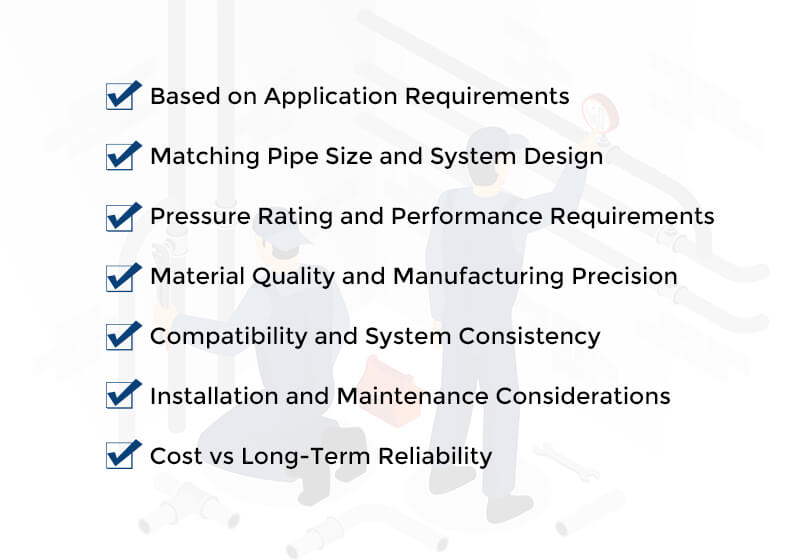
The first step in choosing PPR fittings is to clearly define the application. Different systems place different demands on fittings in terms of temperature, pressure, and usage conditions. For example, hot water systems require fittings that can withstand higher temperatures over extended periods, while cold water systems may prioritize pressure resistance and cost efficiency.
In residential applications, ease of installation and long-term reliability are often the primary concerns. In contrast, commercial or industrial systems may involve more complex layouts, higher pressure levels, or continuous operation, all of which require more robust and precisely engineered fittings. Understanding these differences helps narrow down suitable options from the beginning.
5.2 Matching Pipe Size and System Design
PPR fittings must match the pipe size exactly, as these systems rely on precise dimensional compatibility for proper heat fusion. Even small deviations in diameter or socket tolerance can result in weak joints or installation difficulties.
Beyond basic sizing, the overall system design should also be considered. Complex layouts with multiple direction changes or branch lines may require a wider variety of fittings, such as elbows, tees, reducers, or crossover connectors. Planning the layout in advance allows for more efficient fitting selection and helps avoid unnecessary stress on the system caused by improper routing.
5.3 Pressure Rating and Performance Requirements
Pressure rating is another key factor that should never be overlooked. PPR fittings are typically classified according to pressure grades such as PN10, PN16, and PN20, which indicate their ability to withstand internal pressure under specified conditions.
When selecting fittings, it is essential to ensure that their pressure rating is equal to or higher than that of the pipes used in the system. Using fittings with a lower pressure rating may not cause immediate issues, but it can create a weak point that compromises the safety and durability of the entire system over time. In well-designed systems, fittings should never be the limiting factor in performance.
5.4 Material Quality and Manufacturing Precision
The quality of the raw material and the precision of manufacturing directly affect the performance of PPR fittings. High-quality fittings are typically made from virgin PPR material, which ensures better mechanical strength, thermal stability, and long-term durability.
Equally important is dimensional accuracy. Since PPR systems depend on heat fusion, the fit between the pipe and the fitting must be precise. Poorly manufactured fittings may lead to uneven heating, insufficient bonding, or deformation during installation. In many cases, system failures occur at the joint rather than in the pipe itself, making fitting quality a critical consideration.
5.5 Compatibility and System Consistency
Although many PPR products follow international standards, variations can still exist between different manufacturers. Differences in tolerances, material formulation, or production processes may affect how well pipes and fittings work together.
For this reason, it is generally recommended to use pipes and fittings from the same manufacturer or system whenever possible. If components from different sources must be combined, compatibility should be verified through technical specifications or testing. Maintaining system consistency helps ensure reliable fusion performance and reduces the risk of installation issues.
5.6 Installation and Maintenance Considerations
Practical installation and future maintenance requirements should also be taken into account when selecting fittings. In areas where disassembly may be required—such as near valves, meters, or equipment—using fittings like unions or double union valves can make maintenance significantly easier.
Installation space is another important factor. In tight or complex environments, selecting the right type of fitting (for example, choosing between a 45-degree or 90-degree elbow) can simplify installation and improve overall system layout. Considering these factors in advance helps avoid unnecessary complications during construction and future servicing.
5.7 Cost vs Long-Term Reliability
While cost is always an important consideration, it should be evaluated in the context of long-term performance. Lower-cost fittings may reduce initial investment, but they often come with higher risks of leakage, joint failure, or reduced service life.
In many cases, the cost of repairing a failed connection far exceeds the savings achieved from using cheaper components. For this reason, it is generally more cost-effective to prioritize quality and reliability, especially in systems where long-term performance and safety are critical.
6. Expert Sourcing Guide for Wholesalers & MEP Contractors
If you are procuring PPR fittings for large-scale construction projects or wholesale distribution, standard specifications are not enough. You need to evaluate the manufacturer’s capabilities. Here is what top-tier buyers look for:
6.1 Raw Material Purity:
Ensure the fittings are manufactured using 100% virgin Polypropylene Random Copolymer (such as Hyosung R200P). Recycled plastics drastically lower the lifespan of the system.
6.2 International Compliance:
The factory must hold strict certifications, specifically ISO 15874 and DIN 8077/8078, ensuring global compatibility and safety for potable water.
6.3 The “Brass Insert” Test:
The weakest point in any PPR system is the transition from plastic to metal. High-quality manufacturers use heavily knurled, high-grade brass inserts (CW617N) to prevent the threads from spinning or leaking after years of thermal expansion.
6.4 OEM & ODM Capabilities:
Can the factory customize the color (Green, White, Grey), produce specific PN ratings, or engrave your brand logo on the fittings?
Partner with a Manufacturer You Can Trust. We provide full-scale OEM services, stringent quality control, and on-time global delivery for wholesalers. Click here to request a free sample kit and our latest Wholesale price list!
7. Conclusion
PPR piping systems are widely valued for their durability, corrosion resistance, and long service life. However, as this guide has shown, the overall performance of the system depends not only on the quality of the pipes, but also on the correct selection and application of fittings.
From understanding the different types of PPR fittings and their functions, to ensuring proper sizing and compatibility, and finally to evaluating key selection factors such as pressure rating, material quality, and system design, each step plays a critical role in building a reliable piping network. Even small oversights—such as mismatched sizes or low-quality components—can lead to long-term issues that affect system performance and maintenance costs.
Equally important is the ability to recognize and avoid common mistakes. By paying attention to installation conditions, maintaining system consistency, and planning for future maintenance, it is possible to significantly improve both the efficiency and lifespan of the system.
In practice, a well-designed PPR system is the result of careful planning and informed decision-making. Fittings should not be treated as secondary components, but as integral parts of the system that directly influence its strength, safety, and durability.
For contractors, distributors, and project planners, taking the time to select the right PPR fittings is an investment in long-term performance. By focusing on quality, compatibility, and application-specific requirements, you can ensure that your PPR piping system operates reliably and efficiently throughout its service life.
Thanks for reading. We hope this article has been helpful to you. Ctube provides high-quality PPR pipe fittings to support your plumbing projects. If you have any project needs, please feel free to contact us. Wish you great success with your projects!

FAQs
1. What do DN, OD, and PN mean in PPR pipes?
DN stands for Nominal Diameter, which is a standard reference used in engineering design. OD is the actual Outer Diameter of the pipe in millimeters, and PN indicates the pressure rating, showing the maximum operating pressure the pipe can handle. Understanding these terms helps ensure correct sizing and compatibility with fittings.
2. How do I choose the right PPR pipe size for my project?
Pipe size selection depends on water demand, number of fixtures, system layout, pipe length, and pressure requirements. Start with the main supply line, then gradually reduce diameter for branch lines and individual fixtures, ensuring efficient flow and stable pressure throughout the system.
3. Can I use the same PPR pipe size for hot and cold water?
Yes, PPR pipes are suitable for both hot and cold water, but you must consider the operating temperature. Hot water lines may require a higher PN rating and slightly thicker walls to handle elevated temperatures safely.
4. What are the common PPR pipe sizes for residential applications?
Typical residential sizes include 20 mm for individual fixtures, 25 mm for branch lines supplying multiple fixtures, and 32 mm for the main supply line. Larger sizes may be needed in multi-story or high-demand homes.
5. Are PPR pipe sizes standardized worldwide?
Most PPR pipes follow international standards such as ISO and DIN. While DN and PN references are consistent globally, minor variations may exist in labeling. Metric measurements (millimeters) are commonly used, even in regions where inches are also referenced.
6. How does pipe length affect the size I should choose?
Longer pipe runs experience frictional pressure loss. For extended systems, slightly increasing the diameter of the main line or vertical risers helps maintain consistent flow and avoids low-pressure issues at distant outlets.
7. What factors should I consider for commercial or industrial systems?
High water demand, multiple simultaneous users, system height, and long distances all influence pipe size. Main lines in commercial buildings often range from 32 mm to 50 mm or larger, while industrial systems can require 63 mm or more to ensure efficient water distribution.
8. How important is maintenance for PPR piping systems?
Routine maintenance is essential. Regular inspection for leaks, proper support checks, flushing debris, and monitoring pressure and temperature help maintain performance and extend the system’s lifespan.
9. Can PPR pipes be used for future system expansion?
Yes, planning for potential future expansion is recommended. Installing slightly larger main pipes than immediately necessary can accommodate additional fixtures or higher water demand without replacing the existing system.
10. What are common mistakes to avoid when installing PPR pipes?
Avoid using incompatible fittings, neglecting thermal expansion, under- or oversizing pipes, insufficient support, and incorrect fusion welding techniques. Following manufacturer guidelines ensures secure joints and long-term system reliability.
11. Should I use PN16 or PN25 PPR fittings for hot water lines?
For commercial and residential hot water lines, PN25 is highly recommended. Hot water (especially above 60°C/140°F) softens the plastic slightly, which reduces its effective pressure handling. PN25 provides the necessary wall thickness safety margin to prevent bursting and handle thermal expansion.
12. Why do cheap PPR threaded fittings leak at the brass joint over time?
This is usually due to poor brass insert design. Low-quality inserts lack deep "knurling" (the rough ridges on the outside of the brass). As hot and cold water run through the fitting, the plastic and brass expand and contract at different rates. Without deep knurling, the brass insert eventually breaks loose from the plastic and spins, causing structural leaks.
13. Can I mix different brands of PPR pipes and fittings on a project?
MEP engineers strongly advise against this. Different manufacturers use varying raw material blends, resulting in slightly different Melt Flow Indices (MFI). If the pipe and fitting melt at different rates during the 260°C fusion process, the molecular bond will be weak, leading to potential joint failures. Always stick to a single-brand system.
14. Are PPR fittings safe for high-chlorine or high-pH municipal water?
Yes. Polypropylene Random Copolymer is highly chemically inert. Unlike copper or galvanized steel, which can corrode, scale, or leach metals into the water when exposed to high-pH or highly chlorinated water, PPR remains completely unaffected, maintaining pure water quality.
15. What is the standard lead time for wholesale OEM PPR fittings?
While it varies by manufacturer, a highly capable factory typically requires 15 to 30 days to complete a full 40ft HQ container order. If you require custom molds for specific brass threaded fittings or unique branding, the initial run may take an additional 15 days for tooling setup.



 English
  French
  Spanish
  German
  Arabic
  Indonesian
  Vietnamese